
Picking
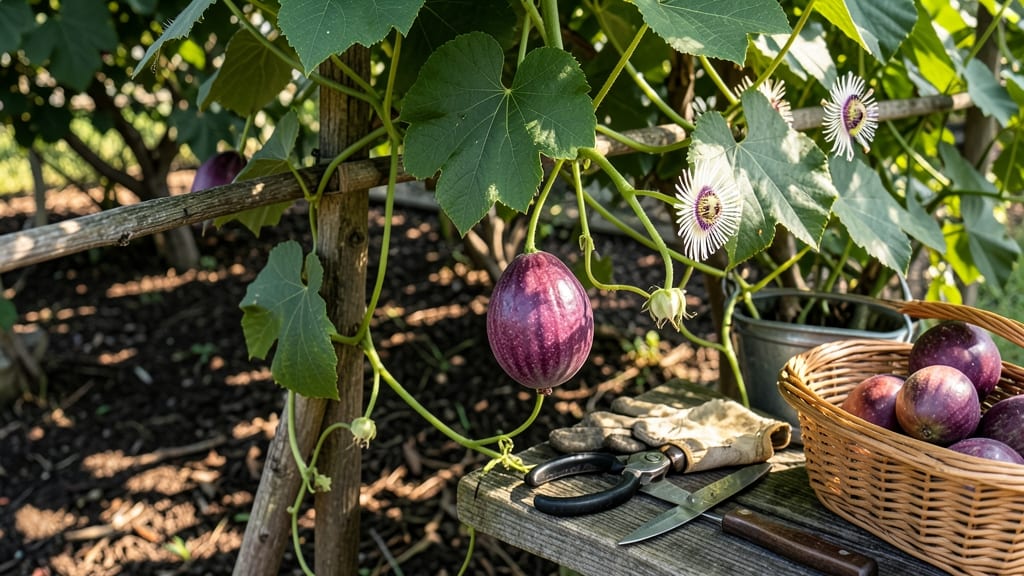
Timing your passion fruit 🍈 harvest is everything—pick too early, and you’ll get bland, seedy fruit; wait too long, and it turns mushy. The sweet spot? A deep purple (or golden-yellow, depending on your variety) with just a hint of wrinkling at the skin.
Most gardeners in zones 9-11 see their first harvest 6-9 months after planting, but tropical climates can speed that up. Purple passion fruit, for example, often takes 9-12 months to reach peak ripeness, while hybrids like the golden variety mature faster.
Here’s the game-changer: ripe passion fruit should twist off the vine with a gentle tug—no cutting needed. Press the skin lightly; if it gives slightly (like a ripe peach), it’s ready. Miss this window, and you’ll end up with fruit that’s either underripe or fermented.
Below, I’ll break down the exact color cues, texture tests, and regional timing tips to ensure you’re picking at the perfect moment—every time. No more guesswork, just bursting flavor.

How to determine passion fruit harvest time by color and texture
Knowing exactly when to harvest your passion fruit ensures maximum sweetness and flavor. Unlike many fruits, passion fruit ripens on the vine and won’t improve after picking. The key lies in observing color changes and texture shifts—two reliable indicators that your fruit is ready.
For purple passion fruit (Passiflora edulis), this means deepening hues, while yellow passion fruit varieties (Passiflora ligularis) develop a golden glow. Let’s break down the visual and tactile cues you need to master.
First, focus on the fruit’s color transition. Unripe passion fruit starts bright green and gradually shifts to its mature shade. For purple varieties, this means a deep eggplant purple, while yellow varieties turn a vibrant golden yellow.
The color change isn’t instant—it can take 2-4 weeks from flowering to full ripeness, depending on your climate. In tropical zones, this process speeds up, while subtropical areas may see a slower progression due to cooler temperatures.
Next, pay attention to the fruit’s texture. A ripe passion fruit should feel slightly soft when gently squeezed—think of a plum’s firmness, not the hardness of an unripe avocado. Press the fruit near the stem; if it yields 1-2 millimeters under gentle pressure, it’s ready.
Overripe fruit will feel mushy and may detach easily, while underripe fruit remains rock-hard. This tactile test is your best defense against picking too early or too late.
Now, let’s compare the key differences between purple and yellow passion fruit varieties in our handy guide below. Understanding these variations will help you tailor your harvesting approach to your specific plant.
Beyond color and texture, another tell-tale sign of ripeness is the fruit’s weight. A ripe passion fruit feels heavy for its size due to the concentrated pulp inside. Hold the fruit in your hand—if it feels surprisingly dense, it’s likely ready.
This is especially useful for yellow varieties, which can sometimes blend into the foliage if not closely monitored. Weighing the fruit in your palm is a quick trick that works even in low-light conditions.
One common mistake gardeners make is waiting until the fruit detaches on its own. While this can happen, it often signals overripeness, which leads to fermented pulp and a loss of flavor.
Instead, harvest when the fruit is 90% ripe—this gives you a 2-3 day window to enjoy it at peak freshness. Store harvested passion fruit in a cool, dry place (like a paper bag) to slow further ripening.
If you’re unsure, cut one open: ripe passion fruit has vibrant yellow-orange pulp with gelatinous seeds.
Regional climate plays a role in harvest timing too. In tropical zones (like Florida or Hawaii), passion fruit may ripen year-round, with peaks in spring and fall. In subtropical areas (such as California or Australia), harvests align with warmer months (May-October).
If you’re in a cooler microclimate, your fruit may take longer to ripen—don’t rush it! Patience pays off with sweeter, more aromatic fruit.
Finally, observe the fruit’s position on the vine. Ripe passion fruit often hangs lower due to the weight of the pulp. If the fruit is facing downward and the stem near the base looks dried or papery, it
Best practices for harvesting passion fruit without damaging the vine
Harvesting passion fruit at the right time ensures sweet, flavorful fruit while protecting your vine's health. The key lies in gentle techniques that minimize stress—rough handling can stunt future growth or invite pests.
I’ve learned that patience and the right tools make all the difference, especially when dealing with delicate vines that can be 25+ feet long!
Start by inspecting the fruit for visual ripeness cues like deep purple (or yellow/orange for hybrids) and slight wrinkling. Once ripe, use the right tools and methods to avoid damaging the vine's structure.
A sharp pair of pruning shears or clean scissors is essential—never pull fruit off by hand, as this can tear the vine and leave it vulnerable to disease.
Step-by-Step Harvesting Guide
-
Step 1: Choose the Right Tool
Use sterilized pruning shears or clean scissors to avoid tearing the vine. Disinfect tools with rubbing alcohol before use to prevent bacterial spread. -
Step 2: Locate the Stem Base
Identify the fruit stem base (where the fruit attaches to the vine). This is your cutting point—never twist or pull the fruit. -
Step 3: Make a Clean Cut
Position shears 1/4 inch above the base and cut at a 45-degree angle to prevent water pooling, which can rot the vine. -
Step 4: Support the Vine
Hold the vine with your non-dominant hand to stabilize it while cutting. This reduces vine stress and prevents accidental damage to nearby fruit. -
Step 5: Harvest in the Morning
Pick fruit early in the day (before 10 AM) when temperatures are cooler. This preserves flavor and texture and reduces stress on the plant. -
Step 6: Handle with Care
Place harvested fruit in a gentle container (like a mesh bag) to avoid bruising. Avoid stacking fruit to prevent physical damage. -
Step 7: Post-Harvest Vine Care
After harvesting, water the vine deeply and apply a balanced fertilizer (10-10-10) to encourage recovery and future fruit production.
One common mistake I see is harvesting overripe fruit that’s already split open. While this might seem ripe, it’s often fermented and seedy, with a bitter taste. Instead, aim for fruit that’s fully colored but still firm—this ensures the best flavor and texture.
Overripe fruit can also attract pests, so remove it promptly to protect your vine.
For large vines, consider using a harvesting pole or ladder to reach high fruit without straining. I’ve found that a lightweight aluminum pole with a basket attachment works perfectly for tall passion fruit vines.
Always prioritize safety and stability—never climb the vine itself, as it can snap under weight.
Finally, keep an eye on your vine’s overall health after harvesting. If you notice yellowing leaves or wilting vines, it may indicate stress or disease. Adjust your care routine by increasing watering frequency or applying a foliar spray to support recovery.
With the right techniques, your passion fruit vine will reward you with years of bountiful harvests! 🌱