
Plants
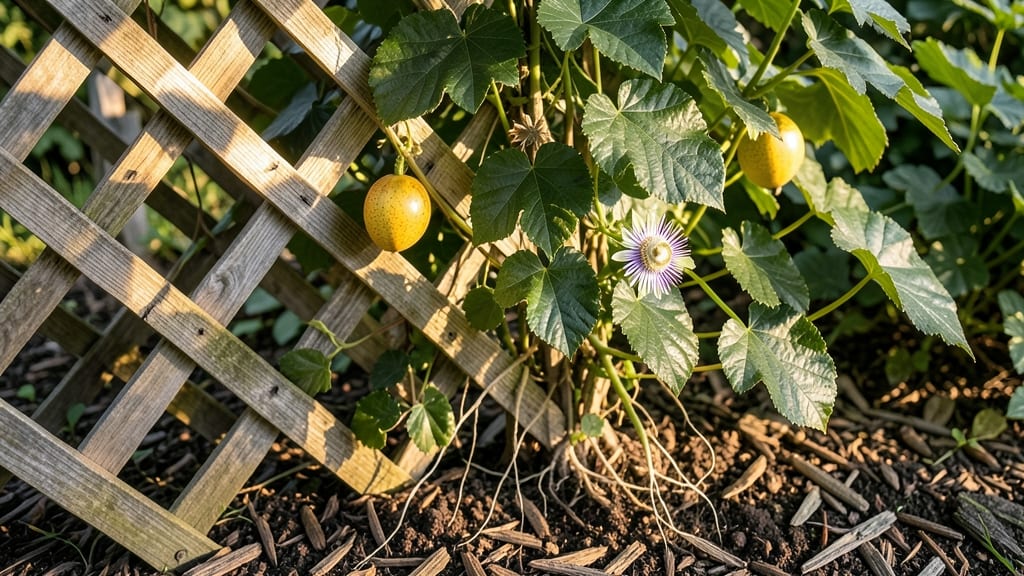
Your passionfruit vine care routine starts with one simple truth: these tropical vines thrive when you mimic their jungle environment. 🌿 The key isn't complicated—it's about consistent warmth, rich soil, and understanding their aggressive growth habits.
I've grown mine for five seasons now, and the difference between a struggling vine and a fruit-loaded monster comes down to these three factors: soil prep, watering discipline, and strategic pruning.
First, the soil must drain like a sponge but hold moisture like a reservoir. Mix in 3 parts compost to 1 part coconut coir, and add a handful of perlite to prevent root rot.
Passionfruit vines drink deeply but hate soggy feet—think of it like watering a thirsty friend who can't hold their liquor. A 5-gallon container works for the first year, but these vines will outgrow it within months.
They climb like crazy, so install a sturdy trellis or fence within reach of your planting spot.
By summer, you'll see the payoff: glossy leaves, rapid growth, and—if you're lucky—those exotic purple fruits forming. The secret to year-round care is winter prep: move potted vines indoors near a sunny window or use frost cloth to protect outdoor plants.
With proper care, my vines produce 50+ fruits per season, and the flavor? Nothing from the store compares. The only real challenge is keeping up with their growth—these vines don't play nice with boundaries.
Here's where most gardeners trip up: over-pruning in spring or underwatering during heatwaves. Passionfruit vines reward patience—don't rush their growth, and they'll reward you with abundant harvests for years.
The first year is about establishing roots; by year two, you'll have a self-sustaining vine that practically cares for itself. Now, let's get those roots growing strong.
📚 In This Guide
- What you need
- Instructions
- Tips and common mistakes
- Wrapping up and next steps
What you need
- ● Passionfruit Vine: Choose between Passiflora edulis (purple) or Passiflora ligularis (yellow) varieties. Buy from a reputable nursery or grow from seeds (though grafted plants yield faster).
- ● Potting Mix (5–10 gallons): A well-draining blend like 60% coconut coir, 20% perlite, and 20% compost. Avoid heavy garden soil!
- ● Containers: 15–20 gallon pots with drainage holes (or a raised bed in warm climates). Use fabric grow bags for better aeration.
- ● Support Structure: A trellis (6–10 ft tall), arbor, or sturdy fence. Passionfruit vines are heavy—secure it well!
- ● Fertilizer: Balanced fertilizer (10-10-10) for young plants.
- ● High-potassium fertilizer (5-10-15) during fruiting season (spring–summer).
- ● Organic options: Composted manure or worm castings (every 4–6 weeks).
- ● Pruning Tools: Bypass pruners (for clean cuts).
- ● Garden shears (for larger branches).
- ● Disinfectant (rubbing alcohol or bleach solution) to sterilize tools between cuts.
- ● Mulch: 2–3 inches of organic mulch (straw, wood chips, or pine bark) to retain moisture and regulate soil temp.
- ● Drip Irrigation or Hose: A soaker hose or drip system for consistent watering (avoid overhead sprinklers to prevent disease).
- ● Hardiness Zone: USDA Zones 8–11 (or grow in containers and bring indoors in colder months).
- ● Sunlight: 6–8 hours of direct sun daily. Partial shade in extreme heat (e.g., desert climates).
- ● Temperature: Ideal: 60–85°F (15–29°C).
- ● Avoid: Below 32°F (0°C)—vines are frost-sensitive!
- ● Humidity: Thrives in 50–70% humidity. Use a humidifier or pebble tray in dry climates.
- ● Grow Lights: LED grow lights (for indoor winter growth).
- ● Pollination Aid: A small paintbrush to hand-pollinate flowers if bees are scarce.
- ● Soil pH Test Kit: Passionfruit prefers 6.0–7.0 pH.
- ● Pest Control: Neem oil or insecticidal soap (for aphids/spider mites).
- ● Winterization Kit: Insulating blankets or a heated mat for colder climates.
Step-by-step guide to year-round passionfruit vine care
Here's how to keep your tropical vines lush, productive, and thriving through every season.
🌱 Step 1: Establish the Right Growing Conditions
Passionfruit vines crave warmth and humidity—think 70-85°F year-round with 60%+ humidity. If your climate dips below 50°F, grow in containers so you can move them indoors during winter. I always place mine near a south-facing window or under a grow light during cooler months. The vines will tell you when they're happy: new growth appears within 2-3 weeks of ideal conditions.
Choose a location with partial shade during peak afternoon sun—direct sunlight can scorch tender leaves. A trellis or sturdy fence gives their sprawling growth habit the support they need. Watch for yellowing leaves as a sign of too much sun or underwatering. This is your cue to adjust either the light exposure or watering schedule immediately.
☀️ Step 2: Master Watering for Optimal Fruit Production
Consistent moisture is key—1-2 inches of water weekly, delivered directly to the root zone. I water deeply in the morning so the foliage has time to dry before evening, which prevents fungal issues. The soil should stay evenly moist but never soggy—passionfruit roots rot quickly in waterlogged conditions. You'll know you've got it right when the top 2 inches of soil feel damp but not wet to the touch.
During fruiting season, increase water slightly—2-3 inches weekly—to support heavy fruit loads. Mulch with 2-3 inches of organic material (like straw or wood chips) to retain moisture and regulate soil temperature. This also suppresses weeds, which passionfruit vines compete poorly with. If you notice dropping buds or small fruit, underwatering is usually the culprit.
💧 Step 3: Fertilize Strategically for Continuous Growth
Feed your vines every 4-6 weeks with a balanced fertilizer (10-10-10 or similar) during active growth. I switch to a low-nitrogen, high-phosphorus formula (5-10-10) when flowers appear to encourage fruiting. Always follow package instructions—over-fertilizing burns roots and stunts growth. You'll see vigorous new shoots and abundant blooms within 2-3 weeks of proper feeding.
In winter, reduce feeding to every 8-12 weeks or stop entirely if the vine is dormant. Look for dark green, healthy foliage as a sign of proper nutrition. Yellowing between veins or stunted growth means it's time to adjust your fertilizer routine. I also add compost tea monthly for a gentle, nutrient boost without risk of burning.
✂️ Step 4: Prune for Health and Productivity
Prune in late winter or early spring before new growth begins. Remove dead, diseased, or crossing branches first—this improves air circulation and prevents fungal spread. Then cut back overly long vines by one-third to encourage bushier growth. You'll notice more lateral branches forming within 4-6 weeks, which is where most fruit develops.
During fruiting season, prune lightly—just enough to remove spent flowers and shape the vine. Avoid heavy pruning then, as it can reduce fruit set. If your vine becomes too leggy, trim the tips of the longest stems to redirect energy toward fruit production. Always use sterilized pruners to prevent spreading disease—wipe blades with rubbing alcohol between cuts.
🪴 Step 5: Protect and Winterize for Long-Term Success
If growing outdoors in cold climates, bring potted vines indoors before temperatures drop below 50°F. Place them near a bright window or under grow lights for 12-14 hours daily. Reduce watering to every 2-3 weeks once growth slows in winter. You'll see slower growth but no new leaves—this is normal dormancy.
For outdoor vines, mulch heavily (4-6 inches) and wrap the base with burlap or frost cloth if frost is forecasted. Prune back one-third in late winter to stimulate fresh growth. Watch for pests like aphids or spider mites—they thrive in dry indoor air. Treat infestations immediately with neem oil or insecticidal soap to prevent spread. With proper care, your vine will rebound quickly in spring.
Tips & tricks for thriving passionfruit vines year-round
These simple yet powerful strategies will help you keep your tropical vines productive and healthy through every season.
Temperature and Humidity Balance: The 70-85°F range is ideal, but don't just focus on heat—humidity matters just as much. If your home or garden dips below 60% humidity, consider using a humidifier near your vine or placing a tray of water nearby. Passionfruit vines are tropical plants, and they'll reward you with faster growth (within those 2-3 weeks of ideal conditions) when humidity is consistent. I've found that misting leaves lightly in the morning also helps maintain that tropical feel.
Soil Moisture Monitoring: The 1-2 inches of water weekly guideline is perfect, but here's how to check if you're doing it right: Stick your finger about 2 inches deep into the soil. If it feels dry, water thoroughly until moisture reaches that depth. During fruiting season, when you increase to 2-3 inches weekly, pay extra attention to the soil's texture—it should feel like a wrung-out sponge, not a dripping wet rag. Overwatering is a silent killer for passionfruit roots.
Fertilizer Timing Strategy: When switching to that 5-10-10 formula for fruiting, apply it in the morning so the nutrients have time to absorb before evening. I've noticed that vines fertilized in the morning show 2-3 weeks of vigorous bloom production faster than those fertilized later in the day. Also, if you're using compost tea monthly, mix it with water and apply it as a foliar spray—this gives your vine a double nutrient boost through both roots and leaves.
Pruning Visual Cues: When pruning back one-third of overly long vines in late winter, look for branches that are growing inward or crossing others—these are your first cuts. The goal is to create an open structure that allows sunlight to reach all parts of the vine. Within 4-6 weeks, you'll see those lateral branches thicken and become more productive. If you're unsure about a cut, remember: you can always prune more, but you can't un-prune!
Pro Tips for Passionfruit Vine Care
- These simple yet powerful strategies will help you keep your tropical vines productive and healthy through every season.
- Temperature and Humidity Balance: The 70-85°F range is ideal, but don't just focus on heat—humidity matters just as m...
- Soil Moisture Monitoring: The 1-2 inches of water weekly guideline is perfect, but here's how to check if you're doin...
Frequently asked questions
Got questions about keeping your passionfruit vine happy? You’re not alone! Here are some of the most common queries—plus quick, actionable answers to keep your tropical beauty thriving.
How often should I water my passionfruit vine?
Passionfruit vines need consistent moisture, especially during fruiting. Water deeply 2-3 times per week in hot climates, or when the top 1-2 inches of soil feel dry. Overwatering can cause root rot, so ensure well-draining soil and a pot with drainage holes if container-grown. Pro tip: Mulch around the base to retain moisture and regulate soil temperature!
When is the best time to prune my passionfruit vine?
Prune your vine twice a year: late winter/early spring (before new growth) to shape the plant and remove dead wood, and after harvest to encourage more fruiting. Avoid heavy pruning during flowering or fruiting seasons—this can stress the plant. Use sterilized pruners to prevent disease, and never cut more than 1/3 of the vine at once.
Why aren’t my passionfruit vines producing fruit?
Lack of fruit can stem from a few issues:
- Insufficient sunlight: Passionfruit vines need 6-8+ hours of direct sun daily. Move yours to a sunnier spot or supplement with grow lights.
- Poor pollination: Hand-pollinate flowers with a soft brush if bees aren’t visiting, or plant companion pollinators like borage nearby.
- Young plant: Vines typically fruit in their second or third year. Be patient and ensure proper care!
- Nutrient deficiency: Feed with a balanced fertilizer (like 10-10-10) every 4-6 weeks during growing season.
Can passionfruit vines survive cold weather?
Passionfruit vines are tropical and hate frost—temperatures below 32°F (0°C) can kill the plant. If you live in a colder climate, grow yours in containers and move it indoors (or to a greenhouse) during winter. For outdoor vines, mulch heavily and cover with frost cloth if temps drop. Some varieties, like Passiflora edulis, are slightly hardier but still need protection.
What can I do with passionfruit vine leaves if they turn yellow?
Yellowing leaves often signal overwatering, nutrient deficiency, or pests. Here’s how to troubleshoot:
- Check soil moisture: Let the soil dry slightly between waterings.
- Test for nutrients: Yellow leaves with green veins may indicate nitrogen deficiency. Use a balanced fertilizer or compost.
- Inspect for pests: Spider mites or aphids can cause yellowing. Spray with neem oil or insecticidal soap if needed.
- Adjust sunlight: Too little light can also cause yellowing—move your vine to a brighter spot.
Act fast to prevent the issue from spreading!
Wrapping up and next steps
Growing a thriving passionfruit vine is all about patience, consistency, and a little tropical love! 🌱 With the right care—from well-draining soil and strategic pruning to protecting against pests—your vine can reward you with abundant, sweet fruit year after year.
Don’t let challenges discourage you; every gardener starts somewhere, and your passionfruit vine will thank you for the effort.
Ready to take the next step? Start small—plant a single vine or propagate cuttings—and watch your confidence (and harvest!) grow. Happy gardening! 🌿✨