
Container Gardens
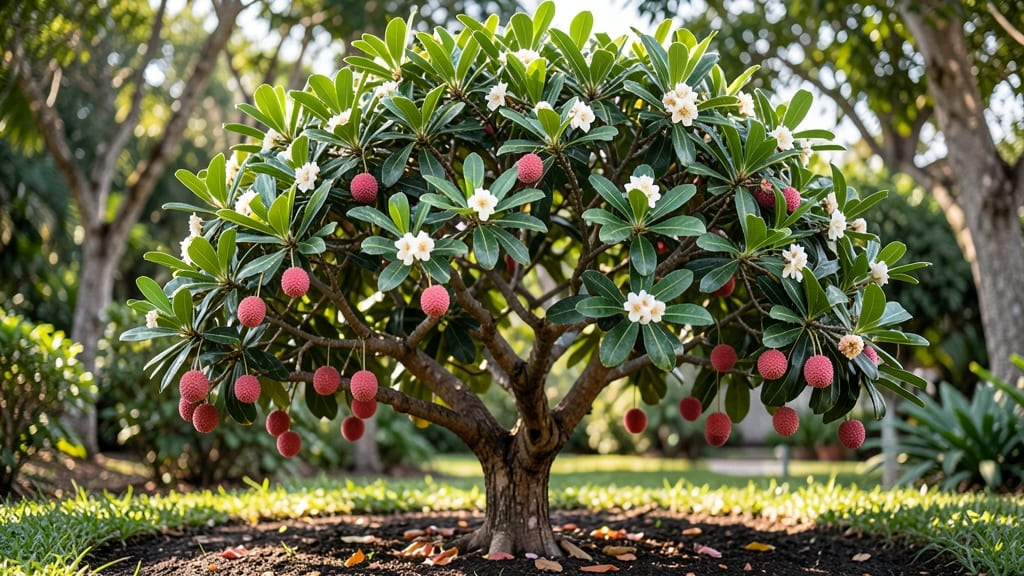
Growing lychee fruit requires USDA Hardiness Zones 10–12, where frost-free conditions, high humidity, and consistent temperatures between 65–95°F create perfect tropical growing environments. These subtropical climates—like those in Florida, Hawaii, and coastal California—support the tree's delicate flowering and fruiting cycles.
Lychee trees are tropical divas that demand warmth year-round, making them sensitive to even brief cold snaps below 32°F. 🌿 The key to success lies in mimicking their native Southeast Asian habitat, where temperatures rarely dip and humidity stays consistently high.
In regions outside Zones 10–12, growers often use greenhouses or microclimates—like urban heat islands—to extend the growing season.
What's fascinating is how these trees actually need a specific temperature range to flower properly: too hot or too cold can disrupt their delicate blooming cycle, which is why coastal areas with mild winters work best.
For those in cooler climates, cold-hardy varieties like 'Wai Chee' or 'Mauritius' offer slightly better resilience, though they still require protection. The tree's shallow root system also makes it vulnerable to temperature fluctuations, so well-draining soil and consistent moisture become critical factors in maintaining healthy growth.
Many commercial growers in Florida and California use windbreaks and irrigation systems to create the ideal microclimate, proving that with the right conditions, even subtropical areas can successfully cultivate these exotic fruits.
💡 In This Article
- Climate Factors Critical for Lychee Fruit Growth
- Best Regions and Microclimates for Growing Lychees
Climate factors critical for lychee fruit growth
Lychee trees are tropical specialists that thrive within a narrow temperature window of 65–95°F, with their optimal growth occurring between 75–85°F. The tree's metabolic processes—including photosynthesis, respiration, and nutrient uptake—peak within this range, which is why even brief dips below 50°F can trigger stress responses.
The tree's delicate flowers, which bloom in spring, require precise temperature conditions (70–80°F) to develop properly, and any deviation can lead to poor fruit set or complete failure.
Humidity plays an equally vital role, with lychees requiring 70–80% relative humidity to prevent flower desiccation and maintain healthy fruit development. In arid conditions, the tree's thin, papery skin can crack, exposing the flesh to oxidation and pests.
Coastal regions naturally provide this humidity through ocean breezes, while inland growers often use misting systems or windbreaks to replicate these conditions. The tree's shallow root system also makes it sensitive to soil moisture fluctuations, requiring consistent irrigation to avoid stress.
Frost is the ultimate enemy of lychee trees, as even a light freeze (32°F) can kill the tree's tender leaves and flowers. The tree's native habitat in Southeast Asia's tropical lowlands has evolved without cold exposure, meaning its cellular structures lack the protective mechanisms found in temperate trees.
This sensitivity explains why lychees are confined to Zones 10–12—any colder, and the tree simply cannot survive. Interestingly, the tree's dormancy period is minimal compared to temperate fruit trees, as it doesn't need a cold winter to reset its growth cycle.
Seasonal patterns matter too, with lychees requiring distinct dry and wet seasons to produce fruit. The tree flowers during the dry season when temperatures are stable, followed by fruit development during the wet season when humidity increases.
This dual-phase cycle is why growers in Florida and California time their harvests to align with natural rainfall patterns, ensuring optimal fruit quality.
The tree's reliance on these seasonal cues makes it particularly sensitive to climate disruptions, such as unexpected droughts or heavy rains, which can lead to blossom drop or fruit splitting.
One fascinating adaptation is how lychee trees respond to light intensity. They prefer full sun exposure (6–8 hours daily), but direct afternoon sun in hot climates can scorch the leaves.
This is why coastal plantings often benefit from partial shade during peak heat hours, a natural buffer provided by nearby vegetation or structures. The tree's leaves also contain a waxy coating that helps reflect excess sunlight, a subtle but effective survival mechanism in its native habitat.
For those outside Zones 10–12, understanding these climate requirements is key to creating artificial growing conditions. Greenhouses with temperature control and humidity regulation can extend the growing range, while cold-hardy varieties offer slight resilience—but neither can fully replicate the tree's natural tropical environment.
The bottom line? Lychees demand precision in their growing conditions, making them a rewarding yet challenging crop for dedicated growers.