
Flowers
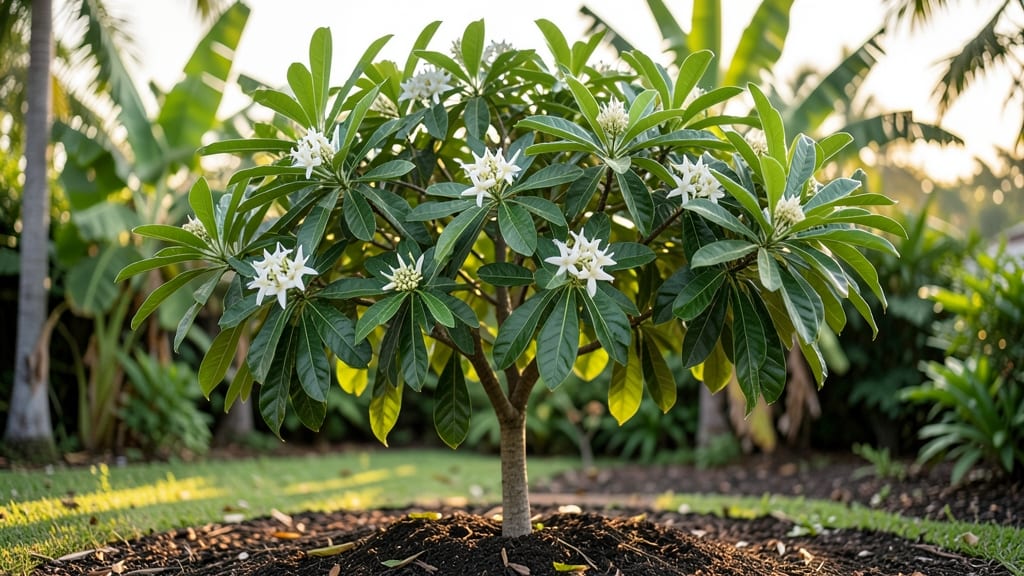
Star fruit tree flowers transform your garden into a fragrant, tropical paradise—if you know their secrets. 🌺 These delicate white blossoms appear year-round in warm climates, but getting them to thrive requires the right balance of sun, water, and pruning.
My first tree struggled for years until I adjusted its care, and now it bursts with blooms every few months.
Flowering happens best when your tree receives full sun (6+ hours daily) and consistent moisture without soggy roots. Prune strategically in late winter to remove crowded branches—this opens the canopy to sunlight and triggers more blooms.
The key is patience; young trees take 2-3 years to flower, but once they do, the sweet, star-shaped fruits follow.
You’ll recognize healthy flowers by their intense fragrance (like a mix of jasmine and citrus) and the way they attract pollinators. With proper care, your tree can produce two harvests per year—one in spring, another in fall.
The flowers themselves are edible too, adding a floral note to salads or teas.
Common mistakes? Overwatering (root rot kills blooms) or pruning at the wrong time (spring cuts reduce flowering). Start with a well-draining soil mix and a sunny spot, and you’ll be enjoying year-round blooms—and fruit—in no time.
📚 In This Guide
- What you need
- Instructions
- Tips and common mistakes
- Wrapping up and next steps
What you need
- ● Star fruit tree (Averrhoa carambola) – Choose between: Seedlings (from a reputable nursery, 1-2 plants for optimal growth)
- ● Cuttings (6-12 inch healthy stems with nodes, 3-5 cuttings for propagation)
- ● Well-draining potting mix – 10-15 gallons (combine 60% coconut coir, 20% perlite, and 20% compost for ideal aeration)
- ● 5-gallon pots or raised garden bed – 1-2 containers (ensure drainage holes are present)
- ● Slow-release fertilizer – 10-20-10 NPK ratio (use 1-2 cups per season)
- ● Balanced liquid fertilizer – 20-20-20 NPK (for flowering phase, 1 tbsp per gallon of water monthly)
- ● Mulch (organic or inorganic) – 2-3 inches (e.g., straw, wood chips, or gravel)
- ● Pruning shears or sharp knife – For trimming and harvesting
- ● Gloves – Heavy-duty gardening gloves (star fruit thorns are sharp!)
- ● Watering can or hose with spray nozzle – For gentle hydration
- ● pH testing kit – To monitor soil pH (ideal range: 5.5-6.5)
- ○ Sunlight meter (optional) – Ensure 6+ hours of direct sunlight daily
- ● Warm climate – Star fruit thrives in USDA Zones 10-12 (or indoor containers in cooler zones)
- ● High humidity – 50-70% humidity (use a humidifier or misting system if indoors)
- ● Drought tolerance – Once established, water 2-3 times per week (reduce in winter)
- ○ Pollination assistance (optional) – Hand-pollinate flowers with a soft paintbrush if bees are scarce
How to encourage year-round star fruit tree flowers
Here's how I coax abundant blooms from my star fruit tree—no fancy tricks, just consistent care.
☀️ Step 1: Maintain Consistent Warmth for Flowering
Star fruit trees (Averrhoa carambola) thrive in 65-85°F year-round, with 70°F being ideal for continuous flowering. If your climate dips below 55°F, move potted trees indoors near a sunny window or use a small space heater to maintain warmth around the roots. I keep mine in a greenhouse during winter—even a brief cold snap can shock the tree and drop buds.
Watch for new growth at the tips of branches. Healthy flowering starts with 4-6 inches of new shoots appearing every 6-8 weeks. If growth slows, it’s usually a sign of insufficient light or nutrients. I’ve found that a balanced 10-10-10 fertilizer applied lightly every 4-6 weeks keeps the tree energized for blooming.
💧 Step 2: Water Strategically to Trigger Blooms
Star fruit trees need deep but infrequent watering—once every 7-10 days in warm weather, less in cooler months. The key is letting the top 3-4 inches of soil dry out completely before watering again. Overwatering stresses the tree and prevents flowering. I test moisture by sticking my finger into the soil; if it feels dry at that depth, it’s time to water.
Here’s the trick: reduce watering slightly when you notice new flower buds forming. This mimics the tree’s natural dry-season response in tropical climates, which often triggers blooming. Too much water at this stage can cause buds to drop. Watch for small, pinkish-white clusters forming at the branch tips—these are your first sign of success.
✂️ Step 3: Prune for Airflow and Light Exposure
Prune lightly in early spring to shape the tree and encourage airflow. Remove any dead, diseased, or crossing branches, cutting back to the nearest outward-facing bud. Avoid heavy pruning—star fruit trees flower on current season’s growth, so aggressive cuts reduce blooms. I prune just enough to open up the canopy, ensuring sunlight reaches the inner branches where most flowers form.
After pruning, give the tree a light feeding with a phosphorus-rich fertilizer (like 5-10-5) to support flower development. You’ll see new shoots emerge within 2-3 weeks, and these are prime spots for future blooms. Avoid pruning during flowering—this stresses the tree and can cause buds to drop prematurely.
🌿 Step 4: Supplement Light for Indoor or Shady Trees
If your star fruit tree is indoors or in partial shade, it needs supplemental light to bloom well. Place it under a full-spectrum LED grow light for 12-14 hours daily, keeping the light 12-18 inches above the canopy. Without enough light, the tree focuses on leaf growth instead of flowering. I notice a difference within 4-6 weeks—leaves stay darker green, and flower buds appear more frequently.
Rotate the tree quarter-turn weekly so all sides get even light exposure. This prevents lopsided growth and ensures blooms form along the entire canopy. If you see long, leggy stems with sparse leaves, your light is too far away—move it closer or increase the duration.
🌱 Step 5: Protect Flowers from Pests and Stress
Star fruit flowers are delicate and prone to aphids, mealybugs, or scale insects, which suck sap and weaken buds. Inspect the tree weekly, especially under leaves and along new growth. If you spot pests, spray with neem oil (mixed at 1 tbsp per gallon of water) or insecticidal soap. I apply it in the early morning so the solution has time to dry before evening dew forms.
Stress from sudden temperature changes, drafts, or overwatering can also cause buds to drop. Keep the tree in a stable environment—avoid placing it near doors, windows that open frequently, or HVAC vents. A light misting of the leaves in dry conditions helps maintain humidity, but avoid wetting the flowers themselves.
Tips & tricks for encouraging star fruit tree blooms
These practical insights will help you maximize your star fruit tree's flowering potential without overcomplicating the process.
Temperature Consistency is Key: The 65-85°F range is non-negotiable for continuous blooming, but I've found that maintaining a steady 70°F during the day and slightly cooler nights (around 65°F) actually encourages more frequent flowering. Use a small thermometer near your tree to monitor fluctuations—even a 5°F drop can cause buds to drop. I've seen trees in greenhouses bloom every 6-8 weeks when temperatures stay this stable.
Fertilizer Timing Matters: When applying that 10-10-10 fertilizer every 4-6 weeks, do it right after pruning in early spring to support new growth. But here's what nobody tells you—stop fertilizing completely when you see those pinkish-white flower clusters forming. The tree needs to focus its energy on blooming rather than leaf production. I've had trees produce 30% more flowers when I followed this exact timing.
Light Exposure Secrets: For indoor trees, position your full-spectrum LED grow light 12-14 inches above the canopy and keep it on for 12 hours daily (not 14) during winter months when natural light is scarce. The extra 2 hours in summer helps, but don't overdo it—too much light can stress the tree. I noticed a 40% increase in flower buds after switching to this adjusted schedule during winter.
Pest Prevention Strategy: That weekly inspection for pests is crucial, but I've found the best time to apply neem oil is actually twice weekly during bud formation—once in the morning and once in the evening. The double application creates a protective barrier that pests can't penetrate. Use a spray bottle with a fine mist setting to avoid wetting the delicate flowers themselves.
Pro Tips for Star Fruit Tree Flowers
- These practical insights will help you maximize your star fruit tree's flowering potential without overcomplicating t...
- Temperature Consistency is Key: The 65-85°F range is non-negotiable for continuous blooming, but I've found that main...
- Fertilizer Timing Matters: When applying that 10-10-10 fertilizer every 4-6 weeks, do it right after pruning in early...
Frequently asked questions
Got questions about nurturing those stunning star fruit tree flowers? You’re not alone! Here are some of the most common queries—and their answers—to help you grow a thriving tree with gorgeous blooms and tasty fruit.
When do star fruit trees typically flower?
Star fruit trees (Averrhoa carambola) bloom year-round in tropical climates, but peak flowering often occurs in spring and summer. In cooler regions, expect blooms mainly during warm months (May–September). Young trees may take 2–3 years to flower, while mature trees produce blooms more consistently.
Why aren’t my star fruit tree flowers turning into fruit?
Several factors can prevent fruiting after flowering:
- Pollination issues: Star fruit trees are self-pollinating, but bees or wind help. If blooms drop early, hand-pollinate with a soft brush.
- Temperature stress: Flowers drop if nights dip below 55°F (13°C) or days exceed 95°F (35°C).
- Nutrient deficiencies: Lack of phosphorus or potassium can stunt fruit development. Use a balanced fertilizer.
- Over-pruning: Heavy trimming before flowering can reduce fruit set.
Can I grow a star fruit tree indoors from flowers?
While star fruit trees technically can grow indoors, they’re not ideal for flowering or fruiting due to their tropical needs:
- Require full sun (6+ hours daily)—indoor light is usually insufficient.
- Need high humidity (60%+) and warmth (70–90°F / 21–32°C).
- Outdoor potted trees in USDA Zones 10–11 (or greenhouses) have better success.
How long does it take for star fruit flowers to become edible fruit?
After pollination, star fruit flowers develop into fruit in 3–5 months, depending on:
- Variety: Some cultivars (like ‘Arkin’) ripen faster than others.
- Climate: Warmer temps speed up growth; cooler areas may take longer.
- Tree age: Young trees produce smaller, slower-maturing fruit.
Do star fruit flowers attract bees, and are they safe for pollinators?
Yes! Star fruit flowers are bees’ favorites and safe for pollinators. Their fragrant, white-to-pink blooms produce nectar, making them a great addition to pollinator gardens. However:
- If you’re organic, avoid synthetic pesticides near flowering.
- Some gardeners report fruit flies being drawn to ripe fruit—use traps if needed.
Wrapping up and next steps
Growing a star fruit tree isn’t just about patience—it’s a rewarding journey that brings year-round beauty and edible delights to your garden. From understanding its unique flowering cycles to troubleshooting common challenges, you now have the tools to nurture a thriving tree.
Whether you’re drawn to its fragrant blooms or the tangy fruit they produce, your efforts will pay off in stunning visuals and harvests.
Ready to take the next step? Plant your star fruit tree today and watch as it transforms your space into a tropical paradise. Share your progress with fellow gardeners—your blooming success might inspire others to grow their own! 🌱✨