
Fertilization
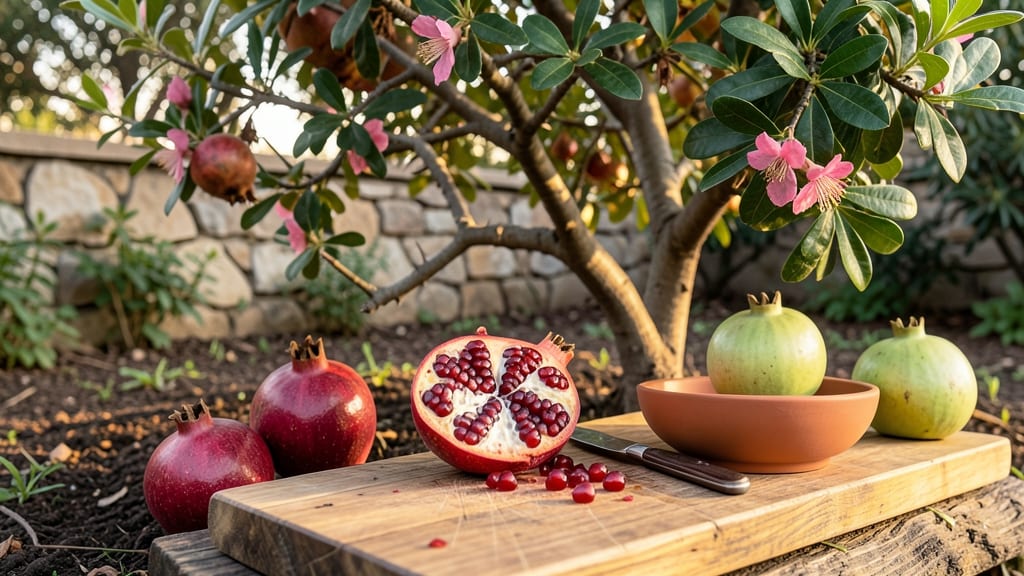
Pomegranate fruit splitting ruins what should be a juicy harvest of ruby arils. The deep cracks appear overnight, turning your hard work into a messy pulp disaster—but there’s a way to prevent it without the struggle.
I’ve watched pomegranates split after heavy rains and again after my well-meaning neighbor overwatered their tree. The key isn’t just cutting back water; it’s understanding the why behind the split.
Most splitting happens when roots can’t keep up with the fruit’s rapid growth, especially after sudden water surges or temperature swings. Pruning in early spring removes excess fruit load, while mulching keeps moisture steady.
Even harvesting at the right firmness (when the skin dimples slightly) makes a difference. These small adjustments turn a frustrating problem into a predictable harvest.
For existing splits, salvage what you can by gently squeezing the fruit over a bowl—just don’t expect perfect arils. The real payoff comes next season: consistent watering, strategic pruning, and harvesting at peak ripeness. Your pomegranates will stay intact, yielding plump, juicy arils that make the effort worthwhile.
This works for both backyard trees and container-grown pomegranates, though container plants need extra attention to drainage. The same principles apply whether you’re dealing with a mature tree or a young sapling. Let’s get those fruits staying whole and delicious.
Root Causes Of Pomegranate Splitting
Understanding why pomegranate fruit cracks or splits is key to preventing it—and preserving that juicy, seed-studded goodness. Here’s a breakdown of the science behind the split, so you can tackle it head-on.
---
Pomegranates are thirsty fruits, but too much water too quickly can cause their skin to burst. This happens when:
- Heavy rain or irrigation – Pomegranates absorb water through their roots and skin.
If the soil is waterlogged or you’ve overwatered, the fruit swells faster than its tough outer layer can accommodate, leading to cellular pressure imbalance (think of a water balloon overinflating). - Sudden downpours after drought – When dry soil suddenly gets drenched, roots gulp water rapidly, and the fruit expands unevenly.
The epidermis (outer skin) can’t stretch fast enough, causing radial cracks (splits that run from the stem outward). - Poor drainage – Compacted or clay-heavy soil traps excess moisture, forcing roots to work harder. This creates internal pressure that weakens the fruit’s structural integrity.
Actionable fix: Water deeply but infrequently—1–1.5 inches per week—and avoid wetting the fruit directly. Use drip irrigation to target roots, not leaves or rind.
---
Pomegranates are heat-lovers, but extreme temperature swings can stress them into splitting. Here’s how:
- Cold snaps followed by heat – If a pomegranate tree experiences freezing nights (below 25°F) followed by sudden warmth, the fruit’s growth resumes too quickly.
The vascular system (which transports water and nutrients) can’t keep up, causing internal pressure buildup and cracks. - Late-season heatwaves – When temperatures spike after fruit set, the fruit expands rapidly while the skin hardens slowly.
This mismatch leads to uneven growth stress, often seen as vertical splits near the stem. - Frost damage to flowers/fruit – Early blooms or young fruit exposed to frost may recover but grow abnormally, creating weak points that split later in the season.
Actionable fix: - Mulch heavily (3–4 inches of straw or wood chips) to stabilize soil temps. - Use frost cloth on young fruit if late frosts are forecast. - Prune for airflow to reduce heat stress on clusters.
---
A pomegranate’s skin is its armor—but if the tree lacks key nutrients, that armor weakens. Common deficiencies that lead to splitting:
| Nutrient Deficiency | How It Causes Splitting | Solution | |-------------------------|-----------------------------|--------------| | Calcium (Ca) | Weakens cell wall integrity, making fruit more prone to bursting under pressure.
Symptoms: Blossom-end rot (on fruit) or corky spots on branches. | Apply calcium nitrate (1 tbsp/gallon) every 4–6 weeks during fruiting. | | Potassium (K) | Disrupts osmotic balance, causing uneven water distribution.
Fruit becomes soft and prone to cracking. | Use potassium sulfate (1 tsp/gallon) or banana peel compost. | | Boron (B) | Critical for cell division and fruit development.
Deficiency leads to misshapen, weak fruit that splits easily. | Spray borax solution (1 tsp/gallon) at bloom time. | | Nitrogen (N) excess | Overgrowth of leaves/fruit without structural support. Rapid fruit expansion outpaces skin hardening. | Balance with low-N, high-P/K fertilizer (e.g., 5-10-10 ratio). |
Actionable fix: Test soil pH (6.0–7.0 ideal) and conduct a leaf tissue test to pinpoint deficiencies. Avoid synthetic fertilizers—opt for compost tea or fish emulsion for gradual nutrient release.
--- Hidden threats can weaken pomegranate fruit from the inside out:
- **Fungal infections (e.g., Alternaria or Phytophthora) – These cause rot or weak spots in the fruit, making it vulnerable to splitting when pressure builds.
Look for dark lesions or soft, mushy areas. - Scale insects or aphids – These sap-suckers stress the tree, reducing its ability to regulate water and nutrient flow evenly.
Infested fruit may over-expand due to hormonal imbalances. - Bird pecking or hail damage – Physical trauma creates entry points for water to seep in, increasing internal pressure.
Actionable fix: - Spray neem oil (1%) to deter pests at bloom time. - Prune infected branches immediately and sterilize tools with rubbing alcohol. - Use netting to protect fruit from birds/hail in high-risk areas.
--- Not all pomegranates split equally—some varieties are naturally prone due to: - Thin-skinned cultivars (e.g., ‘Wonderful’ or ‘Eversweet’) split more easily than thick-skinned types like ‘Herskovits’. - Overburdened branches – Too many fruit per cluster (>5–6 per stem) compete for nutrients, leading to asymmetric growth and splits. - Late-season thinning failure – If you don’t thin fruit early, shading and uneven ripening occur, causing weak points.
Actionable fix: - Choose split-resistant varieties if cracking is recurrent (e.g., ‘Sweetheart’ or ‘Ambrosia’). - Thin fruit when they’re golf-ball sized, leaving 3–4 per stem. - Harvest promptly when 70% ripe**—overripe fruit splits more easily.
Fixing Split Pomegranates Fast
When your pomegranates crack open too soon, it’s not just a cosmetic issue—it’s a sign your fruit needs urgent care. The good news? Most causes have simple fixes, and with a few adjustments, you can salvage your harvest and even prevent future splits.
Below, we’ll match common triggers to easy solutions, plus pro tips to keep your pomegranates intact until they’re ready to be picked.
---
Fix: Adjust your watering routine and improve soil health. - Step 1: Let the soil dry out between waterings. Stick your finger 2 inches deep—if it’s damp, wait 2–3 more days before watering again. 💧 - Step 2: Amend heavy or clay soils with compost or perlite (1 part to 3 parts soil) to boost drainage. A raised bed or mound can also help water flow away from roots. - Step 3: If your garden floods after rain, consider mulching with straw or wood chips (2–3 inches thick) to absorb excess moisture and protect roots. - Prevention Tip: 💡 Plant pomegranates on a slight slope or in well-drained areas to avoid water pooling.
---
Fix: Shield your trees from sudden heat or cold stress. - Step 1: If heat waves are causing splits, provide afternoon shade with lightweight shade cloth (30–50%) or drip irrigation to keep roots cool. 🌞 - Step 2: For cold snaps, wrap the tree trunk with burlap or bubble wrap and cover young fruit with frost cloth if temps drop below 28°F (-2°C). - Step 3: Avoid fertilizing during temperature extremes—wait until soil temps are stable (above 60°F/15°C). - Prevention Tip: 🌡️ Choose cold-hardy varieties (like ‘Wonderful’ or ‘Eversweet’) if you live in hot or cold climates.
---
Fix: Thin fruit and support branches to reduce stress. - Step 1: Prune excess fruit—leave 6–8 inches between pomegranates on each branch to prevent overcrowding. Use sharp pruners and cut at a 45° angle. ✂️ - Step 2: Support heavy branches with tree ties or stakes to avoid physical splitting from wind or weight. - Step 3: Harvest early if splits are severe—even slightly underripe pomegranates are better than burst ones! - Prevention Tip: 🎯 Thin fruit when they’re golf-ball sized (about 6 weeks after flowering) for the best results.
---
Fix: Test soil and treat underlying issues. - Step 1: Test your soil for pH (ideal: 6.0–7.0) and nutrient levels. Pomegranates need balanced NPK (10-10-10) but can suffer from too much nitrogen (which causes weak, splitting fruit). 📊 - Step 2: If fungal diseases (like Alternaria or Phytophthora) are to blame, apply copper fungicide or neem oil spray every 7–10 days during wet seasons. - Step 3: Avoid heavy manure—it can burn roots and disrupt nutrient uptake. Stick to compost tea or slow-release fertilizers. - Prevention Tip: 💪 Rotate crops if you suspect soil-borne diseases and sanitize pruning tools with rubbing alcohol.
---
Fix: Protect fruit during critical growth stages. - Step 1: Cover trees with row covers or tarps during forecasted hail or heavy rain (especially 4–6 weeks before harvest). 🌩️ - Step 2: Harvest immediately if splits are widespread—even if the fruit isn’t fully ripe, you can store it in a cool, dry place for 1–2 weeks. - Step 3: Prune damaged branches after storms to reduce future stress on the tree. - Prevention Tip: ✨ Plant windbreaks (like shrubs or evergreens) to shield trees from harsh weather.
--- Final Pro Tip: 🔥 Monitor your pomegranates weekly—early intervention is key! If splits start small, you might still save the fruit by hand-picking and storing them separately to prevent further damage. With these fixes, you’ll go from “oh no!” to “jackpot!” in no time.
Frequently asked questions
Why do my pomegranate fruits split even when I water them regularly?
Split pomegranates often happen when watering is inconsistent—not just overwatering, but also sudden shifts. If your soil gets too dry between waterings, then gets drenched, the fruit swells too fast. The skin can't stretch quickly enough, causing cracks. Try watering deeply 1–1.5 inches per week and use mulch to keep moisture steady.
Can I save pomegranates that have already started splitting?
You can salvage some of the fruit! Gently squeeze the intact sections over a bowl to collect the arils. For minor splits, harvest early—even slightly underripe pomegranates are better than burst ones. Store them in a cool, dry place for 1–2 weeks to finish ripening.
How do I know if my pomegranate tree has a nutrient deficiency causing splits?
Look for these signs: yellowing leaves (nitrogen), brown spots on fruit (calcium), or weak stems (potassium). Test your soil pH (6.0–7.0 ideal) and use a leaf tissue test. Apply calcium nitrate or potassium sulfate if deficiencies are found, but avoid synthetic fertilizers—they can worsen the issue.
Will pruning help prevent pomegranate splitting?
Pruning reduces overcrowding, which causes uneven growth. Thin fruit clusters to 3–4 pomegranates per stem when they're golf-ball sized. Also, prune branches to improve airflow—this helps fruit ripen evenly and strengthens the tree's structure.
Are some pomegranate varieties more prone to splitting than others?
Yes! Thin-skinned varieties like ‘Wonderful’ or ‘Eversweet’ split more easily than thick-skinned types like ‘Herskovits’ or ‘Sweetheart’. If splitting is a recurring issue, try planting a split-resistant variety. Also, harvest promptly when 70% ripe—overripe fruit is more prone to cracking.