
Pruning
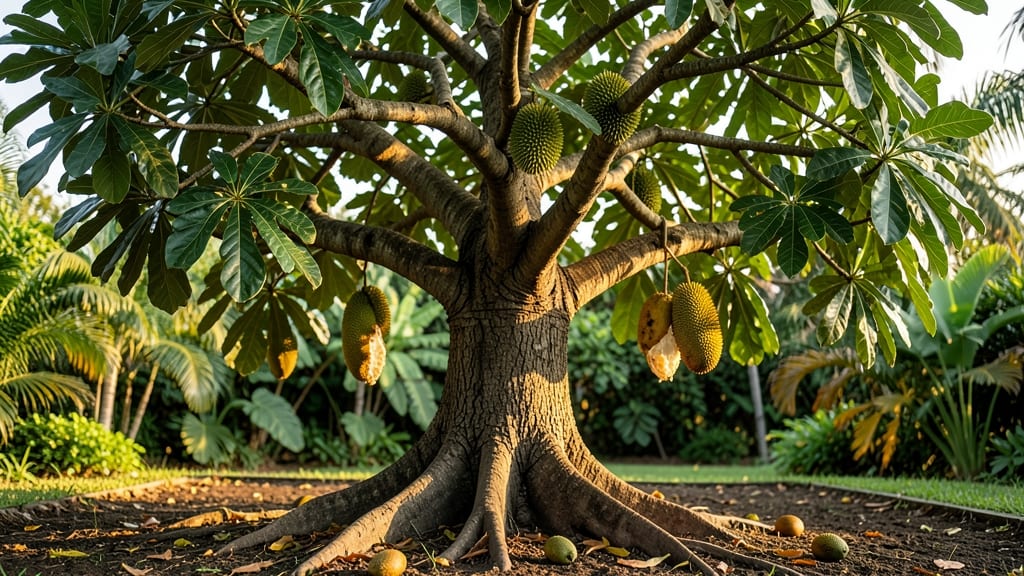
Your jackfruit tree’s future harvest depends on when you prune—and how. 🌿 I’ve spent years watching jackfruit trees transform from scraggly saplings into heavy-fruiting giants, and the pruning window between late winter and early spring is where the magic happens.
Skip this, and you’ll end up with uneven fruit size, weak branches, or even a tree that struggles to support its own weight.
Here’s the thing about jackfruit trees: they grow fast, but they also need structure. Prune too little, and sunlight gets blocked; prune too much, and you stunt fruit production.
The goal is 30-40% canopy reduction each year, focusing on removing dead wood, crossing branches, and opening up the center for airflow. That’s how you go from a few scattered fruits to dozens of 50-pound jackfruits hanging heavy on the branches.
What you’ll notice after proper pruning is a tree that looks like a well-built umbrella—strong trunk, sturdy scaffold branches, and a canopy that catches every ray of sunlight.
The fruits themselves start as small, fuzzy green balls (yes, they’re edible at this stage too!) before swelling into the massive, spiky orbs we all recognize. With the right cuts, you’ll see new growth within 2-3 weeks, setting up next year’s harvest.
Works best in tropical and subtropical zones (10-12), but even in cooler areas, container-grown jackfruit trees can thrive with winter protection. The key is patience—jackfruit trees take 3-5 years to bear fruit, but once they do, they’ll keep producing for decades if you prune right. Let’s get those branches shaped!
📚 In This Guide
- What you need
- Instructions
- Tips and common mistakes
- Wrapping up and next steps
What you need
- ● Pruning shears: Bypass shears (8–10 inches) for small branches
- ● Loppers: 1 pair (18–24 inches) for medium branches (1–3 inches thick)
- ● Pruning saw: 1 handheld or folding saw for thick branches (3+ inches)
- ● Gloves: Heavy-duty, cut-resistant (2 pairs) for safety
- ● Ladder: Sturdy, extendable (16+ feet) for tall trees
- ● Disinfectant: 70% isopropyl alcohol or bleach solution (1:9 ratio) for sterilizing tools
- ● Heavy-duty trash bags: 3–5 (for debris cleanup)
- ○ Tree wound sealant: Pruning paste (optional, for large cuts)
- ● Extension pole: With shears attachment (for high branches)
- ● Safety goggles: To protect from debris
- ● Notebook & pen: For marking pruning notes
- ● Water spray bottle: To clean tools between cuts
- ● 🌡️ Weather: Prune on a dry, overcast day (avoid wind/rain)
- ● ⏰ Timing: Best done in late winter/early spring (dormant season) or post-harvest
- ● 📊 Tree health check: Ensure no pests/diseases before pruning
- ● 🌿 Safety first: Turn off sprinklers and warn others nearby
Step-by-Step guide to pruning your jackfruit tree for maximum yields
Here’s how I keep my jackfruit tree producing heavy, year-round harvests by pruning strategically.
✂️ Step 1: Identify and Remove Dead or Diseased Branches
Start by inspecting the entire canopy for branches that are dry, cracked, or showing signs of disease like black spots or oozing sap. These branches won’t produce fruit and can spread problems to healthy wood. Use sharp, sterilized pruning shears to cut just outside the branch collar—the swollen area where the branch meets the trunk.
I always prune deadwood first because it’s the easiest way to open up the canopy for better airflow and sunlight. If you see a branch with more than 50% dead tissue, remove it entirely. Healthy branches should have a firm, green interior when you cut into them.
✂️ Step 2: Thin Out Overcrowded Growth for Better Airflow
Jackfruit trees produce fruit on new growth, so you’ll want to maintain an open, airy structure. Look for branches that are rubbing against each other or growing too close together—these compete for sunlight and nutrients. Remove about 20-30% of the total branches to create space, focusing on the smallest, weakest stems first.
I like to step back and visualize the tree from all angles. The goal is a balanced shape with sunlight reaching the inner canopy. Avoid heavy pruning in one area—uneven cuts can create weak spots where pests or disease might take hold.
☀️ Step 3: Prune to Encourage Fruit Production on New Growth
Jackfruit trees fruit on current season’s growth, so pruning stimulates new shoots where fruit will develop. Cut back overly long branches by one-third to encourage bushier, more productive growth. For horizontal branches, make the cut just above a leaf node where new buds are forming.
Here’s the thing—if you see a branch with more than 3-4 fruit clusters, thin it out to 1-2 clusters per branch. Too many fruits drain the tree and reduce size. Watch for water sprouts (thin, vertical shoots) and remove them—they steal energy from fruiting branches.
⏰ Step 4: Time Pruning for Seasonal Growth Patterns
Prune lightly in late winter (just before new growth starts) to shape the tree, and heavily after harvest (late summer/early fall) to prepare for the next flush. Avoid pruning during peak flowering—this can reduce fruit set. If you live in a tropical climate, prune every 3-4 months to maintain steady production.
I’ve found that pruning right after a heavy harvest gives the tree time to recover before the next fruiting cycle. Always sterilize your tools between cuts to prevent bacterial or fungal infections. A 10% bleach solution (1 part bleach to 9 parts water) works well for cleaning shears.
🌿 Step 5: Maintain Pruning for Long-Term Tree Health
After the initial pruning, monitor the tree for suckers (shoots growing from the base) and remove them to direct energy upward. Every 6-12 months, revisit the canopy to thin out any new overgrowth. A well-pruned jackfruit tree should have strong, outward-facing branches with plenty of sunlight reaching the inner leaves.
Real talk: If you see yellowing leaves, it’s often a sign of over-pruning or nutrient deficiency. In that case, fertilize with a balanced, slow-release fertilizer (like 10-10-10) and reduce pruning intensity for a few months. The key is balance—prune enough to keep the tree open, but not so much that it struggles to recover.
Tips & tricks for pruning your jackfruit tree
These pruning secrets will help you transform your jackfruit tree into a year-round fruit-producing powerhouse.
Tool Preparation: Sterilizing your pruning shears between cuts is non-negotiable. I use a 10% bleach solution (1 part bleach to 9 parts water) to prevent spreading disease between branches. For extra efficiency, carry a small spray bottle with this solution in your pruning kit and mist tools between each major cut. Sharp tools make cleaner cuts that heal faster—dull blades tear wood, creating entry points for infections.
Visual Pruning Cues: In Step 1, when identifying dead branches, look for the "thimble test"—healthy branches should have a firm, green interior when you cut into them. For Step 2's thinning, visualize your tree from all angles before making cuts. Imagine sunlight streaming through the canopy—any branch blocking this light should go. The goal is 20-30% open space in the canopy to maximize airflow and fruit production.
Seasonal Timing Strategy: The late winter pruning (Step 4) is your chance to shape the tree before new growth begins. I mark my calendar for this timing—it's when the tree's energy is naturally shifting toward spring growth. For tropical climates, that every-3-4-months schedule becomes your rhythm: prune after harvest, then again before flowering season. This maintains continuous production while preventing energy drain.
Fruit Load Management: When you see branches with more than 3-4 fruit clusters (Step 3), remember this rule: "One big fruit or two medium ones." The tree's energy gets divided among too many small fruits, resulting in poor development. I use a small flag or ribbon to mark branches I've already thinned—this prevents me from accidentally over-pruning the same area during subsequent visits to the tree.
Pro Tips for Jackfruit On Tree
- These pruning secrets will help you transform your jackfruit tree into a year-round fruit-producing powerhouse.
- Tool Preparation: Sterilizing your pruning shears between cuts is non-negotiable.
- Visual Pruning Cues: In Step 1, when identifying dead branches, look for the "thimble test"—healthy branches should have a firm, green interior when you cut into them.
Frequently asked questions
Got questions about keeping your jackfruit tree productive year-round?
Here are answers to the most common ones—so you can prune with confidence and enjoy a bountiful harvest!
When is the best time to prune a jackfruit tree for maximum fruit?
Prune your jackfruit tree after harvest season (late spring to early summer) to avoid stressing the tree during flowering. Light trimming can also occur in winter, but avoid heavy pruning during active growth or flowering—this can reduce fruit set.
How often should I prune my jackfruit tree?
Jackfruit trees thrive with annual pruning (post-harvest) to shape the canopy and remove dead/diseased wood. Light maintenance trims (removing water sprouts or crossing branches) can happen every 6–12 months. Over-pruning weakens the tree, so aim for 20–30% of the canopy max per session.
What should I do if my jackfruit tree isn’t producing fruit after pruning?
Fruit production issues often stem from over-pruning or poor flowering conditions (like low sunlight or stress). Ensure your tree gets full sun (6+ hours/day), balanced fertilizer (high in potassium/phosphorus), and consistent watering. If pruned too aggressively, wait 1–2 years for recovery—patience is key!
Can I prune a young jackfruit tree the same way as a mature one?
No! Young trees (under 5 years) need gentle shaping—focus on removing only dead branches or those growing inward. Avoid heavy cuts; prioritize a central leader (main upward branch) to encourage strong growth. Mature trees (5+ years) can handle more aggressive pruning for fruit access and air circulation.
What’s the deal with those weird "water sprouts" popping up everywhere?
Water sprouts (fast-growing vertical shoots) steal energy from fruit production. Simply snip them at the base during regular pruning—no need for fancy tools! These sprouts often appear after heavy rain or over-fertilizing. Keep an eye out in spring/summer.
Wrapping up and next steps
Pruning your jackfruit tree isn’t just about trimming—it’s about unlocking a year-round bounty while keeping your tree healthy and thriving! 🌿 With the right tools, timing, and techniques, you’ll enjoy larger fruits, better airflow, and fewer pests.
Start small, stay consistent, and watch your jackfruit tree reward you with delicious harvests.
Ready to take the next step? Pick a sunny day, grab your pruners, and begin your pruning journey today—your jackfruit tree (and taste buds) will thank you!