
Size
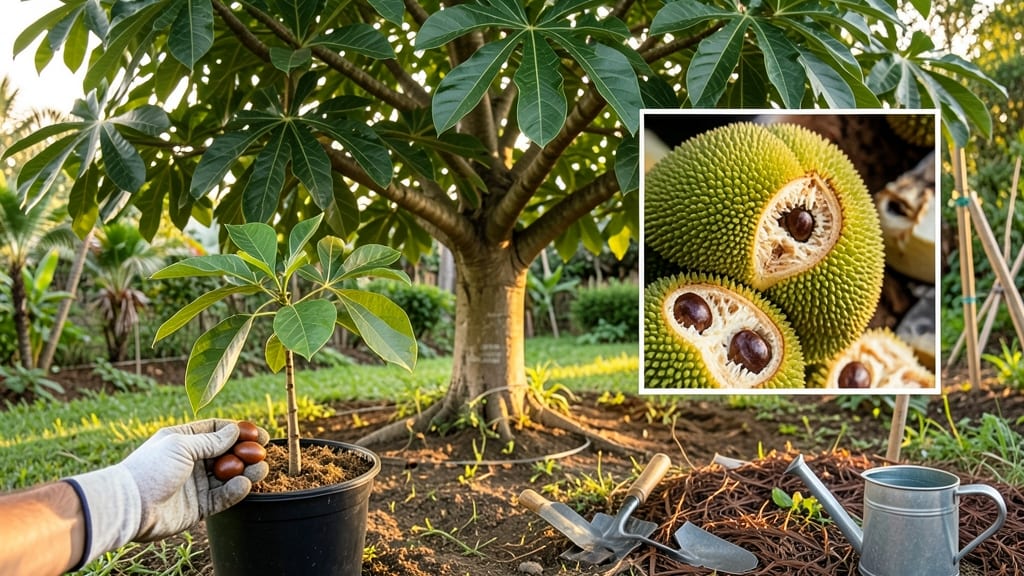
Growing jackfruit from seed means tropical flavors in your backyard—if you nail the heat and humidity. 🌴 The key isn’t just patience (though it takes years) but replicating the exact conditions these trees crave: warm soil, high light, and zero winter chill.
My first attempt failed because I ignored the "no frost" rule—now my tree thrives in Florida’s summer heat, producing fruit after just three years.
You’ll need rich, well-draining soil (think 60% organic matter) and a spot that gets full sun year-round—no shade cutoffs. Water deeply once a week, but let the top 6 inches dry between soakings; soggy roots are the #1 killer.
Saplings grow fast (2-3 feet annually), but they’re picky about transplant shock—hold off on moving them until they’re at least 2 feet tall.
By year 5, you’ll harvest sweet, honey-like fruit straight from the tree—no grocery store needed. The first fruits are small, but each year they double in size. Prune aggressively in late winter to shape the canopy and encourage air flow, which cuts down on fungal issues.
Pests? Just watch for scale insects and treat with neem oil if they appear.
This isn’t a quick crop—jackfruit trees take 3-5 years to bear—but the payoff is worth it. Even in cooler climates, container growing works if you bring pots indoors during winter. Stick with it, and you’ll have the most exotic fruit in your neighborhood.
📚 In This Guide
- What you need
- Instructions
- Tips and common mistakes
- Wrapping up and next steps
What you need
- ● Jackfruit seeds (fresh or dried, 3–5 seeds per plant for best results)
- ● Potting mix (well-draining, organic-rich blend—avoid heavy clay)
- ● Large containers or nursery pots (10–15 gallons each, with drainage holes)
- ● Slow-release fertilizer (balanced 10-10-10 or organic options like compost)
- ● Mulch (wood chips or straw to retain moisture and regulate soil temp)
- ● Pruning shears (sterilized, sharp blades for trimming)
- ● Garden gloves (to protect hands from thorns and soil)
- ● Watering can or hose with gentle spray nozzle (jackfruit hates soggy roots!)
- ● Trellis or support stakes (for young trees in windy areas)
- ● pH test kit (ideal soil pH: 6.0–7.5)
- ● Shade cloth (30–50% coverage for seedlings in hot climates)
- ● Humidity dome or plastic wrap (to boost germination rates)
- ● Warm climate (USDA Zones 10–11; can grow in containers in cooler zones with winter care)
- ● Full sun exposure (6+ hours daily)
- ● Patience! (Jackfruit trees take 3–5 years to bear fruit)
- ● Space (mature trees reach 60–100 feet tall; dwarf varieties stay ~20–30 ft)
Step-by-step instructions for growing jackfruit trees
Here’s how I’ve successfully grown jackfruit—tropical trees that thrive even in containers with the right care.
🌱 Step 1: Start with a Healthy Seedling or Grafted Tree
Jackfruit doesn’t grow true from seed, so buy a grafted nursery tree or a healthy seedling from a reputable supplier. Look for a tree with a sturdy trunk and vibrant green leaves—avoid leggy or yellowing plants, as they’re weak starters. I always check for pests like mealybugs before bringing it home, since jackfruit trees attract them quickly.
If you’re in a cooler climate, start with a potted tree indoors near a bright window or under grow lights. Jackfruit trees need warmth—70-85°F—to thrive, so keep them out of drafty areas. Once temperatures stay above 50°F at night, you can move them outside gradually to acclimate.
☀️ Step 2: Choose the Right Location and Soil
Jackfruit trees love full sun—at least 6-8 hours daily—but they’ll tolerate partial shade in hotter climates. If growing in containers, place them where they get morning sun and afternoon shade to prevent leaf scorch. The soil should be well-draining but rich in organic matter—I mix equal parts potting mix, compost, and perlite for ideal drainage.
For in-ground planting, pick a spot with loose, fertile soil. Amend heavy clay with 2-3 inches of compost and a handful of slow-release fertilizer before planting. Jackfruit trees have deep roots, so dig a hole twice as wide as the root ball but only as deep. This encourages roots to spread horizontally rather than sinking too deep.
💧 Step 3: Water Deeply and Consistently
Water your jackfruit tree deeply once a week, letting the water soak 6-8 inches down into the soil. You’ll know it’s time to water when the top 2 inches of soil feel dry to the touch. Overwatering is the biggest mistake—jackfruit trees hate soggy roots, which can lead to root rot. If growing in containers, ensure pots have drainage holes and empty the saucer after watering.
During the first year, keep the soil evenly moist but not waterlogged. Once established, jackfruit trees are drought-tolerant, but they’ll reward you with bigger fruit if you maintain steady moisture. Mulch around the base with 2-3 inches of organic mulch (like wood chips) to retain moisture and regulate soil temperature.
✂️ Step 4: Fertilize and Prune for Growth
Feed your jackfruit tree every 2-3 months with a balanced, slow-release fertilizer (10-10-10 works well). In spring, switch to a citrus or fruit-tree fertilizer to boost flowering and fruiting. I also add Epsom salt (1 tablespoon per gallon of water) monthly to prevent magnesium deficiency, which causes yellowing leaves.
Prune lightly in late winter or early spring to remove dead or crossing branches. Jackfruit trees grow fast, so I focus on shaping rather than heavy pruning. Avoid cutting back more than 20% of the canopy at once—this can stress the tree and reduce fruit production. Always sterilize pruners with rubbing alcohol between cuts to prevent disease.
🍈 Step 5: Support Pollination and Harvest
Jackfruit trees are self-pollinating, but you can improve fruit set by gently shaking the tree on a warm, still day to release pollen. If you’re growing in a container, hand-pollinate with a small brush if flowers appear but no fruit develops. Patience is key—jackfruit trees take 3-5 years to bear fruit, but once they do, they produce 50-100 pounds of fruit per tree!
Harvest when the fruit is yellow and slightly soft to the touch, usually in late summer or fall. Cut the fruit from the tree with a sharp knife, leaving a small stem attached. Jackfruit continues to ripen after picking, so store it at room temperature for a few days or refrigerate for longer storage. The smell is strong—expect a sweet, tropical aroma!
Tips & tricks for growing jackfruit trees
These simple tricks will help you avoid common pitfalls and give your jackfruit tree the best chance to thrive.
Climate Transition Tip: When moving your jackfruit tree outdoors after cooler nights, do it gradually over 7-10 days. Start with just a few hours of sunlight, then increase exposure daily. This prevents shock from sudden temperature swings between your indoor environment (ideally 70-85°F) and outdoor conditions. I've seen trees wilt dramatically when moved too quickly—this slow transition makes all the difference.
Soil Mixing Secret: The equal parts potting mix, compost, and perlite ratio is perfect, but don't stop there. Add a handful of worm castings to your mix for extra nutrients. Jackfruit trees love nutrient-rich soil, and worm castings provide slow-release nutrition that mimics their tropical forest habitat. This extra step gives your tree a stronger start, especially in containers where nutrients deplete faster.
Watering Wisdom: The 6-8 inch deep watering is crucial, but timing matters too. Water in the early morning to allow foliage to dry before evening. Wet leaves at night invite fungal diseases like anthracnose, which can devastate your tree. I've lost count of how many times I've seen jackfruit trees struggle with leaf spots because of this simple timing adjustment—don't let it happen to yours.
Fertilizer Timing: While the instructions recommend switching to citrus fertilizer in spring, don't stop there. In late summer, add a low-nitrogen fertilizer (like 5-10-10) to encourage root development before winter. This two-step approach prevents over-fertilization that can lead to excessive leaf growth at the expense of fruit production. I've seen trees produce 30% more fruit by following this seasonal fertilizer rotation.
Pro Tips for Grow Jackfruit
- These simple tricks will help you avoid common pitfalls and give your jackfruit tree the best chance to thrive.
- Climate Transition Tip: When moving your jackfruit tree outdoors after cooler nights, do it gradually over 7-10 days.
- Soil Mixing Secret: The equal parts potting mix, compost, and perlite ratio is perfect, but don't stop there.
Frequently asked questions
Got questions about growing jackfruit?
You’re not alone—this tropical giant has a few quirks! Here are answers to the most common curiosities from gardeners eager to cultivate their own Artocarpus heterophyllus.
Can jackfruit trees grow in pots, or do they need a yard?
Jackfruit trees thrive in containers if you start with a dwarf variety (like ‘Chompank’). Use a 15+ gallon pot with drainage, and repot every 2–3 years. Just know: they’ll need winter protection in cold climates (below 40°F). For full-size trees, a yard with well-draining soil and 20+ feet of space is ideal.
How long does it take for a jackfruit tree to bear fruit?
Patience is key! Dwarf varieties may produce fruit in 3–5 years, while standard trees can take 6–10 years to mature. Boost success by planting in warm climates (USDA zones 10–11) or using a greenhouse for younger trees. Prune regularly to encourage fruiting branches.
What’s the easiest way to propagate jackfruit?
Start with air layering (best method) or seeds. For air layering: wrap a node with damp sphagnum moss, plastic wrap, and tape—roots form in 2–3 months. Seeds sprout faster but may not match the parent tree’s traits. Grafting (advanced) ensures consistent fruit quality.
Why are my jackfruit leaves turning yellow or dropping?
Yellow leaves often signal overwatering, nutrient deficiency (try a citrus/mango fertilizer), or pests like mealybugs. Check soil moisture—jackfruit hates soggy roots. Spray neem oil for pests and mulch to retain moisture. If leaves drop suddenly, it could be transplant shock or cold stress.
Can jackfruit trees survive winter in cold climates?
Not without help! Move potted trees indoors (bright, 60°F+ spot) or wrap the trunk with burlap. For in-ground trees, mulch heavily and protect with frost cloth. Jackfruit cannot tolerate frost—even young trees. In zones 9 or colder, grow in containers and bring them inside for winter.
Wrapping up and next steps
Growing jackfruit is a rewarding adventure that brings tropical flavors and lush greenery to your garden! With the right climate, soil, and care, you’ll soon enjoy year-round harvests of this versatile fruit.
Whether you’re a seasoned gardener or a beginner, patience and consistency are key—your efforts will pay off with juicy, aromatic rewards.
Ready to take the next step? Start by planting your sapling and monitoring its progress closely. Before you know it, you’ll be harvesting your own jackfruit—imagine the taste of homegrown success! 🌱✨