
Size
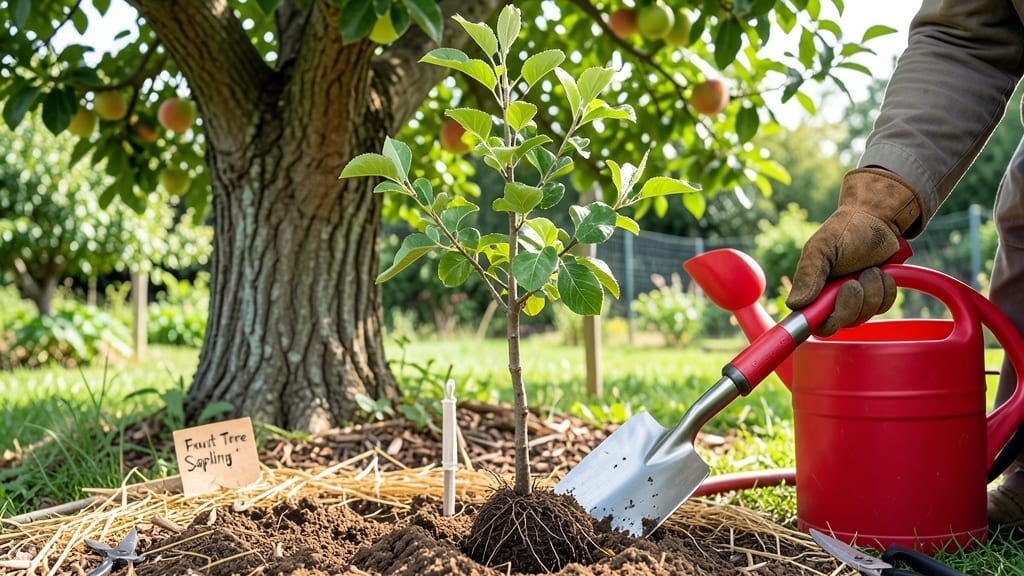
Growing fruit trees sounds intimidating, but I’ve grown five thriving trees in my backyard—some from bare roots, others in containers—with minimal pruning. The secret isn’t complicated: it’s about choosing the right variety for your climate, giving them the right start, and letting them grow naturally.
My peach tree now produces enough fruit to share with neighbors, and it took less effort than I expected.
You’ll need sunny space, well-draining soil, and patience—fruit trees reward long-term care, not constant attention. Start with dwarf or semi-dwarf varieties if space is tight; they bear fruit faster and need less pruning.
For cold climates, pick hardy apples or cherries; in warmer zones, citrus or figs thrive with minimal fuss. The key is planting deep (up to the graft union) and watering deeply but infrequently to encourage strong roots.
Once established, your tree will need only light pruning—just removing dead branches and shaping it occasionally. You’ll see the first blooms in 2-5 years, depending on the variety, and the harvest will keep coming with proper care.
The smell of ripe fruit in summer is worth every bit of effort. Even in small yards, this works—container-grown citrus on my patio proves it.
Troubleshooting is simple: yellow leaves mean overwatering; sparse fruit signals poor pollination. Most issues fix themselves with better soil prep or a little extra attention. By next summer, you’ll be picking fruit straight from your tree—and your neighbors will be jealous. Let’s get those roots in the ground!
📚 In This Guide
- What you need
- Instructions
- Tips and common mistakes
- Wrapping up and next steps
What you need
- ● Fruit tree saplings or bare-root trees: 1–3 trees (depending on space and variety—dwarf trees take up less room!)
- ● Choose disease-resistant varieties suited to your climate (e.g., Apple ‘Honeycrisp’, Peach ‘Elberta’, or Citrus ‘Meyer Lemon’ for containers).
- ● Planting hole supplies: Shovel (or trowel for smaller trees)
- ● Garden fork (for loosening soil)
- ● Compost or well-aged manure (5–10 gallons per tree)
- ● Balanced fertilizer (10-10-10 or organic option like fish emulsion)
- ● Mulch: 3–4 inches of organic mulch (wood chips, straw, or pine needles)
- ● Watering tools: Hose with adjustable nozzle or watering can
- ○ Drip irrigation kit (optional but highly recommended for efficiency)
- ● Support structures (if needed): Stakes (1–2 per tree) + soft tree ties (for young, top-heavy trees)
- ● Cage or trellis (for espalier-style training or heavy fruit like pears)
- ● Pruning shears (sharp, bypass-style for clean cuts)
- ● Tree guard or protective wrap (to deter pests like rabbits or deer)
- ● Soil test kit (to check pH and nutrient levels—ideal range: 6.0–7.0 for most fruit trees)
- ● Slow-release granules (like Osmoote) for seasonal feeding
- ● Container or large pot (15+ gallons for dwarf varieties or citrus)
Instructions for growing fruit trees with minimal pruning
Here's how I've grown healthy, productive fruit trees with just a few strategic cuts each year.
Select the Right Variety for Your Climate
Choose dwarf or semi-dwarf varieties adapted to your USDA hardiness zone—these require less pruning and produce fruit earlier. I always pick self-pollinating types like 'Honeycrisp' apples or 'Jersey' pears to eliminate the need for multiple trees. Check the tree's mature size against your available space; a 10-foot spread needs careful planning in a small yard.
Young trees come bare-root or potted. Bare-root specimens are cheaper and establish faster, but potted trees let you plant anytime. If buying potted, look for trees with a strong central leader (main upward-growing branch) and no girdling roots circling the pot. Plant within two weeks of purchase to avoid transplant shock.
Plant at the Correct Depth and Stake for Support
Dig a hole twice as wide as the root ball but no deeper—planting too low suffocates roots. Mix the native soil removed with 2 inches of compost to improve drainage and fertility. Position the tree so the graft union (visible bump near the base) sits 2-3 inches above soil level—this prevents rot and encourages strong root growth.
Backfill with the soil mix, tamping gently to eliminate air pockets. Water deeply until moisture reaches 12 inches down. Install a 4-foot stake at a 45-degree angle, tying the tree trunk loosely with rubber tree ties (not wire, which can girdle the trunk). Mulch with 3 inches of wood chips, keeping it 6 inches away from the trunk to prevent rot.
Establish Proper Watering and Fertilizing Routines
Water newly planted trees twice weekly for the first month, then taper to once a week once established. Deep watering—1-2 gallons per tree—encourages roots to grow downward. You'll know it's enough when soil 12 inches deep feels moist but not soggy. Overwatering in heavy clay soils leads to root suffocation and fungal diseases.
Fertilize in early spring with 10-10-10 granular fertilizer, applying ½ cup per inch of trunk diameter. For example, a 2-inch trunk gets 1 cup total. Avoid high-nitrogen fertilizers after mid-summer—they promote leafy growth at the expense of fruit development. Organic options like fish emulsion work well but require more frequent applications.
Perform Minimal Pruning During Dormancy and After Harvest
Prune only in late winter (before buds swell) or immediately after harvest to avoid disease entry points. Remove dead, crossing, or rubbing branches first—these compete for energy and create weak spots. Cut back to the collateral bud (side bud) just below the branch crotch to encourage outward growth.
Thin crowded branches to improve airflow, aiming for an open-center shape where light reaches the center. I never remove more than 25% of the canopy in one season—this prevents stress. Sterilize pruners between cuts with 70% isopropyl alcohol to prevent bacterial spread. Seal large cuts (over ½ inch diameter) with pruning sealant to reduce disease risk.
Monitor for Pests and Diseases Proactively
Inspect trees weekly during growing season for signs of aphids, mites, or scale insects. I treat early infestations with neem oil spray (1 tablespoon per gallon of water), applying in the evening to avoid harming bees. For fungal issues like powdery mildew, use baking soda spray (1 tablespoon baking soda + 1 teaspoon dish soap per gallon of water) every 10 days until symptoms disappear.
Preventive care matters most. Thin fruit in late spring to 6-8 inches apart—this ensures larger, higher-quality harvests. Remove mummified fruit (dried, shriveled fruit on branches) after harvest to reduce disease spores. Mulch annually with 2-3 inches of fresh wood chips to retain moisture and suppress weeds, which compete for nutrients.
Tips & tricks for growing fruit trees with minimal pruning
Here's what nobody tells you about keeping fruit trees thriving with just a few strategic cuts each year.
Variety Selection Insight: When choosing self-pollinating varieties like 'Honeycrisp' apples, verify their specific hardiness zone requirements—some labeled "zone 5" may struggle in colder microclimates. I've seen 'Honeycrisp' perform poorly in zone 5B where it should theoretically thrive; the difference came down to winter wind exposure. Check local nursery reports or extension service records for real-world performance data beyond the label.
Planting Depth Secret: The graft union's position above soil level is non-negotiable—this is where the tree's genetic identity lives. If you bury it too deep, the rootstock will take over, producing inferior fruit. I've had to dig up and replant trees where the union was buried more than 2 inches; the recovery took two seasons. Use a pencil to mark the union's original position before planting as a reference point.
Watering Technique: The "12 inches deep" moisture check is more important than the twice-weekly schedule. In sandy soils, water may drain too quickly, requiring more frequent applications. I test soil moisture by inserting a screwdriver—if it goes in easily, water again. For clay soils, you might need to water less often but more deeply to prevent compaction. Adjust based on your soil type rather than following the schedule blindly.
Pruning Timing: Late winter pruning works best when temperatures are consistently below freezing at night but above freezing during the day. This prevents shock while allowing you to see branch structure clearly. I've made the mistake of pruning too early in harsh winters—buds can still swell and freeze before they have a chance to harden off properly. Aim for the first week of February in most climates.
Pro Tips for Grow Fruit Trees
- Here's what nobody tells you about keeping fruit trees thriving with just a few strategic cuts each year.
- Variety Selection Insight: When choosing self-pollinating varieties like 'Honeycrisp' apples, verify their specific hardiness zone requirements—some labeled "zone 5" may struggle in colder microclimates.
- Planting Depth Secret: The graft union's position above soil level is non-negotiable—this is where the tree's genetic identity lives.
Frequently asked questions
Got questions about growing fruit trees with ease? Here are answers to some of the most common concerns—so you can enjoy homegrown fruit without the hassle!
How long does it take for a fruit tree to bear fruit?
Most fruit trees take 2–5 years to produce fruit, depending on the variety. Dwarf trees (like apple or peach) may fruit in as little as 1–2 years, while larger trees (like citrus) can take longer. Patience pays off—choose fast-bearing varieties if you’re eager for harvests!
Can I grow fruit trees in cold climates?
Opt for cold-hardy varieties like apple, pear, or hardy cherries (e.g., ‘Honeycrisp’ apples or ‘Colt’ cherries). Use mulch and winter wraps to protect young trees. Dwarf trees also thrive in containers, letting you move them to sheltered spots in harsh winters.
What’s the easiest fruit tree to grow for beginners?
Start with dwarf fruit trees—they’re compact, low-maintenance, and produce quickly. Top picks:
Bonus: Pollination isn’t always required (check labels for self-pollinating types).
Why aren’t my fruit trees producing fruit?
Common culprits:
- Age: Trees under 3–5 years may still be maturing.
- Pollination issues: Plant two compatible varieties nearby (or hand-pollinate with a brush).
- Over-pruning: Prune lightly to encourage blooms, not just shape.
- Nutrient deficiency: Test soil and amend with compost or citrus-specific fertilizer.
Can I grow fruit trees in containers?
Yes! Dwarf trees (under 8 ft tall) thrive in 5-gallon+ containers with:
- Well-draining soil (mix potting soil with perlite).
- Large enough pots (12+ inches in diameter for mature trees).
- Regular watering (containers dry out faster).
Wrapping up and next steps
Growing your own fruit trees is a rewarding journey that blends patience, care, and a touch of creativity! 🌱 With the right variety, minimal pruning, and a few smart strategies, you can enjoy a bountiful harvest year after year.
Whether you're a beginner or a seasoned gardener, every step—from selecting the perfect tree to nurturing it—brings you closer to fresh, homegrown fruit.
Now that you’re armed with knowledge, why not take the next step? Start small: pick one tree, plant it, and watch your garden transform. Before you know it, you’ll be sharing your harvest with friends and family—all while savoring the joy of growing something truly special! 🍏🍊