
How To
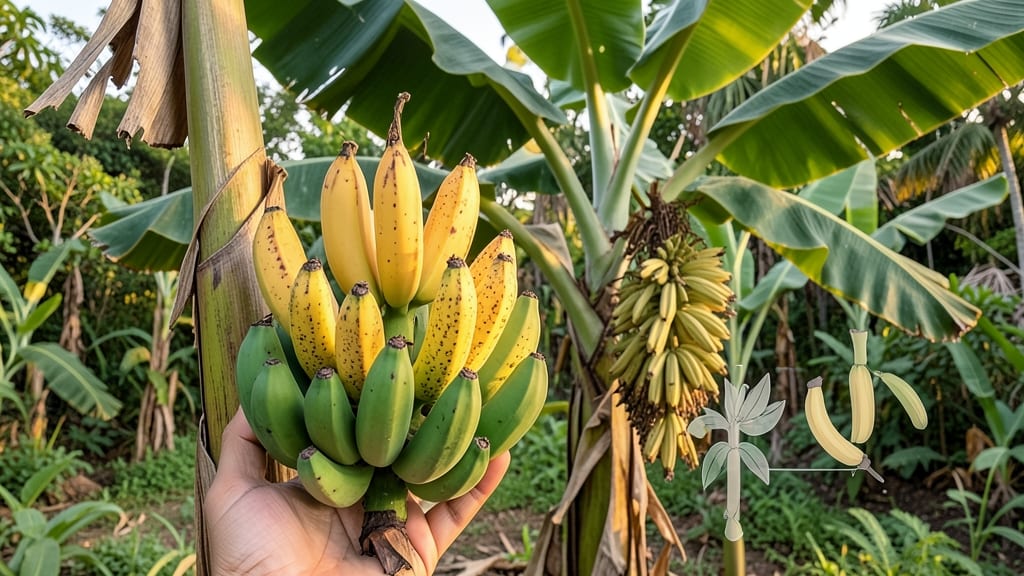
A banana tree 🍌 typically bears fruit how many times does a banana tree bear fruit—a cycle that can feel mysterious if you’re not familiar with its growth stages.
If you’ve ever watched your banana tree flower and then drop its fruit, or wondered why it seems to produce bananas in unpredictable bursts, you’re not alone. The truth is, this tropical giant follows a strict life cycle that determines when—and how often—it rewards you with a harvest.
Understanding this cycle isn’t just about patience; it’s the key to maximizing your yield and avoiding frustration. From flowering triggers to climate influences, every factor plays a role in how often your banana tree delivers.
In this guide, I’ll break down the exact stages of a banana tree’s fruiting cycle, explain why most trees produce one major harvest per year, and share tips to encourage healthier, more frequent yields—without overstressing your plant.
Banana tree fruiting cycle: how often it bears fruit in stages
Most banana trees follow a predictable fruiting cycle that typically results in one major harvest per year. This cycle spans 9 to 12 months from flowering to fruit maturity, depending on the variety and growing conditions.
Understanding this process helps you manage expectations and optimize care for a bountiful yield. The key stages—vegetative growth, flowering, and fruiting—are interconnected, and disruptions at any stage can delay or prevent fruit production.
Banana trees are monocarpic, meaning they produce a single bunch of fruit before entering a recovery phase. After fruiting, the tree’s energy shifts to regrowing leaves and rebuilding its pseudostem. This recovery period is essential for future flowering and fruiting cycles.
Hybrid varieties, like the Dwarf Cavendish, may produce 2-3 bunches per cycle under ideal conditions, but even these typically space harvests 6-12 months apart.
Climate plays a critical role in determining how often your banana tree bears fruit. Trees in tropical zones (USDA 10-12) with consistent warmth and 12+ hours of daylight may produce fruit year-round, though they still follow the same recovery cycle.
In subtropical climates, cooler winters can delay flowering or even prevent it entirely. For example, a tree in Zone 9 might only fruit once every 18-24 months if winter temperatures dip below 50°F (10°C) for extended periods.
Proper nutrient management also influences fruiting frequency. Banana trees are heavy feeders, especially during the vegetative and flowering stages. A balanced fertilizer (10-10-10 or 6-6-6) applied every 4-6 weeks during the growing season encourages robust growth and flowering.
However, over-fertilizing with nitrogen can lead to excessive leafy growth at the expense of fruit production. I’ve seen trees in my garden produce larger, healthier bunches when I switch to a potassium-rich fertilizer (e.g., 5-10-10) once flowering begins.
Watering habits directly impact fruiting cycles. Banana trees require consistent moisture, especially during flowering and fruiting. Drought stress can cause flower drop or fruit abortion, effectively halting the cycle prematurely.
I’ve learned the hard way that deep, infrequent watering (1-2 gallons 2-3 times per week) is more effective than shallow, daily watering. Mulching around the base of the tree helps retain moisture and regulates soil temperature, which is crucial for sustaining flowering and fruit development.
Light exposure is another non-negotiable factor. Banana trees thrive in full sun to partial shade, with 6+ hours of direct sunlight daily. In my experience, trees grown in low-light conditions (e.g., under dense canopy) often produce smaller bunches or fail to flower altogether.
If you’re growing bananas in containers, place them near a south-facing window or use grow lights to supplement sunlight during shorter winter days. Even a 10% reduction in sunlight can delay flowering by 2-3 months.
Some gardeners mistakenly believe that pruning or stressing the tree can force multiple harvests in a single year. While selective pruning (removing dead leaves or damaged pseudostems) can improve airflow and reduce disease, aggressive pruning to encourage secondary flowering weakens the tree and often results in smaller, lower-quality fruit.
Hybrid varieties like the Red Dacca or Ice Cream Banana are exceptions—they may produce 2-3 hands per cycle under optimal conditions, but even these require careful management to avoid exhausting the plant.
If your banana tree is healthy but not flowering, check for these common issues: inadequate sunlight, nutrient deficiencies (especially potassium or magnesium), or root stress (from overwatering or poor drainage).
I once had a tree that refused to flower until I amended the soil with compost and moved it to a sunnier spot. Sometimes, the solution is as simple as patience and adjustments—banana trees don’t rush their cycles, and forcing them can backfire.
For gardeners in cooler climates, consider growing dwarf or cold-hardy varieties like the Lady Finger or Blue Java. These varieties are more forgiving and may produce smaller but more frequent harvests (e.g., 2 bunches per year) if given proper care.
Even in less-than-ideal conditions, understanding the 9-12 month cycle helps you plan ahead—whether you’re saving seeds, preparing storage space, or simply enjoying the process of growing your own bananas.
Signs your banana tree is ready to flower and bear fruit
Spotting the right moment for your banana tree to flower can feel like decoding a secret language—until you know what to look for. Most banana trees produce one major harvest per year, but recognizing the early signs ensures you don’t miss the window.
The first clue? A dramatic change in your tree’s pseudostem, which swells noticeably as it prepares for flowering. This isn’t just growth—it’s your tree’s way of signaling, “I’m ready to fruit!”
Next, watch for leaf color shifts near the center of the plant. Healthy, mature leaves may start turning yellow or brown at the tips, while new leaves emerging from the center often appear smaller and tighter. This is your tree conserving energy for the big event: producing flowers.
If you’ve been wondering, “How many times does a banana tree bear fruit?,” the answer often hinges on these visual cues—most trees flower once annually, but hybrids like Dwarf Cavendish can sometimes produce two bunches per cycle under ideal conditions.
Don’t overlook the inflorescence—that’s the dramatic flower stalk (often purple or red) that emerges from the center of your tree. This “hand” is your tree’s most obvious signal that flowering is underway.
If you’re growing a Dwarf Cavendish or similar hybrid, you might see a second hand forming later in the year, but this is rare and requires optimal care.
Pay attention to the size and health of this stalk: a thick, vibrant one means your tree is thriving and ready to fruit.
Environmental triggers play a huge role in when your banana tree flowers. Most varieties need a cooling period—even in tropical climates—to shift from vegetative growth to flowering.
If you’re in USDA Zones 10–12, this might mean a slight dip in temperatures during late summer or early fall. Sunlight exposure also matters: trees in full sun (6+ hours daily) tend to flower more reliably.
If your tree isn’t flowering after a year, check for nutrient deficiencies (especially potassium and phosphorus) or overwatering, which can delay the process.
Once you spot these signs, act quickly! Banana flowers are highly perishable—if the stalk wilts or dries out, your tree may abort the fruit. Keep the area around the base well-mulched and water deeply every 5–7 days during the flowering phase.
Avoid fertilizing heavily now; focus on balanced nutrients to support fruit development. With the right care, your tree will go from flowering to harvest-ready bananas in 3–6 months, depending on the variety.
Pro tip: Take photos of your tree’s flowering cues to compare with future cycles. Over time, you’ll recognize the subtle shifts that mean “fruit is coming soon!” And remember—patience is key.
Even the most productive banana trees take 9–12 months from flower to fruit, so mark your calendar and enjoy the process! 🌿