
Blooming
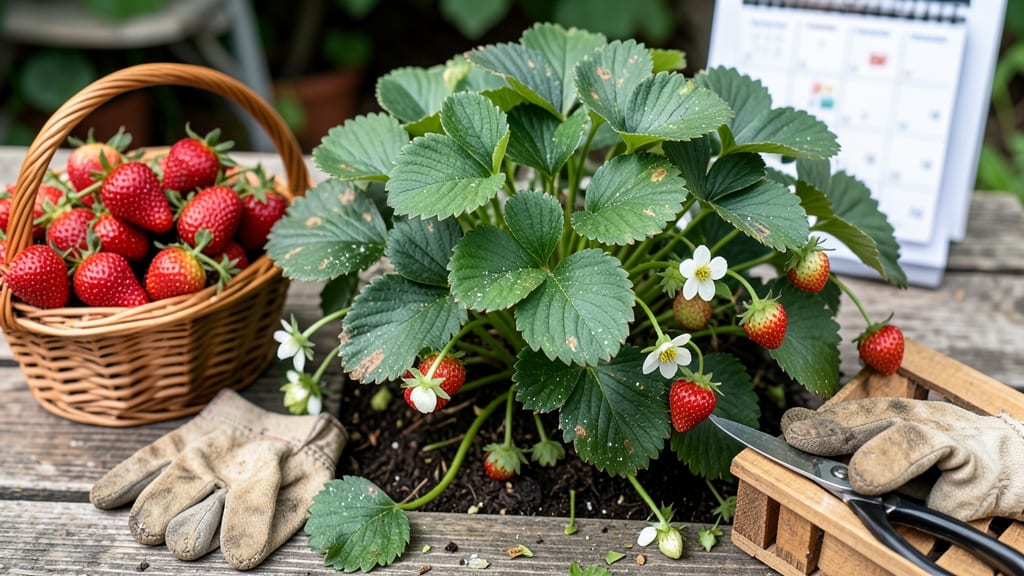
Strawberries typically produce fruit for 2-4 weeks per season, with June-bearing types delivering one concentrated harvest while everbearing and day-neutral varieties offer staggered yields from spring through fall. The right growing conditions can push this window even longer.
Understanding your strawberry variety is key to managing expectations.
June-bearing plants, for example, focus all their energy on a single massive bloom in late spring, while everbearing types produce smaller flushes every few weeks. 🌱 I've seen day-neutral varieties keep producing for months if given consistent warmth and moisture—some gardeners even harvest through light frosts with proper protection.
The secret lies in balancing sunlight exposure, soil nutrients, and water consistency.
Did you know that strawberries can actually produce fruit year-round in ideal climates? While most home gardeners in temperate zones see seasonal production, tropical varieties like 'Camarosa' or 'Albion' can keep fruiting continuously when grown in USDA zones 8-10.
The trick is maintaining soil temperatures above 55°F and providing consistent moisture without waterlogging.
💡 In This Article
- Strawberry Varieties and Their Fruit Production Cycles
- Extending Strawberry Harvest Seasons with Gardening Strategies
Strawberry varieties and their fruit production cycles
The biological differences between strawberry varieties determine how long they produce fruit. June-bearing types, like 'Jewel' or 'Chandler,' focus their energy on a single massive bloom in late spring, typically yielding fruit for just 2-3 weeks.
This concentrated production happens because they store energy over winter to fuel one big flowering event triggered by 14-16 hours of daylight in spring. The flowers emerge in clusters, and each cluster develops into fruit over 20-30 days, creating that familiar peak harvest window.
Everbearing varieties, such as 'Seascape' or 'Ozark Beauty,' produce fruit in two main flushes—one in early summer and another in fall—with smaller yields between.
The key difference is their ability to flower multiple times when day lengths are between 12-14 hours, a trait controlled by the FLC (Flowering Locus C) gene.
Day-neutral varieties like 'Albion' or 'Tristar' take this further by producing fruit continuously from spring through fall, as long as temperatures stay above 55°F. Their unique genetic makeup means they don't rely on specific daylight triggers, making them ideal for extended harvests.
What most gardeners don't realize is how temperature influences these cycles. June-bearing plants need chilling hours (300-500 hours below 45°F) during winter to initiate flowering, while everbearing and day-neutral types are more flexible. Without proper chilling, June-bearing varieties may produce fewer flowers or even skip fruiting entirely.
The trade-off? Everbearing types may yield smaller berries because their energy is spread across multiple fruiting cycles rather than one big push. 🌡️
Here's where the science gets interesting: strawberries use a process called photoperiodism to regulate flowering. June-bearing plants detect increasing daylight in spring and trigger flowering hormones, while day-neutral types ignore daylight cues and focus on temperature and growth conditions.
This is why you'll see June-bearing plants produce all their fruit in one go, while day-neutral varieties might keep bearing for 3-4 months if conditions are ideal. The choice of variety directly impacts your harvest timeline and planning.
Consider these key factors when selecting varieties for your garden:
- Climate zone: June-bearing thrive in cooler regions (USDA zones 3-7), while day-neutral perform better in warmer zones (8-10)
- Harvest goals: June-bearing for large berries in short time; day-neutral for continuous supply
- Maintenance: Everbearing types need more frequent pruning to encourage multiple fruiting cycles
The berry size difference also plays a role in production timing. June-bearing varieties often produce 1-2 inch berries in massive quantities, while day-neutral types might yield smaller ½-1 inch berries over a longer period. This trade-off affects both yield quantity and the duration of your harvest window. 🍓