
How To
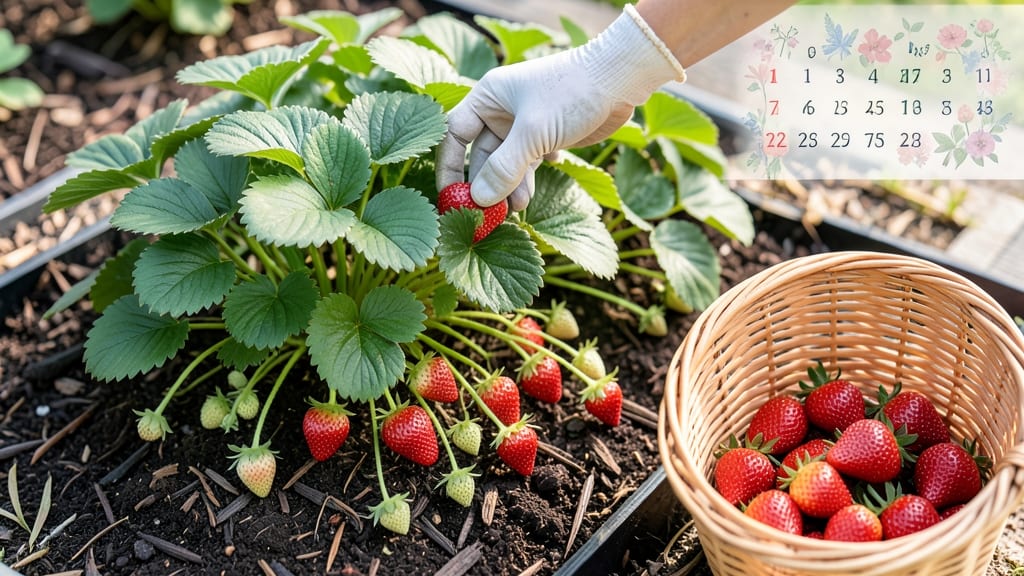
Strawberries produce fruit for 3 distinct phases in a single season — not just one burst like you might expect.
Wondering why your strawberry plants aren’t producing fruit year-round? The answer lies in their unique 3-phase bearing cycle — and understanding it could double your harvest this season.
June-bearing varieties deliver their main crop in June-July, but everbearing types stretch production into late summer with two smaller harvests. Even then, proper pruning and care can extend the season further.
Below, I break down each phase, how to maximize your yield, and the common mistakes that cut production short — so you can enjoy 🍓 from spring through fall.
The 3-Phase strawberry fruit production cycle explained
Strawberries don’t produce fruit continuously—they follow a 3-phase bearing cycle that determines how long they fruit each season. Understanding these phases helps you plan for June-bearing, everbearing, or day-neutral varieties.
Each phase offers a unique harvest window, and knowing when to expect fruit can double your yearly yield.
First, let’s clarify the 3 key phases: the primocane phase (new growth), the florocane phase (fruit production), and the renewal cycle (preparing for next year). These phases explain why some gardeners get just one harvest while others enjoy multiple fruiting periods per season.
The summary table below breaks down how long strawberries produce fruit in each phase for June-bearing vs. everbearing varieties, along with key timing variations by climate zone. This visual guide makes it easy to compare and plan your strawberry harvest schedule.
The primocane phase is all about new growth—these are the long, leafy stems that emerge in late summer. In June-bearing varieties, these stems won’t fruit until the following year. However, in everbearing or day-neutral types, these same stems can produce a small fall harvest if temperatures stay mild.
Next comes the florocane phase, where the magic happens. For June-bearing strawberries, this is your single, massive harvest window—typically 4–6 weeks in late spring to early summer.
Everbearing varieties, on the other hand, offer two distinct harvests: one in spring and another in fall, stretching their fruiting season to 8–12 weeks total.
Finally, the renewal cycle is when strawberries rest and regenerate. June-bearing types enter dormancy after their main harvest, while everbearing varieties might produce a light winter harvest in warmer climates like Zone 8+.
This phase is critical for next year’s yield, so avoid pruning or fertilizing during dormancy.
Climate plays a huge role in these phases. In cooler zones (5–7), June-bearing varieties dominate, delivering one heavy harvest in June–July. But in warmer zones (8–10), everbearing types thrive, offering spring, summer, and fall harvests—sometimes even year-round with proper care.
One common misconception is that strawberries fruit continuously, but their 3-phase cycle means production is seasonal and strategic. By aligning your planting with these phases—especially for everbearing types—you can enjoy fresh strawberries for months, not just weeks.
Pro tip: If you’re in a short-season climate, plant a mix of June-bearing (for a big summer harvest) and everbearing (for fall fruit). This extends your harvest window by up to 3 months compared to June-bearing alone.
Understanding these phases isn’t just about timing—it’s about maximizing your plants’ potential. With the right variety and care, your strawberries can fruit for half the year instead of just a few weeks.
Now that you know the 3-phase cycle, you’re ready to plan your strawberry patch for longer, more abundant harvests—no more wondering why your plants aren’t producing year-round!
How to maximize strawberry fruit production in each seasonal phase
Strawberries follow a 3-phase bearing cycle, and understanding each phase helps you maximize fruit production year after year. The key is adjusting your care routine to match what your plants need during primocane production, florocane fruiting, and renewal phases.
Let’s break down how to optimize each stage for bigger harvests.
For June-bearing varieties, fruit production happens primarily in one 2-4 week window during spring, while everbearing varieties produce two smaller harvests—spring and fall. Day-neutral varieties offer continuous production from late spring to frost. Your goal? Extend these fruiting windows by fine-tuning care at the right time.
📌 Seasonal Care Checklist for Maximum Strawberry Yield
-
🌱 Primocane Phase (Summer-Fall)
📍 Action: Remove first-year flowers on June-bearing plants to boost next year’s yield. For everbearing, let some flowers set fruit. -
🍓 Florocane Phase (Spring)
📍 Action: Apply balanced fertilizer (10-10-10) at first signs of flowers and mulch with straw or pine needles to retain moisture. -
🌿 Renewal Phase (Late Summer)
📍 Action: Prune dead florocanes after harvest and thin runners to focus energy on new primocanes for next season. -
❄️ Winter Protection
📍 Action: Mulch with 6+ inches of straw in USDA Zones 5-7 to prevent frost damage to crowns. -
☀️ Spring Revitalization
📍 Action: Remove old mulch and add compost before new growth emerges to replenish nutrients.
In warmer climates (Zones 8-10), strawberries can produce year-round with proper care. Focus on consistent watering (1 inch per week) and shade cloth during peak summer heat to prevent sunburn. For cooler zones (Zones 3-6), prioritize early spring fertilization and late-season mulching to protect roots.
One common mistake? Over-pruning runners in summer. While removing excess runners helps established plants, everbearing varieties need some runners to produce fall fruit. Balance is key—remove only 50% of runners to maintain production while controlling spread.
For container-grown strawberries, adjust care slightly: use potting mix with perlite, water daily in summer, and fertilize every 3 weeks with a half-strength liquid feed. Containers dry out faster, so monitor soil moisture closely—dry soil = smaller berries.
By aligning your care with each phase’s needs, you’ll transform a single summer harvest into multiple yields per year. Start with the primocane phase this summer, and watch your strawberry patch thrive through all seasons! 🌱