
Planting
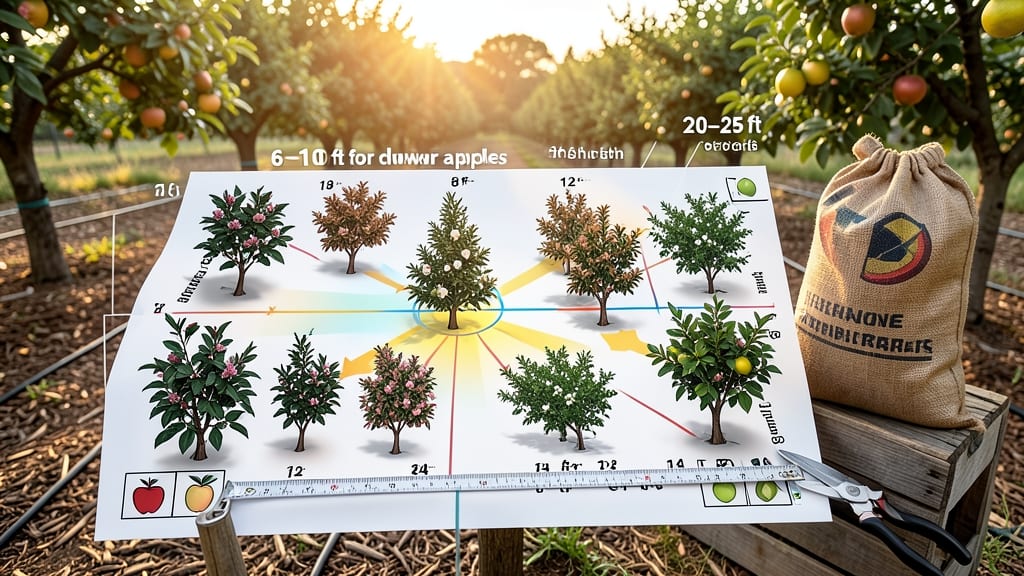
A fruit tree spacing chart shows you should plant full-sized trees 10-25 feet apart, dwarf varieties 8-12 feet apart, and espaliered or semi-dwarf types 5-8 feet apart, based on their mature size and root spread to maximize sunlight, airflow, and nutrient access. Always verify spacing for your specific tree varieties.
A fruit tree's spacing needs go beyond just numbers—they're about creating an ecosystem where each tree thrives. 🌳 Overcrowding forces trees to compete for water and nutrients, leading to weaker growth and smaller fruit.
I've seen orchards where trees were planted too close, resulting in stunted peach trees with poor yields after just five years. The right spacing also prevents fungal diseases by improving airflow between branches.
For example, apple trees need 15-25 feet of space to develop strong root systems, while citrus trees can handle 8-12 feet in warmer climates where their growth is more compact. Urban gardeners often use dwarf varieties, but even these benefit from proper spacing to prevent root competition.
Always consider your local climate—windy areas may need slightly wider spacing to prevent branch damage.
💡 In This Article
- How Fruit Tree Spacing Affects Growth and Yield
- Best Spacing for Popular Fruit Trees by Variety
How fruit tree spacing affects growth and yield
Proper spacing creates a balanced ecosystem where trees access sunlight, water, and nutrients without competing. When trees are too close, their roots tangle underground, forcing them to fight for moisture and minerals.
This competition weakens structural roots, reducing a tree's ability to anchor itself and absorb nutrients—leading to smaller fruit and shorter lifespan.
For instance, apple trees with 15-25 feet of space develop root systems that spread 3-5 feet wide, while crowded trees may only spread 1-2 feet, limiting their stability and productivity.
Sunlight exposure is another critical factor. Trees need 6-8 hours of direct sunlight daily for photosynthesis, but overcrowding creates shaded areas where branches struggle to produce energy. The outer canopy gets full sun, but inner branches often become leggy and produce poor-quality fruit.
Airflow also suffers—humid conditions between crowded trees trap moisture, creating ideal environments for fungal diseases like powdery mildew or apple scab. I've seen peach orchards where poor spacing led to 30% yield loss due to fungal infections within three years.
Traditional orchard layouts use wide spacing (25-30 feet) for full-sized trees, allowing machinery access and easier maintenance. High-density orchards, however, pack trees closer (8-12 feet) using dwarf or semi-dwarf varieties, which reduces land use but requires intensive pruning and training.
These systems maximize yield per acre but demand more labor and expertise. For home gardens, a 10-15 foot spacing often balances productivity and manageability while preventing root overlap.
Soil type plays a surprising role too. Heavy clay soils slow root growth, so trees need extra space (20-25 feet) to develop adequate drainage. Sandy soils, however, allow roots to spread faster, so slightly closer spacing (15-20 feet) may suffice.
Always consider your local climate—windy coastal areas may need wider spacing to prevent branch breakage, while sheltered inland spots can handle tighter arrangements.
What most gardeners overlook is how spacing affects fruit quality. Trees with adequate room produce larger, sweeter fruit because they allocate more energy to fruit development rather than survival. For example, a properly spaced pear tree yields fruit that's 20-30% heavier than one grown in crowded conditions.
The trade-off? Wider spacing means fewer trees per acre, but the long-term benefits in fruit size, flavor, and tree health make it worthwhile.
Here's a quick comparison of two approaches:
- Traditional spacing: 25-30 feet apart, fewer trees per acre, lower maintenance, ideal for large properties
- High-density spacing: 8-12 feet apart, more trees per acre, higher labor needs, best for commercial orchards
For home growers, I recommend starting with 12-15 feet spacing—enough to prevent competition while keeping the orchard manageable. 🌱