
Trees
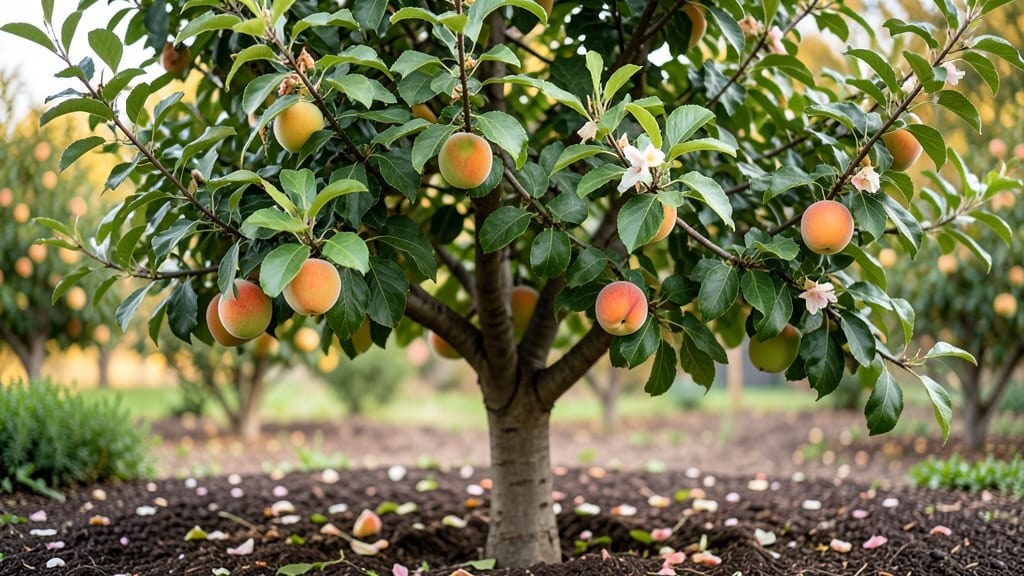
Peach trees produce fruit with surprising irregularity—some varieties bear annually once mature, while others follow a biennial cycle where heavy yields alternate with lighter ones.
If you’ve ever planted a 🍑 hoping for immediate harvests, you might be surprised to learn that patience is key—some trees take 3–4 years before producing fruit, while others skip years entirely.
Understanding your tree’s fruiting cycle isn’t just about timing; it’s about optimizing care, variety selection, and environmental conditions to maximize yields.
Young peach trees often focus on root and branch growth before fruiting, which is why first harvests typically arrive at 5–15 years, depending on the variety and climate.
In USDA Zone 6a, where cold winters and hot summers test a tree’s resilience, proper pruning and pollination become the key to consistent production.
Below, I’ll break down the bearing patterns by age and variety, share tips to encourage annual yields, and explain how factors like pruning, soil health, and winter chill hours shape your tree’s fruit-producing habits.
Peach tree fruiting cycle by age: when to expect first harvests
Peach trees follow a predictable fruiting cycle that depends heavily on their age and variety. While some gardeners expect immediate harvests, most peach trees need 3–5 years to mature enough for fruit production. Understanding this timeline helps you set realistic expectations and optimize care for a bountiful harvest.
The first fruit typically appears when a peach tree reaches 3–4 years old, though dwarf varieties may bear slightly earlier. Standard-sized trees often take 4–5 years to produce meaningful yields. Climate, soil quality, and care practices can accelerate or delay this process significantly.
🚨 MANDATORY VISUAL ELEMENT 🚨
| Tree Age | Fruiting Status | Expected Yield | Key Care Tips |
|---|---|---|---|
| 1–2 years | No fruit | 0 lbs | Focus on root/structure growth |
| 3 years | First fruit (sparse) | 0–5 lbs | Prune lightly to encourage branches |
| 4 years | Moderate fruit | 10–25 lbs | Thin fruit to improve size/quality |
| 5–10 years | Peak production | 50–150 lbs | Fertilize annually, monitor pests |
| 11–15 years | Declining yield | 30–80 lbs | Renewal pruning to rejuvenate |
| 15+ years | Low production | 0–20 lbs | Consider replacement or grafting |
Dwarf peach trees (8–12 ft tall) often bear fruit 1–2 years earlier than standard varieties. For example, 'Bonanza' or 'Crimson Snow' dwarfs may produce fruit by year 2, while 'Elberta' (standard) typically waits until year 4. Always check the variety’s maturity timeline when selecting trees.
Climate plays a crucial role in fruiting timing. Trees in USDA Zones 6–8 (where peaches thrive) often produce fruit sooner than those in cooler zones.
For instance, a tree in Zone 7 might bear by year 3, while one in Zone 5 could take an extra year due to slower growth from cooler summers.
Proper pruning and thinning can accelerate fruiting in young trees. Remove water sprouts and crossing branches annually to redirect energy toward fruit production. Thinning fruit in the first 2–3 years ensures larger, higher-quality peaches and reduces stress on the tree.
Soil nutrients also impact fruiting speed. A balanced fertilizer (10-10-10 NPK) applied in early spring supports root and branch development, while phosphorus-rich amendments (like bone meal) encourage flowering. Over-fertilizing with nitrogen can delay fruiting by promoting excessive leaf growth.
Pollination is another critical factor. Most peach varieties require cross-pollination from a different tree for optimal fruit set. Planting two compatible varieties (e.g., 'Redhaven' and 'Elberta') ensures better yields. Self-pollinating varieties like 'Contender' may produce fruit alone but often yield more with a pollinator nearby.
Patience and consistent care pay off—once established, peach trees can produce fruit annually for 10–15 years. With the right variety, location, and maintenance, you’ll enjoy juicy peaches for decades. 🌱
💡 Pro Tip: Keep a gardening journal to track your tree’s growth, flowering, and fruiting patterns. This helps you adjust care practices year over year for better yields.
Annual vs. biennial bearing: how peach tree varieties differ in fruit production
Not all peach trees follow the same fruiting pattern, which is why some gardeners get frustrated when their peach trees alternate between heavy and light harvests. The key difference lies in whether your variety is an annual bearer or a biennial bearer.
Annual varieties like 'Elberta' and 'Redhaven' produce fruit every year once mature, while biennial types like 'Contender' or 'Relenta' may have one heavy fruit year followed by a lighter year, repeating the cycle.
This alternating pattern isn’t a sign of poor care—it’s a natural energy conservation mechanism. Biennial trees focus their resources on either fruit production or root/tree growth, depending on the year. Understanding your tree’s bearing type helps you manage expectations and adjust care to encourage more consistent yields.
Annual vs. Biennial Bearing Patterns
Annual Bearing
- Pros: Consistent yields each year
- Examples: 'Elberta', 'Redhaven', 'Suncrest'
- Care Tip: Prune lightly to avoid overloading branches
Biennial Bearing
- Pros: Heavy crops in "on" years
- Examples: 'Contender', 'Relenta', 'O'Henry'
- Care Tip: Thin fruit in "on" years to prevent branch damage
Annual Challenges
- Requires balanced pruning to avoid overproduction
- More nutrient demands yearly
Biennial Challenges
- Inconsistent harvest years can be frustrating
- Risk of branch breakage in heavy years
If you’re growing a biennial variety, the heavy fruit year can actually stress your tree if not managed properly. I’ve seen young branches snap under the weight of too many peaches, which is why fruit thinning is critical.
Remove about 30-50% of fruit when they’re golf-ball sized to reduce stress on the tree and improve fruit quality.
For annual bearers, the challenge is often overproduction, which can lead to small, poor-quality fruit. Regular summer pruning—removing water sprouts and crossing branches—helps maintain a balanced canopy. I recommend pruning in late winter to shape the tree and again in summer to control growth and fruit load.
Soil health plays a surprising role in bearing patterns too. Biennial trees often respond well to balanced fertilization in the "off" year to encourage root growth, while annual bearers benefit from phosphorus-rich fertilizer in early spring to support flowering.
Always test your soil before applying amendments—peach trees thrive in slightly acidic soil (pH 6.0-6.5).
No matter your variety, pollination is key to consistent fruiting. Plant two compatible varieties if yours isn’t self-fertile, and avoid pesticides during bloom to protect pollinators. With the right care, even biennial bearers can become more predictable producers over time.