
Trees
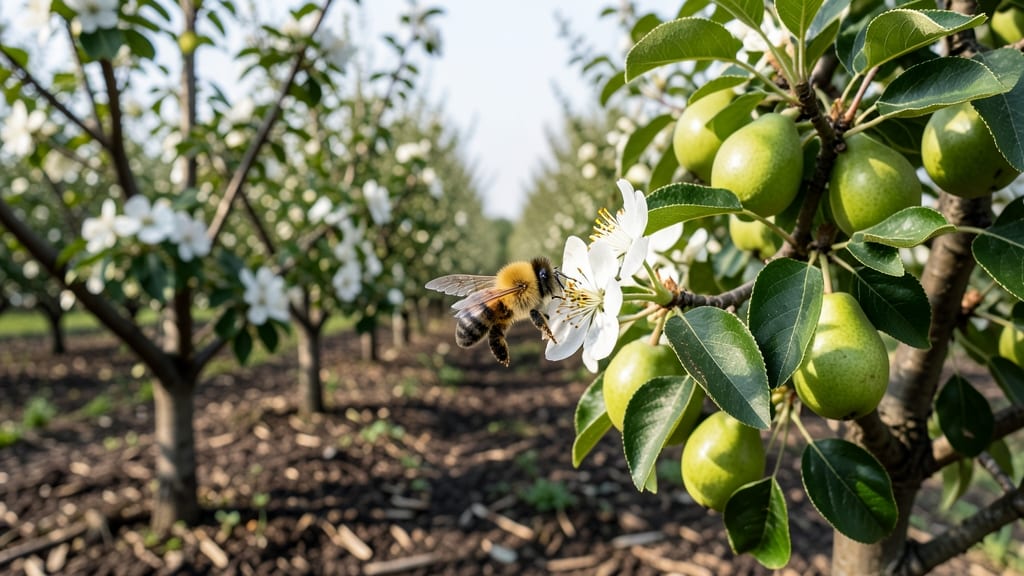
To produce fruit, you do need 2 pear trees for cross-pollination in most varieties since they depend on bees carrying pollen between different types. However, self-fertile types like Bartlett, Anjou, and Seckel can bear fruit alone without needing a second tree.
Cross-pollination happens when bees transfer pollen from one pear tree's flowers to another's, triggering fruit development. 🌸 Without a second tree, most varieties won't set fruit because their pollen and stigma aren't compatible.
The exceptions—Bartlett, Anjou, and Seckel—produce both pollen and receptive stigma, making them self-sufficient. This biological quirk saves gardeners space while still delivering sweet, juicy pears.
For those without room for two trees, these self-fertile varieties offer a practical solution. Planting just one Bartlett tree, for example, can yield abundant fruit, though yields may be slightly lower than with cross-pollinated pairs. The key is choosing the right variety and ensuring proper care to maximize fruit set.
💡 In This Article
- How Cross-Pollination Works in Pear Trees
- 3 Self-Fertile Pear Trees That Fruit Alone
How cross-pollination works in pear trees
Pear trees rely on a delicate biological process called cross-pollination, where pollen from one tree's flowers must fertilize another's to produce fruit. The flowers contain both male (pollen-producing anthers) and female (pollen-receptive stigma) parts, but most varieties can't fertilize themselves effectively.
This is because their pollen and stigma mature at slightly different times, creating a natural incompatibility that prevents self-pollination. 🌸
Bees play the starring role in this process, transferring pollen from tree to tree as they forage for nectar. A single bee can carry up to 2 million pollen grains on its body, ensuring efficient transfer between compatible varieties.
The timing is critical—pear flowers typically bloom in late spring (April-May), and fruit set depends on successful pollination during this 7-10 day window. Without a second tree, most varieties produce little to no fruit because their flowers lack the genetic diversity needed for proper fertilization.
This biological mechanism explains why gardeners often need two trees: one acts as the pollen donor, while the other receives it. The exceptions—self-fertile varieties—have evolved to produce both viable pollen and receptive stigma simultaneously, allowing them to fruit alone.
For example, Bartlett pears can achieve up to 80% fruit set when planted solo, though yields may still benefit from cross-pollination.
Temperature and weather also influence pollination success. Cold spring nights (below 45°F) can disrupt bee activity, while rainy conditions may wash away pollen before it reaches the stigma.
This is why some regions with unpredictable spring weather see lower fruit yields unless gardeners plant multiple compatible varieties to ensure backup pollination sources.
For those growing pears commercially or in orchards, this process is carefully managed by planting multiple varieties in close proximity. Even self-fertile trees often produce better yields when paired with another variety, as the additional pollen increases fruit set and size.
The science behind this involves a balance of genetics, environmental conditions, and pollinator activity—all working together to turn blossoms into sweet, juicy pears.