
Picking
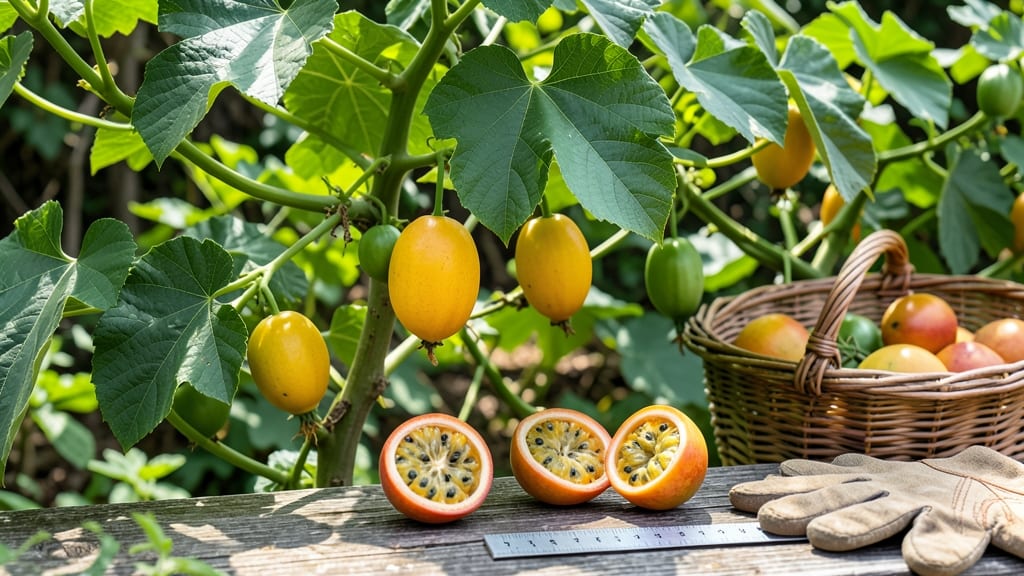
Passionfruit do not ripen off the vine after being picked—they may soften but lose their peak sweetness and flavor intensity. For the best taste, harvest them when fully mature on the vine, then store at room temperature to preserve quality, or refrigerate for up to 1 week.
Unlike many tropical fruits, passionfruit rely on the vine to develop their signature sweetness and complex flavor profile. 🌿 When detached, they soften but never reach the same level of ripeness or sugar concentration, which is why vine-ripened fruit always tastes more vibrant.
The key difference lies in ethylene production—the natural ripening hormone—which continues only while attached to the plant.
If you've picked passionfruit that aren't fully ripe, don't despair. Placing them in a paper bag with a banana (which emits ethylene) for 24 hours can help jumpstart the softening process.
For storage, keep them at room temperature until ready to use, as cold temperatures accelerate moisture loss and dull the flavor. Once cut open, always refrigerate the remaining pulp to prevent spoilage.
💡 In This Article
- How Passionfruit Ripening Works on and Off the Plant
- Best Practices for Storing Picked Passionfruit
How passionfruit ripening works on and off the plant
Passionfruit ripening is a fascinating biological process that hinges on the vine's ability to produce ethylene gas—the same hormone that triggers softening and sugar development in many fruits.
While attached, the vine continuously supplies nutrients and ethylene, allowing the fruit to develop its signature 15-20% sugar content and complex flavor profile that includes tropical, floral, and citrus notes. The flesh's vibrant yellow-orange color also deepens as carotenoids develop during this vine-dependent maturation.
Once detached, passionfruit can soften slightly due to residual ethylene, but the sugar conversion process halts abruptly. Studies show vine-ripened passionfruit contain 30-40% more soluble solids (the compounds responsible for sweetness) than those picked early and allowed to soften off the plant.
The flesh also becomes more gelatinous—a quality chefs prize for sauces and desserts—because the pectin structure continues to break down only while connected to the vine's nutrient supply.
What makes this particularly interesting is the fruit's dual-layer structure. The outer rind hardens as it matures on the vine, protecting the delicate pulp inside, while the inner arils develop their signature tart-sweet balance through enzymatic activity that only occurs at peak vine maturity.
When you pick passionfruit early, you're essentially freezing this flavor development process, which is why even "ripe-looking" fruit can taste flat or mealy when compared to vine-ripened specimens.
The temperature plays a crucial role too. Passionfruit vines thrive in 75-85°F conditions, and this warmth triggers optimal ethylene production. Once picked, storing them at 65-70°F (room temperature) slows moisture loss but doesn't restart the ripening process.
Below 50°F, the fruit's cellular structure begins to degrade, accelerating the loss of that prized tart-sweet flavor profile that takes weeks to develop on the vine.
Here's what happens chemically: The vine's chlorophyll breaks down as the fruit matures, revealing the carotenoids that give passionfruit their signature color. Simultaneously, starches convert to sugars through a process called glycolysis, which stops abruptly when the fruit is detached.
This is why passionfruit picked at 70-80% maturity (when the rind turns from green to yellow) can never fully reach the flavor complexity of vine-ripened fruit, even if they soften afterward.
For the home gardener or market shopper, this means timing is everything. The ideal passionfruit will have a slightly wrinkled rind and give just slightly when gently squeezed—signs it's reached peak vine maturity.
Once picked, these fruits will maintain their quality for 3-5 days at room temperature before flavor degradation begins, making proper vine selection the single most important factor in achieving that restaurant-quality passionfruit taste at home.