
Pruning
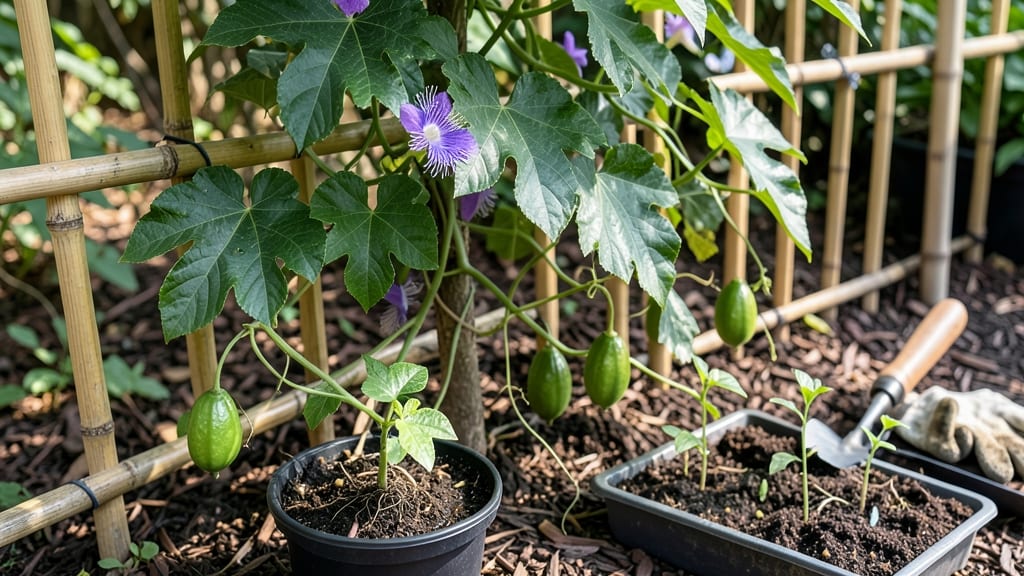
Planting passionfruit vines starts with the right conditions—warmth, humidity, and a sturdy trellis. 🌿 I’ve watched these vines climb and fruit in just six months, turning a bare corner of my yard into a tropical oasis.
The key isn’t just soil or water, but patience—these vines need time to establish roots before they reward you with those sweet, exotic fruits. You’ll need well-draining soil, a sunny spot with at least 6 hours of light daily, and a trellis or fence for support.
Passionfruit thrives in zones 9-11, but with a greenhouse or container, cooler climates can grow them too. Start with cuttings (more reliable than seeds) and plant in spring after the last frost—roots need warmth to take hold.
Once planted, keep the soil moist but not soggy, and fertilize lightly every 4-6 weeks with a balanced formula. The first year focuses on growth, not fruit—expect vines to climb 10-15 feet if given space. Prune leggy growth early to encourage bushier, fruit-bearing branches.
By summer’s end, you’ll see the first buds forming. The real magic happens in 6-8 months, when the vines burst with golden or purple passionfruit—each one a burst of tropical flavor. Here’s how to set yours up for success.
📚 In This Guide
- What you need
- Instructions
- Tips and common mistakes
- Wrapping up and next steps
What you need
- ● Passionfruit vines: 2–3 healthy plants (choose varieties like Purple Passionfruit or Sweet Granadilla for best results).
- ● Well-draining soil: Mix of topsoil, compost, and perlite (ratio: 60% soil, 30% compost, 10% perlite).
- ● Support structure: Trellis, fence, or sturdy wire frame (at least 8–10 feet tall for optimal growth).
- ● Organic fertilizer: Balanced fertilizer (e.g., 10-10-10) or compost tea for nutrient-rich soil.
- ● Mulch: Straw or wood chips (2–3 inches thick) to retain moisture and suppress weeds.
- ● Pruning tools: Bypass pruners (for clean cuts)
- ● Loppers (for thicker stems)
- ● Gloves & long sleeves (passionfruit vines have thorns!)
- ● Drip irrigation system (for consistent watering, especially in hot climates).
- ● Potting mix (if starting indoors or in containers).
- ● Fruit thinning scissors (to remove excess flowers/fruit and boost yield).
- ● Pest control: Neem oil or insecticidal soap (for aphids/mites).
- ● Sunlight meter (to ensure 6+ hours of direct sun daily).
Step-by-step instructions for planting passionfruit vines
Here's how to get your tropical vines thriving—and fruiting—in just six months.
🌱 Step 1: Choose the Right Location and Prepare the Soil
Passionfruit vines crave warmth and sunshine, so pick a spot that gets at least 6-8 hours of direct sunlight daily. Partial shade works in hotter climates, but fruit production slows dramatically. I always test the soil first—passionfruit thrives in well-draining, slightly acidic soil with a pH between 6.0 and 7.0. If your soil is heavy clay, mix in 2-3 inches of compost and a handful of perlite to improve drainage.
Dig a hole twice as wide as the root ball but only as deep as the container it came in. Loosen the sides of the hole with a shovel to encourage root spread. The reason we don’t bury the vine too deep is that passionfruit roots need oxygen, and compacted soil suffocates them. If you're planting in a container, use a pot at least 12 inches deep and 18 inches wide—these vines grow fast and need space.
🪴 Step 2: Plant the Vine and Water Deeply
Gently remove the vine from its container and place it in the hole, ensuring the top of the root ball sits level with the surrounding soil. Spread the roots outward—don’t bunch them—so they can establish quickly. Fill the hole with soil, pressing lightly to remove air pockets, but don’t compact it too tightly. Water immediately after planting to settle the soil and eliminate gaps.
Give the vine 1-2 gallons of water right away, soaking the root zone thoroughly. You’ll know it’s done when water runs out the drainage holes (if in a container) or puddles briefly on the surface. Mulch around the base with 2-3 inches of organic mulch, like wood chips or shredded leaves, to retain moisture and keep roots cool. Just keep the mulch 2 inches away from the stem—too close invites rot.
☀️ Step 3: Train the Vine and Provide Support
Passionfruit vines grow 15-20 feet in a single season, so install a strong trellis, fence, or arbor before planting. I use a 6-foot tall T-post trellis for small gardens and a permanent arbor for larger spaces. The moment the vine reaches 12 inches tall, gently weave the main stem through the trellis and tie it loosely with soft plant ties or old fabric strips. Never use wire—it cuts into the tender stems.
Prune any side shoots that form in the first 6-8 weeks to encourage a single strong leader. This might seem counterintuitive, but letting the vine focus its energy on one main stem speeds up fruiting. Once the vine climbs, it’ll produce side shoots naturally—those are the branches where fruit develops. Watch for new growth at the leaf axils (the angle between the stem and leaf)—these are your future fruiting zones.
💧 Step 4: Water and Fertilize for Rapid Growth
Water deeply 2-3 times per week during the first 3 months, keeping the soil consistently moist but not soggy. Passionfruit vines are drought-tolerant once established, but young plants need steady moisture to root deeply. You’ll know it’s time to water when the top 2 inches of soil feel dry to the touch. Avoid wetting the leaves—water at the base in the morning to prevent fungal diseases.
Feed the vine every 4-6 weeks with a balanced, water-soluble fertilizer (like 10-10-10) mixed at half-strength. I switch to a low-nitrogen, high-phosphorus fertilizer (like 5-10-10) once flowers appear to encourage fruiting. Stop fertilizing 6 weeks before the first frost—new growth won’t harden off in time. You’ll see dark green, glossy leaves as a sign the vine is thriving, and tiny purple or red flowers by month 4 if all goes well.
⏰ Step 5: Prune and Protect for Year-Round Success
In late winter or early spring, prune back one-third of the previous year’s growth to encourage new, vigorous shoots. Cut just above a leaf node (the bump where leaves grow) to promote branching. Remove any dead, diseased, or crossing branches—this improves airflow and reduces pests. If you’re in a cold climate, wrap young vines in burlap or frost cloth during unexpected frosts, but avoid plastic, which traps moisture and causes rot.
Watch for passionfruit wood borers (tiny holes in stems) and aphids (sticky residue on leaves). I spray neem oil monthly as prevention—it’s organic, safe, and keeps pests at bay. By month 6, you should see blooms transitioning to fruit, and with proper care, your first harvest arrives 8-12 months after planting. Patience pays off—these vines reward consistency with sweet, tropical fruit for years.
Tips & tricks for planting passionfruit vines
Here’s what I’ve learned after growing these vines for years—these little details make all the difference between a struggling plant and a fruit-bearing powerhouse.
Sunlight Secret: While 6-8 hours of sunlight is the minimum, I’ve found that vines in full sun (8+ hours) produce fruit twice as fast. If your location gets intense afternoon sun, consider partial shade during the hottest hours—especially in climates where temperatures exceed 90°F. The key is balancing heat and light; too much direct sun can scorch tender new leaves while too little slows fruiting dramatically.
Root Ball Rescue: When removing your vine from its container, I’ve learned to gently squeeze the root ball to loosen it—this prevents roots from circling, which can strangle growth. If you notice roots growing in tight circles, use your fingers to gently tease them apart before planting. This simple step can double your vine’s early growth rate by allowing roots to spread naturally into the soil.
Watering Wisdom: The 1-2 gallons of water right after planting should soak the entire root zone, but don’t let it pool around the stem. I’ve seen many gardeners make the mistake of watering lightly multiple times instead of thoroughly once. For container-grown vines, check that water drains completely—soggy soil leads to root rot faster than you’d think. A moisture meter helps here, but even a simple finger test works: if the top 2 inches feel dry, it’s time to water again.
Trellis Timing: Installing your trellis before planting saves you from wrestling with a 15-foot vine later. I’ve used everything from simple T-posts to permanent arbors, but the critical detail is spacing: leave 12-18 inches between the vine and trellis at planting time. As the vine grows, it’ll naturally weave itself through the structure. If you wait until the vine is already climbing, you risk damaging stems or creating weak attachment points that can snap in wind or rain.
Pro Tips for Planting Passionfruit Vines
- Here’s what I’ve learned after growing these vines for years—these little details make all the difference between a s...
- Sunlight Secret: While 6-8 hours of sunlight is the minimum, I’ve found that vines in full sun (8+ hours) produce fru...
- Root Ball Rescue: When removing your vine from its container, I’ve learned to gently squeeze the root ball to loosen ...
Frequently asked questions
about planting passionfruit vines—here’s what you need to know before diving in!How long does it take for passionfruit vines to bear fruit after planting?
With ideal conditions, expect passiflora edulis vines to produce fruit within 12–18 months of planting. Dwarf varieties may fruit slightly faster (9–12 months), while standard vines take longer. Patience pays off—healthy vines reward you with abundant harvests in subsequent years!
Can I plant passionfruit vines in winter or cold climates?
Passionfruit thrives in warm climates (USDA Zones 8–11) and needs consistent temperatures above 60°F (15°C). In colder regions, grow them in containers and move them indoors during winter or plant them near a sunny, sheltered wall. Hardy varieties like Passiflora caerulea tolerate cooler temps better but still need protection.
What’s the best support system for passionfruit vines?
Use a trellis, arbor, or sturdy fence (8–10 ft tall) to guide vines upward—this improves airflow, reduces disease risk, and makes harvesting easier. Avoid weak supports like flimsy stakes; passionfruit vines can grow 20+ feet in a season! For small spaces, try a dwarf variety trained on a small trellis or wall.
Why are my passionfruit leaves turning yellow or dropping?
Yellow leaves often signal overwatering, nutrient deficiency, or pests. Check soil moisture (keep it consistently damp but not soggy) and fertilize with a balanced citrus/pomegranate mix every 4–6 weeks. Spider mites or aphids can also cause issues—spray with neem oil or insecticidal soap if needed.
Are there passionfruit alternatives for cooler climates?
If passionfruit is too finicky, try hardy tropicals like kiwano (horned melon) or cherimoya, which tolerate slightly cooler temps. For a similar exotic fruit experience, grow figs or loquats—they’re easier to manage and still delicious! Just ensure they get full sun and well-draining soil.
Wrapping up and next steps
Planting passionfruit vines is a rewarding journey that blends patience with tropical delight!
With the right soil, support, and care, you’ll be savoring homegrown fruit in just six months. 🌱✨ Whether you’re a beginner or a seasoned gardener, the key is consistency—watering, pruning, and protecting your vines will ensure a bountiful harvest.
Ready to take the next step? Start by choosing your passionfruit variety and mark your calendar for planting season. Your future self (and taste buds!) will thank you. Happy growing! 🍈💚