
Trees
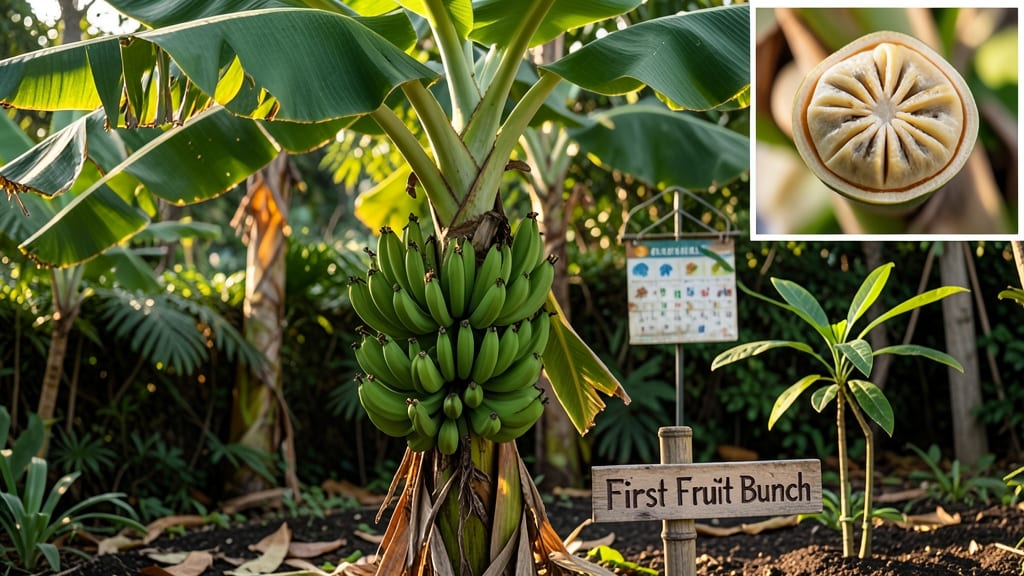
Banana trees don't fruit only once—they produce fruit repeatedly through a process where each individual stalk bears fruit just once before dying back. The plant's root system (corm) then generates new shoots that can fruit annually or biannually with proper care.
This lifecycle might sound unusual, but it's actually a clever adaptation.
Banana plants are monocarpic, meaning they allocate all their energy to producing a single massive flower stalk and fruit cluster before dying. 🌱 The real magic happens underground: the corm (thickened stem base) stores energy and sends up new shoots after the old stalk dies.
This is why you often see multiple banana plants growing from the same area—each one is a new growth cycle from the same root system.
What's fascinating is how this system works in nature. The plant's pseudostem (the thick, leafy trunk) acts like a temporary support structure that dies after fruiting, while the corm remains alive underground.
With proper care—like consistent watering, balanced nutrients (especially potassium and phosphorus), and protection from extreme temperatures—you can encourage this cycle to repeat every 12-18 months.
💡 In This Article
- Banana Tree Lifecycle: Why Each Plant Fruits Once
- Maximizing Banana Fruit Production: Care Tips for Year-Round Harvests
Banana tree lifecycle: why each plant fruits once
The reason banana plants fruit just once before dying comes down to their monocarpic nature—a biological strategy where the plant allocates nearly all its energy to a single reproductive event. 🌱 Unlike perennial trees that fruit repeatedly, banana plants invest heavily in producing that massive flower stalk (called an inflorescence) and subsequent fruit bunch, which can weigh up to 100 pounds in commercial varieties.
This energy drain is so extreme that the plant's above-ground structure (the pseudostem) essentially becomes a temporary support system that collapses after fruiting.
Here's the science: The plant's growth hormones shift dramatically when flowering begins. Gibberellins (growth-promoting hormones) decrease while ethylene (fruit-ripening hormone) increases, signaling the plant to prioritize fruit development over vegetative growth.
The pseudostem, which appears woody but is actually made of tightly packed leaves, serves as a water reservoir and structural support during this 3-6 month fruiting process. Once the fruit is produced, the pseudostem senesces (dies back) because its job is complete—it's no longer needed for photosynthesis or structural support.
What happens next is where the magic of banana cultivation lies. The plant's true survival mechanism is the corm, an enlarged underground stem that stores carbohydrates and nutrients. When the pseudostem dies, the corm remains alive and begins sending up new shoots called suckers.
These suckers develop from dormant buds along the corm's surface, each capable of growing into a new banana plant. This is why you often see multiple banana plants growing from the same area—they're all offspring of the original corm's root system!
The timing of this cycle depends on environmental conditions. In tropical climates, banana plants typically complete their lifecycle in 12-18 months, with new shoots emerging within 2-3 months after the old plant dies.
The key difference between wild and cultivated bananas is that commercial varieties have been bred to produce multiple suckers simultaneously, allowing farmers to select the strongest one for continued production while using others for propagation. Without human intervention, wild banana plants would rely solely on this natural regeneration process.
This lifecycle explains why banana trees appear to "die" after fruiting—they're not actually dying, just completing their single reproductive cycle. The corm's ability to regenerate new shoots means the plant's genetic material continues through successive generations.
For growers, this means each planting can theoretically produce fruit year after year as long as the corm remains healthy and conditions are optimal. 🌿
Interestingly, this monocarpic strategy isn't unique to bananas—other plants like pine trees and agave also use this energy-intensive reproductive approach. The tradeoff is dramatic growth followed by death, but for bananas, the underground storage system makes this a sustainable cycle that's been perfected over millennia.
This biological quirk is what allows banana cultivation to be both productive and renewable when managed properly.