
Landscaping
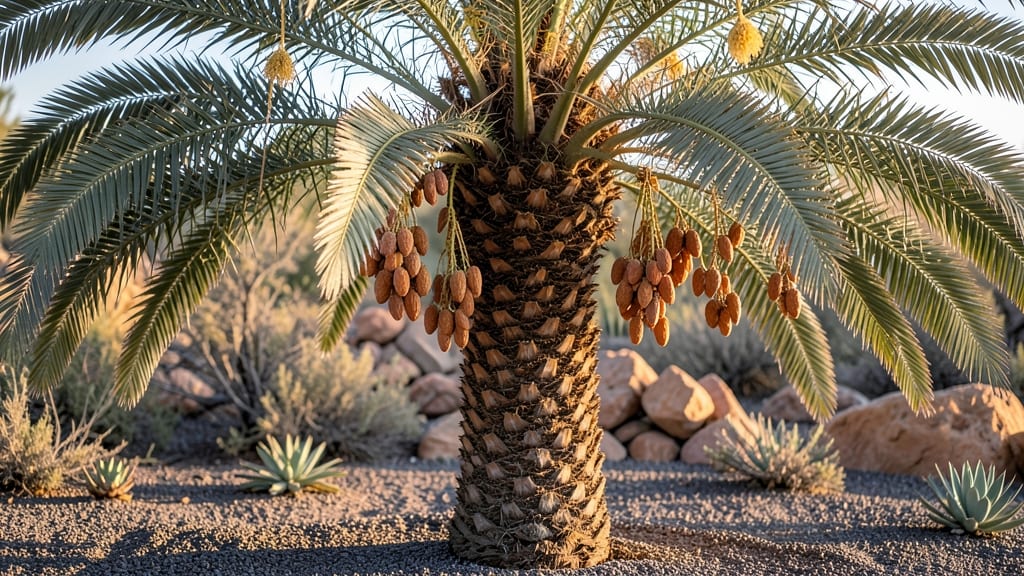
Growing a date fruit palm transforms your yard into a desert oasis with minimal fuss. 🌵 I planted mine three years ago, and now it towers over my patio, producing sweet dates while using half the water of other palms.
The key? Mimicking its natural arid habitat—something even drought-prone areas can manage.
These palms thrive in USDA zones 8-11, where winters stay above 25°F—frost kills them instantly. Well-draining sandy soil is non-negotiable; heavy clay means root rot. Start with a 15-gallon container for young palms or plant directly in ground with 3-4 feet of space for mature growth.
They’re slow starters but reward patience with 10-foot height in just five years.
Watering is where the magic happens—or fails. New plants need deep watering every 2-3 weeks; established ones survive on monthly soakings. Overwatering is the #1 killer, so let the top 6 inches of soil dry between waterings.
Full sun (6+ hours daily) is a must; shade slows growth and reduces fruiting. The payoff? Lush fronds, edible dates, and a landscape that drinks like a camel.
Prune only to remove dead fronds or brown tips—never more than 20% at a time. Fertilize lightly in spring with a low-nitrogen palm fertilizer (like 8-2-12). In colder zones, overwinter indoors near a sunny window.
Pests? Scale insects are the main threat; hose them off early. With this care, your palm will outlive you—and keep producing dates for decades.
📚 In This Guide
- What you need
- Instructions
- Tips and common mistakes
- Wrapping up and next steps
What you need
- ● Date fruit palm saplings: 1–3 (depending on desired spacing; Medjool or Deglet Noor varieties are popular choices).
- ● Well-draining soil: 5–10 cubic yards (mix 60% native soil, 30% sand, and 10% compost for optimal drainage).
- ● Organic mulch: 2–3 inches of wood chips or straw (helps retain moisture and regulate temperature).
- ● Slow-release fertilizer: 10–15 lbs (look for a balanced formula like 6-6-6 or one high in potassium for fruiting palms).
- ○ Drip irrigation system: Optional but highly recommended (1–2 emitters per palm, delivering 1–2 gallons per day during dry spells).
- ● Shovel or trenching tool: For digging planting holes (18–24 inches deep and wide).
- ● Garden hose or watering can: For initial watering (avoid overhead sprinklers to prevent fungal issues).
- ● Pruning shears: For trimming dead fronds or shaping the palm as it grows.
- ○ pH testing kit: Optional but useful (ideal soil pH: 6.5–7.5 for date palms).
- ● Stakes and ties: 2–4 stakes per sapling (to support young palms during establishment).
- ● Climate zone: USDA Zones 9–11 (or equivalent tropical/subtropical regions). Note: Young palms may need winter protection in colder zones.
- ● Sunlight: Full sun (6+ hours daily). Choose a location with minimal shade competition.
- ● Water access: While drought-tolerant, newly planted palms need consistent watering for the first 1–2 years.
- ● Space: Mature palms can reach 60–100 feet tall and wide; plant at least 15–20 feet apart.
- ● Local regulations: Check if your area requires permits for large palm trees.
Step-by-step guide to establishing a thriving date fruit palm
Here's how to cultivate this drought-tolerant desert beauty with confidence.
🌱 Step 1: Select and Prepare the Right Planting Site
Choose a location with full sun exposure (6+ hours daily) and well-draining soil. Date palms thrive in USDA zones 8-11, where temperatures stay above 20°F year-round. If your climate dips below that, plant in a large container you can move indoors during winter months.
Amend native soil with 2-3 inches of coarse sand or grit to prevent waterlogging. The roots need oxygen—compacted soil leads to root rot. I always dig a 2-foot-deep hole that's twice as wide as the root ball. This gives roots room to spread without circling, which weakens the plant.
🪴 Step 2: Plant at the Correct Depth and Orientation
Position the palm so the crown (where roots meet trunk) sits 1-2 inches above soil level. Planting too deep suffocates the root collar and causes rot. Gently backfill with native soil mixed with 1 cup of slow-release fertilizer (10-10-10 ratio) to encourage early growth.
Water deeply immediately after planting to settle the soil. You'll see the surface firm up—this ensures good root-to-soil contact. For container-grown palms, use a pot at least 24 inches deep with drainage holes. The larger the container, the longer you can delay transplanting into the ground.
☀️ Step 3: Establish a Watering Routine for Drought Tolerance
Water newly planted palms once weekly for the first month, then reduce to every 2-3 weeks once established. Date palms store water in their trunks—overwatering is far riskier than underwatering. Check moisture by pushing your finger 2 inches into soil; if dry, water thoroughly until it drains from the bottom.
Mulch with 3-4 inches of organic mulch (straw or wood chips) to retain moisture and regulate soil temperature. Keep mulch 6 inches away from the trunk to prevent rot. You'll notice fewer weeds and more consistent soil moisture after applying mulch—this is your signal the system is working.
✂️ Step 4: Prune Strategically for Health and Fruit Production
Remove only dead or diseased fronds—never prune healthy leaves. Cut at the base with clean, sharp pruners to prevent tearing. Date palms produce fruit on old fronds, so avoid removing more than 20% of the canopy at once. I wait until fronds turn completely brown before removing them—this ensures I'm not sacrificing potential fruit clusters.
Fertilize twice yearly: once in spring and once in summer with a palm-specific fertilizer. Look for one with higher potassium levels to support fruiting. Apply fertilizer when soil is moist to prevent root burn. You'll see new fronds emerging within 4-6 weeks of proper fertilization—that's your confirmation the plant is responding well.
🌿 Step 5: Protect Against Common Pests and Environmental Stress
Watch for palm weevils, which bore into trunks and kill plants quickly. Inspect the base of the trunk monthly for sawdust-like frass or holes. If you spot signs, treat immediately with systemic insecticide. Prevention is easier—apply neem oil preventatively every 2 months during warm months.
Young palms need protection from strong winds. If you live in a coastal or exposed area, stake the trunk temporarily until it reaches 10 feet tall. The goal is to let the plant develop a sturdy trunk before facing full wind exposure. You'll know it's ready when the trunk measures 3 inches in diameter at the base.
Tips & tricks for perfect date fruit palm cultivation
Confession: I nearly lost my first date palm to overzealous watering—here's what I learned the hard way about nurturing these desert survivors.
Soil Preparation: The 2-3 inches of coarse sand or grit you add isn't just about drainage—it's about creating an oxygen-rich environment for those deep roots. I've found that mixing in perlite (about 20% of the soil volume) gives even better aeration, especially in clay-heavy soils. The key is to mimic the natural desert conditions where date palms evolved—loose, fast-draining soil prevents that deadly root rot that kills so many palms.
Planting Depth: That 1-2 inch crown height above soil level is non-negotiable. I've seen beginners bury the crown too deep, thinking it needs support, but this suffocates the plant. Use a level or small ruler to verify depth—your palm's future health depends on this simple measurement. For container palms, ensure the pot's drainage holes are large enough to handle the volume of water these plants can absorb when thirsty.
Watering Wisdom: The 2-inch soil moisture check is your best friend. I've trained myself to perform this check before watering—if moisture persists at 2 inches, wait another week. Remember, date palms store water in their trunks like natural reservoirs. Overwatering in the first year is the #1 reason palms fail, so resist the urge to keep the soil damp. The plant will tell you when it's truly thirsty through leaf color and texture.
Fertilizer Timing: Those spring and summer feedings with palm-specific fertilizer are critical, but timing matters. I've found that applying fertilizer right after a deep watering (when soil is moist) prevents root burn. Look for fertilizers with micronutrients like magnesium and zinc—these support the palm's complex growth needs. The 4-6 week window for new frond emergence is your confirmation the plant is thriving, not just surviving.
Pro Tips for Date Fruit Palm
- Confession: I nearly lost my first date palm to overzealous watering—here's what I learned the hard way about nurturing these desert survivors.
- Soil Preparation: The 2-3 inches of coarse sand or grit you add isn't just about drainage—it's about creating an oxygen-rich environment for those deep roots.
- Planting Depth: That 1-2 inch crown height above soil level is non-negotiable.
Frequently asked questions
Got questions about growing date fruit palms in your landscape? You’re not alone! Here are some of the most common queries—and their answers—to help you thrive with this drought-resistant beauty.
How long does it take for a date palm to bear fruit?
A Phoenix dactylifera (true date palm) typically takes 5–10 years to produce fruit in ideal conditions, while ornamental varieties like Phoenix canariensis may never bear fruit. Patience is key—focus on proper care (sun, water, and soil) to speed up the process!
How much water does a date palm really need?
One of their biggest perks! Mature date palms need only 1–2 inches of water per week once established (years 2–3+). Young palms (first 2 years) may need weekly deep watering. Overwatering is the real enemy—root rot is a silent killer.
Can date palms survive cold weather?
Most Phoenix species tolerate down to 15–20°F with proper prep (mulch, watering before freezes). True date palms (dactylifera) are tropical—protect or move potted plants indoors if temps drop below 30°F.
What pests or diseases should I watch for?
Keep an eye out for:
- Palm weevils (larvae bore into trunks—act fast if you spot frass or oozing sap).
- Scale insects (sticky residue on leaves; treat with horticultural oil).
- Fungal leaf spot (yellow/brown spots; improve airflow and avoid overhead watering).
Are there low-maintenance alternatives to date palms?
Yes! If you love the look but want less upkeep, try:
- Mediterranean fan palm (Chamaerops humilis)
- California fan palm (Washingtonia filifera)
- Sago palm (Cycas revoluta—not a true palm but ultra-drought-tolerant!).
Wrapping up and next steps
The date fruit palm is a true gem for arid landscapes—offering stunning beauty, minimal water needs, and delicious rewards with just a little care! 🌵✨ Whether you're a seasoned gardener or a beginner, this resilient plant proves that thriving gardens can grow even in the driest climates.
Ready to transform your outdoor space?
Your next step? Plant one today—start small with a sapling or propagate from seeds, and watch your desert oasis flourish. Share your progress with fellow plant lovers, and don’t forget to experiment with varieties to find your perfect match!