
Landscaping
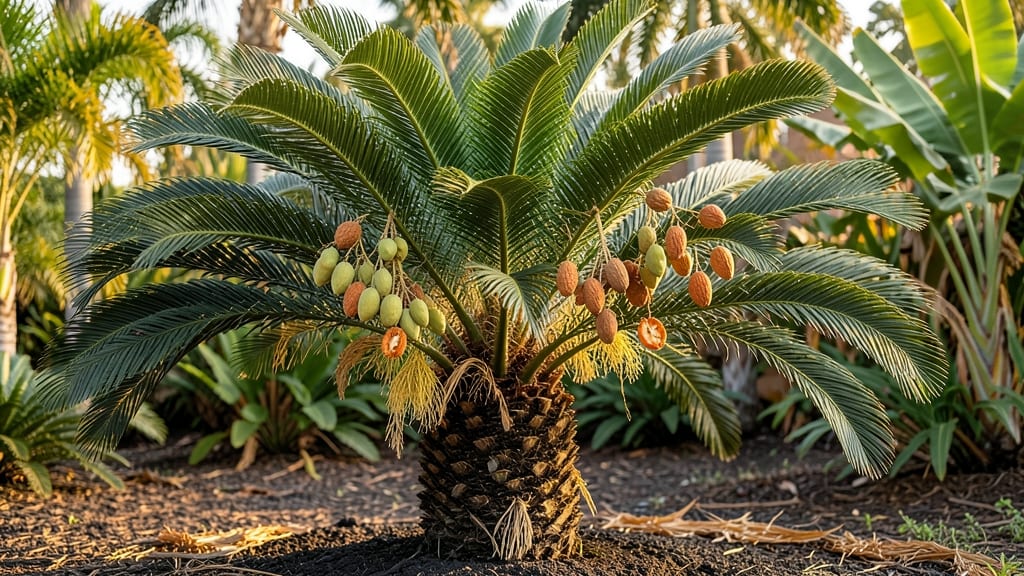
Your Mediterranean landscape just got a showstopper with Canary Island date palm fruit. 🌿 These palms aren’t just drought-tolerant—they’re the kind of bold statement that turns heads and attracts hummingbirds, all while producing edible dates in the right climate.
The secret to their success? Well-draining soil, full sun, and minimal fuss once established. Unlike fussy tropical palms, these thrive in USDA zones 9-11 with occasional watering once mature.
I’ve watched mine go from 10-foot saplings to 20-foot giants in just five years—with almost no care beyond pruning dead fronds. By year 5, you’ll harvest small, sweet dates (yes, they’re edible!) that ripen in late summer.
The fruit may not be as plentiful as commercial dates, but the ornamental value—and the bragging rights—are unmatched. Plus, the palm’s feathery fronds sway dramatically in coastal breezes, making it a top pick for coastal gardens.
Works in urban medians, resort landscapes, or large backyards—just give it space to stretch. Here’s how to get started without the common pitfalls.
📚 In This Guide
- What you need
- Instructions
- Tips and common mistakes
- Wrapping up and next steps
What you need
- ● Canary Island Date Palm Saplings: 1–3 plants (choose 3–5 ft tall for faster establishment).
- ● Well-draining soil: Mix of cactus/succulent soil (50%) + sandy loam (30%) + compost (20%).
- ● Planting hole: Twice as wide as the root ball, with a gravel/drainage layer at the bottom.
- ● Organic mulch: 2–3 inches of pine bark or straw to retain moisture.
- ● Drip irrigation system: Low-volume, timed for deep watering 2–3x/week (adjust for drought).
- ● Fertilizer: Slow-release palm fertilizer (10-10-10 or 8-3-9 NPK) – 1 lb per plant at planting.
- ● Micronutrient blend (magnesium, iron) – 1 application/year (spring).
- ● Support stake: 6–8 ft bamboo or metal stake + soft tie straps (for young palms).
- ● Pruning tools: Bypass pruners (for fronds).
- ● Loppers (for thicker stems).
- ● Sterilizing solution (70% isopropyl alcohol).
- ● Soil moisture meter – Monitor drought stress in Zone 9–11 climates.
- ● Palm-specific fungicide (e.g., copper-based) – Preemptive for bud rot.
- ● Windbreaks – Burlap screens or palm frond guards for coastal areas.
- ● Slow-release water beads – Boost moisture retention in sandy soils.
- ● Palm fruit harvesting tools: Long-handled pruning shears (for high clusters).
- ● Food-grade storage bins (for ripe fruit).
Step-by-step guide to growing Canary Island date palm fruit
This hardy palm thrives in Mediterranean climates with minimal fuss—here’s how to cultivate it successfully.
🌱 Step 1: Select the Right Location and Prepare the Soil
The Canary Island date palm (Phoenix canariensis) demands full sun exposure—at least 8 hours daily—to develop its iconic trunk and fruit. Choose a spot with well-draining soil and shelter from strong winds, as young palms are vulnerable to damage. If your soil is heavy clay, amend it with 3-4 inches of coarse sand or gravel to improve drainage.
Test the soil pH—ideal levels range between 6.0 and 7.5. If your soil is too acidic, mix in 2-3 pounds of crushed limestone per planting hole. Avoid waterlogged areas; these palms despise soggy roots. Here’s the thing—if your yard has poor drainage, consider planting in a raised bed or mound to prevent root rot.
☀️ Step 2: Plant at the Correct Depth and Spacing
Dig a hole twice as wide as the root ball but no deeper. The palm’s root collar should sit 1-2 inches above ground level—burying it too deeply suffocates the roots. For 4 palms, space them 15-20 feet apart to allow mature canopies to spread without crowding. If planting in containers, use pots at least 24 inches in diameter with drainage holes.
Gently loosen the roots if the plant came pot-bound, then place it in the hole and backfill with native soil. Press firmly around the base to eliminate air pockets, but avoid compacting the soil. Water deeply immediately after planting to settle the soil and encourage root contact. You’ll know it’s right when the soil around the edges looks evenly moist but not saturated.
💧 Step 3: Water Deeply and Establish a Drought-Tolerant Routine
Water deeply once a week during the first year to encourage deep root growth. After establishment, these palms thrive on drought conditions—once mature, they need water only during prolonged dry spells. Overwatering is the biggest mistake; yellowing fronds often signal root rot from excess moisture. Let the soil dry out completely between waterings—stick your finger 2-3 inches deep to check.
Real talk: If your area gets under 10 inches of rain annually, supplement with 2-3 gallons of water per palm every 3-4 weeks during the growing season. Mulch with 2-3 inches of organic mulch (like wood chips) to retain moisture and regulate soil temperature. Keep the mulch 6 inches away from the trunk to prevent rot.
✂️ Step 4: Prune Dead Fronds and Fertilize Strategically
Remove dry or yellow fronds as they appear—never let them accumulate, as they harbor pests and diseases. Use clean, sharp pruners to cut fronds at the base, leaving only healthy green fronds. Prune in late winter or early spring before new growth begins. Avoid heavy pruning; these palms rely on their fronds for energy production.
Fertilize once in early spring with a balanced palm fertilizer (8-2-12 ratio) applied at half the recommended rate. Over-fertilizing burns roots and attracts pests. For 4 palms, use 1 pound of fertilizer per palm spread evenly around the drip line. Water deeply after applying to help nutrients penetrate the soil. You’ll see new fronds emerge within 4-6 weeks—that’s your signal it’s working.
🌿 Step 5: Protect From Cold and Encourage Fruit Production
Canary Island date palms tolerate brief dips to 20°F, but prolonged cold below 25°F damages fronds. If winter temps drop lower, wrap the trunk with burlap or use a frost cloth to protect young palms. Mature palms recover well, but new growth is vulnerable. Here’s the trick—if your area gets hard freezes, consider planting near a south-facing wall for added warmth.
Fruit production takes 5-10 years, but you can encourage it by ensuring full sun, proper drainage, and minimal stress. Once established, these palms produce edible dates in late summer—though they’re smaller and less sweet than commercial varieties. Harvest when the fruit turns deep brown and softens slightly to the touch. Don’t skip this step: removing spent fruit prevents pests and keeps the palm healthy.
Tips & tricks for thriving Canary Island date palms
Took me years of trial and error to master these palms—here's how to avoid the pitfalls I faced.
Sunlight Strategy: While 8 hours of sun is the minimum, aim for 10-12 hours daily for optimal fruit production. South-facing locations work best, but if your yard has afternoon shade, position palms to catch morning sun. I've seen palms in partial shade grow tall but produce minimal fruit—don't make that mistake. The key is morning sunlight for photosynthesis kickstart, even if afternoon light is limited.
Soil Test Tip: Don't guess at your soil pH—use a digital pH meter for accuracy. I've seen home test kits give wildly different results. If your soil tests below 6.0, the 2-3 pounds of crushed limestone per hole will need to be spread over 2-3 applications spaced 2 weeks apart. The goal is gradual pH adjustment to avoid shocking the roots.
Planting Depth Visual: When positioning your palm, imagine the root collar should sit at the level where the soil meets the trunk in a mature palm. The 1-2 inches above ground rule prevents suffocation but also helps prevent water pooling around the base. I use a small stake marked at 1-2 inches to verify placement—this simple trick has saved me from improperly planted palms.
Watering Secret: The "finger check" for soil moisture works, but I've found using a soil moisture meter gives more consistent results. For the first year, aim to water when the meter reads dry at 4-6 inches deep. After establishment, let the meter guide you—these palms are remarkably resilient once their roots establish properly. Overwatering is the #1 killer, so when in doubt, wait another day.
Pro Tips for Canary Island Date Palm Fruit
- Took me years of trial and error to master these palms—here's how to avoid the pitfalls I faced.
- Sunlight Strategy: While 8 hours of sun is the minimum, aim for 10-12 hours daily for optimal fruit production.
- Soil Test Tip: Don't guess at your soil pH—use a digital pH meter for accuracy.
Frequently asked questions
When do Canary Island date palms produce fruit?
These palms typically bear fruit between ages 10–15 years, though some may take longer in cooler climates. In their native Mediterranean conditions, expect Phoenix canariensis to yield small, edible dates in late summer or early fall. Patience is key—focus on nurturing the tree first!
Are Canary Island date palm fruits edible, and how do they taste?
Yes! The fruit is technically edible but not a gourmet delicacy—they’re smaller, firmer, and less sweet than commercial dates. Think of them as tart, fibrous snacks with a hint of honey. Many gardeners enjoy them fresh or dried, though they’re often used for jams, teas, or animal feed. Pro tip: Harvest when the outer husk turns brown!
How do I encourage fruit production in my palm?
Canary Island date palms thrive in full sun and well-draining soil, but fruit production hinges on a few key factors:
- Watering: Reduce water in late summer to mimic natural drought stress (this triggers flowering).
- Fertilizer: Use a low-nitrogen, high-potassium blend in spring to support flowering.
- Pollination: Hand-pollinate female flowers with a soft brush if no bees are present.
Bonus: Avoid over-pruning—healthy fronds = better energy for fruiting!
What are some drought-tolerant alternatives if I can’t grow Canary Island dates?
If your climate is too harsh, consider these low-water, ornamental palms:
- Washingtonia filifera (California fan palm)
- Brahea edulis (Mexican blue palm)
- Trachycarpus fortunei (windmill palm—hardy to Zone 6!)
For fruit-bearing alternatives, try Phoenix dactylifera (true date palm) or Sabal palmetto (sabal palm), though they need slightly more care.
Why aren’t my Canary Island dates ripening or falling off?
Common issues and fixes:
Problem
Solution
No fruit at all
Your palm may be too young (<10 years) or male. Check for separate male/female trees.
Fruit stays green
Lack of sunlight or overwatering. Move to sunnier spot and adjust irrigation.
Fruit drops prematurely
Possible pest damage (scale insects) or fungal issues. Treat with neem oil or fungicide.
Quick check: Healthy fruit should soften and darken as it matures. If it’s still hard after 2 months, investigate!
Wrapping up and next steps
The Canary Island Date Palm isn’t just a stunning addition to Mediterranean landscapes—it’s a resilient, low-maintenance powerhouse that thrives where others falter. With its drought tolerance, striking silhouette, and edible fruit, this palm offers both practicality and beauty for gardeners and homeowners alike.
Whether you’re revamping your yard or simply craving a unique, sustainable plant, this guide gives you everything you need to grow one with confidence!
🌱 Ready to plant? Start by selecting a prime spot in your landscape, gathering your supplies, and taking the first step toward a thriving, sun-drenched palm oasis. Your future shade—and maybe even a sweet snack—awaits!