
Flowers
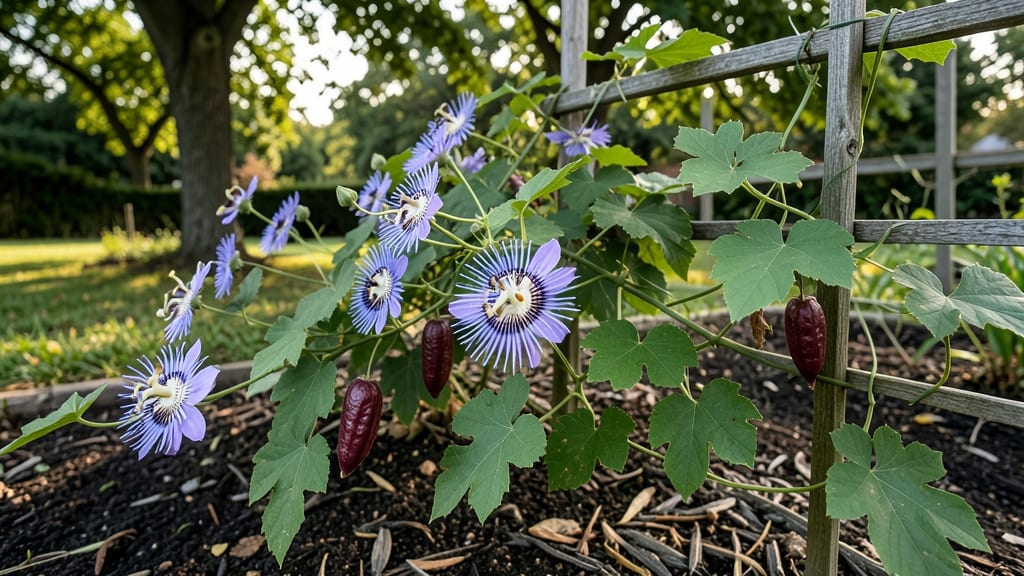
Growing blue passion flower fruit means your garden will soon smell like tropical sunshine and taste like a secret. 🌿 These striking vines—Passiflora caerulea—produce edible fruit with delicate, edible petals and a sweet-tart pulp, but they demand just the right balance of humidity, sunlight, and patience to thrive.
I’ve learned the hard way that dry air and inconsistent watering will stunt their growth, but when they’re happy, they reward you with vibrant blooms and fruit that looks like it belongs in a fairy tale.
The key to success starts with the right spot: a location with 6+ hours of sunlight and protection from harsh winds, since these vines love to climb but hate being blown around.
They’re not fussy about soil as long as it drains well, but adding compost at planting time gives them a nutrient boost they’ll appreciate. Once established, they’re surprisingly drought-tolerant—but don’t let that fool you into neglecting them.
A regular drink during dry spells keeps those lush leaves and abundant blooms coming.
Here’s the magic: when you see those stunning blue-purple flowers, you’re just steps away from fruit. The trick to getting fruit is ensuring proper pollination—either by hand with a small brush or by inviting bees to do the work.
Within 60-90 days of flowering, you’ll have oval-shaped fruit that starts green and ripens to a yellowish hue, packed with tiny black seeds and a flavor that’s a mix of citrus and pineapple. The real payoff? These vines keep producing for years, with minimal care once they’re settled in.
Now, let’s talk troubleshooting—because even the best-laid plans can go sideways. If your vines aren’t flowering, they might need more sunlight or a balanced fertilizer in early spring. No fruit? Check for pollinators or try hand-pollinating.
And if the leaves start yellowing, it’s usually a sign of overwatering or poor drainage. With a little attention, you’ll have a thriving vine that’s as beautiful as it is productive, turning your garden into a tropical paradise right in your backyard.
📚 In This Guide
- What you need
- Instructions
- Tips and common mistakes
- Wrapping up and next steps
What you need
- ● Blue passion flower seeds (Passiflora caerulea) – 5–10 seeds (or 1–2 young plants for faster results).
- ● Well-draining potting mix – 5–10 gallons (or a blend of 60% peat/compost, 30% perlite, and 10% sand).
- ● Containers or garden space – 5-gallon pots (for seedlings) or in-ground beds with full sun (6+ hours/day).
- ● Support structure – Trellis, fence, or stakes (6+ feet tall) for climbing vines.
- ● Watering can or hose – For consistent moisture (aim for 1–2 inches per week).
- ● Organic fertilizer – Balanced 10-10-10 or compost tea (apply every 4–6 weeks).
- ● Pruning shears – Sharp, clean pair for trimming vines.
- ● Humidity dome or plastic wrap – To retain moisture during germination.
- ● Mulch (straw or wood chips) – To lock in soil moisture and regulate temperature.
- ● pH test kit – Ideal soil pH: 6.0–7.0 (slightly acidic to neutral).
- ● Insecticidal soap – For pest control (aphids, spider mites).
- ● Grow lights – If starting indoors before last frost (14+ hours of light/day).
Step-by-Step instructions for growing blue passion flower fruit
Here's how to cultivate these stunning vines that reward you with edible blooms and exotic fruit.
🌱 Step 1: Choose the Right Location and Prepare the Soil
Blue passion flowers thrive in full sun to partial shade—at least 6 hours of sunlight daily—but they adore humidity. If your climate is dry, plant near a water feature or in a spot with afternoon shade to prevent leaf scorch. The soil should be well-draining yet rich in organic matter—think loamy, slightly acidic soil with a pH between 6.0 and 7.0. Amend heavy clay with compost or aged manure to improve drainage, and mix in a handful of perlite or sand if your soil feels compacted.
Dig a hole twice as wide as the root ball but only as deep. This encourages the roots to spread horizontally, which passion vines love. If planting in containers, use a large pot (at least 15 gallons) with drainage holes. I always add a slow-release fertilizer at planting time to give the vine a nutrient boost without overwhelming it.
☀️ Step 2: Plant and Provide Initial Support
Place the vine in the hole and backfill with soil, pressing gently to remove air pockets. Water deeply to settle the roots—about 1 gallon for every 12 inches of vine height. Passion flowers are vigorous climbers, so install a strong trellis, fence, or arbor nearby before planting. I use a 6-foot-tall wooden trellis for mine, but a sturdy chain-link fence works too. Secure the vine loosely to the support with soft plant ties or old fabric strips to avoid damaging the stems as it grows.
Here’s the thing—passion vines grow fast, but they need time to establish roots. Don’t rush to prune or fertilize heavily in the first 4-6 weeks. Instead, focus on keeping the soil evenly moist (not soggy) and watch for new leaves—that’s your sign the vine is settling in. If you’re in a hot, dry climate, mulch around the base with 2-3 inches of organic mulch to retain moisture and regulate soil temperature.
💧 Step 3: Water and Fertilize for Healthy Growth
Passion flowers are thirsty but hate soggy roots, so water deeply 2-3 times per week during the growing season, aiming for 1-2 inches of water per week. You’ll know you’re doing it right when the top 2 inches of soil feel dry to the touch before the next watering. In containers, check moisture daily—potted plants dry out faster. I water mine in the early morning to reduce evaporation and fungal risks.
Feed your vine every 4-6 weeks during the growing season with a balanced, water-soluble fertilizer (like 10-10-10). Start with half-strength to avoid burning the roots, then gradually increase to full strength. Stop fertilizing 2 months before the first frost—you don’t want tender new growth when winter hits. If you notice yellow leaves, it’s often a sign of overwatering or nutrient deficiency. Adjust accordingly: less water or a chelated iron supplement can help.
✂️ Step 4: Prune and Encourage Flowering
Pruning passion flowers isn’t just about shaping—it’s about promoting blooms and fruit. In early spring, trim back any dead or weak growth to just above a leaf node. Then, throughout the growing season, pinch back the tips of new growth to encourage bushier vines and more flowers. This is where it gets fun: every time you see a flower bloom, leave it on the vine—even if it’s not your favorite color. The fruit that follows will attract pollinators for next year’s blooms.
If your vine gets too leggy, prune back one-third of the oldest stems in late winter or early spring. This rejuvenates the plant and redirects energy to newer, more productive growth. Real talk: passion flowers can get wild, so keep an eye on them. If they start to sprawl everywhere, a light pruning every 6-8 weeks keeps them manageable. Always use clean, sharp pruners to avoid spreading disease.
🌿 Step 5: Harvest and Overwinter for Next Year
Harvest passion fruit when it changes color from green to its mature hue (blue, purple, or yellow, depending on the variety) and feels slightly soft when gently squeezed. Twist the fruit gently to detach it from the vine—don’t pull, or you might damage the stem. The fruit should plop off easily when ripe. If you’re growing for both fruit and flowers, leave some blooms unharvested to ensure a steady supply of fruit. I usually harvest every 2-3 days during peak season to keep the vine productive.
As frost approaches, cut back the vine to about 1 foot tall and mulch heavily around the base. In colder climates, dig up container-grown vines and store them in a cool, dark place (like a garage) with barely moist soil until spring. If you’re in a milder zone, the vine may survive outdoors with extra mulch and frost cloth for protection. Here’s the key: passion flowers are perennials in warm climates but often grown as annuals in cold areas—so plan accordingly. With proper care, your vine will reward you with bold blooms and exotic fruit for years to come.
Tips & tricks for growing blue passion flower fruit
A few smart moves will help your passion vines thrive and produce stunning blooms and fruit. Here's what I've learned after years of growing these humidity-loving plants.
Location and Soil Secrets: In Step 1, pay special attention to that 6 hours of sunlight requirement—morning sun with afternoon shade works best in hot climates. I've found that adding a handful of coffee grounds to the planting hole gives a subtle acid boost, helping maintain that 6.0-7.0 pH range without needing pH test kits. For containers, place a saucer underneath to catch excess water and prevent root rot from soggy drainage holes.
Support System Strategy: When setting up your trellis or fence in Step 2, think vertical growth early. I install mine at planting time and train the main stems upward immediately. This prevents the vine from developing sprawling habits later. Use soft garden twine instead of plastic ties—they won't cut into the stems as they thicken. For heavy fruit loads, add horizontal crossbars every 2 feet to distribute weight.
Watering Wisdom: That 2-3 times per week guideline in Step 3 works well, but timing matters more than frequency. I water deeply in the morning and again in the late afternoon during extreme heat—this mimics natural rainfall patterns. For potted plants, I check moisture by lifting the pot: if it feels light, it's time to water. A mulch ring of 2-3 inches keeps soil consistently moist while preventing weeds.
Pruning Precision: When you're pinching back tips in Step 4, look for new growth that's about 6 inches long—this is the ideal length for pinching. The one-third pruning for leggy vines should focus on the oldest stems first. I always sterilize my pruners with rubbing alcohol between cuts to prevent disease spread. Save those pruned stems—they root easily in water for new plants!
Pro Tips for Blue Passion Flower Fruit
- A few smart moves will help your passion vines thrive and produce stunning blooms and fruit.
- Location and Soil Secrets: In Step 1, pay special attention to that 6 hours of sunlight requirement—morning sun with afternoon shade works best in hot climates.
- Support System Strategy: When setting up your trellis or fence in Step 2, think vertical growth early.
Frequently asked questions
Got questions about growing or using blue passion flower fruit?
Here are some of the most common ones—plus quick, practical answers to help you succeed with this tropical beauty!
How long does it take for blue passion flower to bear fruit?
Blue passion flower vines typically take 1–2 years to mature enough to produce fruit after planting, depending on climate and care. In ideal conditions (warm, humid, and well-fed), you may see flowers as early as 6–12 months, with fruit ripening 2–3 months later. Patience is key—these vines reward consistency!
Can I eat blue passion flower fruit raw, or does it need to be cooked?
Yes! The fruit is edible raw when fully ripe (soft, slightly wrinkled skin, and a sweet, tangy aroma). However, some varieties have hard seeds that require chewing or blending. For a smoother texture, cook or blend the pulp into jams, juices, or desserts. Warning: Always confirm the species—some lookalikes are toxic!
What’s the best way to handle humidity for blue passion flower?
Blue passion flower thrives in high humidity (60–80%). In dry climates, mist leaves daily, use a humidity tray, or grow near a water feature. If humidity drops below 50%, vines may drop buds or fruit. For container growers, group plants together to create a microclimate. Pro tip: A pebble tray with water beneath pots works wonders!
Why aren’t my blue passion flowers pollinating or setting fruit?
Poor pollination is often the culprit! Blue passion flowers rely on hummingbirds, bees, or manual pollination. If blooms appear but no fruit forms:
- Check for pollinators: Attract them with native flowers or gently transfer pollen with a soft brush.
- Ensure proper care: Weak vines (from over/under-watering or nutrient deficiencies) may fail to support fruit.
- Hand-pollinate: Use a cotton swab to dab pollen from male to female flowers (look for the cone-shaped stigma).
Are there non-edible alternatives to blue passion flower for shade and beauty?
If you love the look but not the fruit, try these humidity-loving, edible-friendly vines:
- Passiflora edulis (Purple Passion Fruit) – Sweeter, easier to grow, and great for jams.
- Passiflora caerulea (Blue Passionflower) – Ornamental, fragrant blooms (but not edible fruit).
- Cocculus laurifolius (Staff Vine) – Fast-growing, evergreen vine for tropical gardens.
Wrapping up and next steps
Growing blue passion flower fruit is a rewarding journey that brings vibrant blooms and delicious, tropical treats to your garden! 🌿 With the right care—like ensuring proper humidity, sunlight, and support—you’ll enjoy stunning flowers and edible fruits in no time.
Whether you’re a seasoned gardener or just starting out, these humidity-loving vines are a fantastic addition to any outdoor space.
Ready to take the next step? Start by selecting a healthy cutting or seedling, then give your passion flower the love it deserves. Before you know it, you’ll be harvesting your own blue passion fruit—perfect for jams, juices, or fresh eating! 🍈✨