
Light Requirements
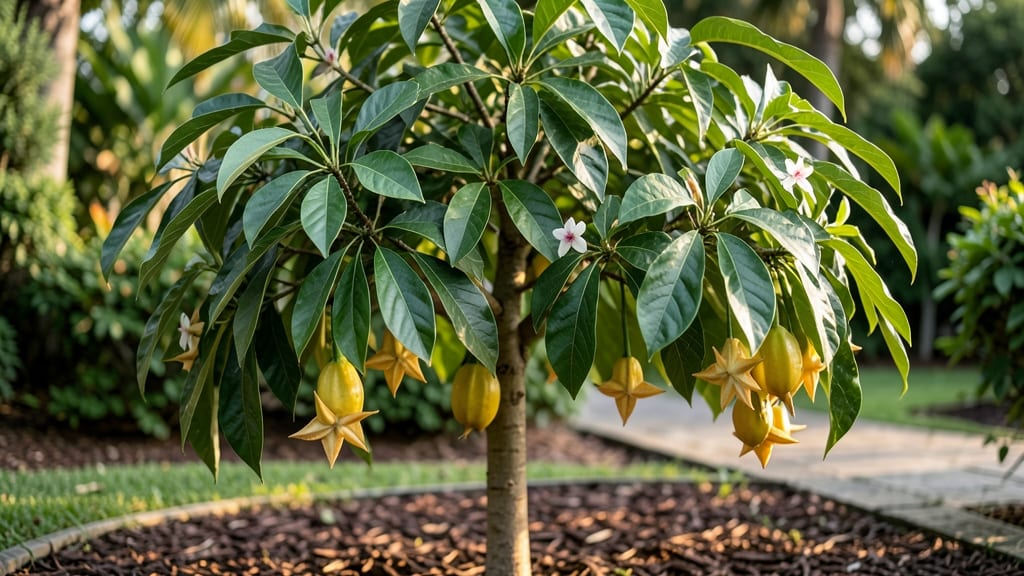
Starfruit grows primarily in tropical regions where warm temperatures, high humidity, and abundant sunlight create ideal growing conditions. The most productive areas include Southeast Asia, Central America, and parts of South America, where these environmental factors align perfectly.
These tropical conditions aren't just about warmth—they're about consistency. Starfruit trees need steady temperatures between 70°F and 90°F year-round, with humidity levels above 60% to prevent fruit from drying out. 🌿 The soil must also be well-draining but rich in organic matter, as waterlogged roots lead to poor yields.
Many commercial growers in places like Thailand and Vietnam use raised beds to maintain these perfect conditions, while home gardeners in Florida often rely on drip irrigation systems to mimic the tropical rainfall patterns.
What's fascinating is how these growing zones have expanded beyond traditional regions. Hawaii and parts of Mexico now produce high-quality starfruit thanks to controlled greenhouse environments that replicate tropical climates.
This adaptability means even gardeners in subtropical areas can successfully grow starfruit with the right care and attention to moisture levels.
💡 In This Article
- Climatic and Soil Requirements for Starfruit Cultivation
- Top Starfruit-Growing Regions Around the World
Climatic and soil requirements for starfruit cultivation
Starfruit trees, scientifically known as Averrhoa carambola, are tropical evergreens that demand precise environmental conditions to thrive. The ideal temperature range for optimal growth and fruiting sits between 70°F and 90°F, with nighttime temperatures rarely dropping below 60°F.
These trees are highly sensitive to cold—even brief exposure to 50°F can damage leaves, while temperatures below 40°F will kill the plant. This sensitivity explains why starfruit cultivation is confined to equatorial and subtropical zones where temperature fluctuations are minimal. 🌴
The humidity requirement is equally critical, with starfruit trees performing best in environments where relative humidity stays above 60%. Low humidity causes the fruit to develop a dry, leathery texture and bitter flavor, while excessive dryness can lead to premature dropping.
In regions with seasonal dry periods—like parts of Central America—growers use drip irrigation systems timed to release water during early morning hours, mimicking natural dew cycles.
The fruit's unique star-shaped cross-section is a visual indicator of its need for consistent moisture; when water-stressed, the segments fail to develop evenly, resulting in misshapen fruits.
Soil composition plays a vital role in determining both yield and fruit quality. Starfruit trees prefer slightly acidic to neutral soil with a pH range of 5.5 to 7.0, though they can tolerate up to 7.5 in well-drained conditions.
The key soil characteristic is excellent drainage—waterlogged roots lead to root rot and reduced fruiting. Many commercial growers in Southeast Asia use a mix of 60% sandy loam and 40% organic compost, which prevents compaction while providing essential nutrients.
Interestingly, the tree's deep root system (reaching up to 6 feet) allows it to access water from deeper soil layers, making it more resilient than many tropical fruits during brief dry spells.
Sunlight requirements are straightforward: starfruit trees need full sun exposure (6-8 hours daily) to produce quality fruit. However, the intensity matters—direct tropical sunlight can cause leaf scorch, so some growers use 30-50% shade cloth during peak afternoon hours in regions with intense UV radiation.
This practice doesn't reduce fruit production but improves leaf health, which indirectly benefits flowering and fruiting cycles. The tree's natural growth habit—reaching 15-20 feet tall—means it can outcompete weeds for sunlight, reducing the need for manual weeding in established orchards.
One often overlooked factor is wind exposure. While starfruit trees tolerate light breezes that aid pollination, prolonged exposure to strong winds (> 10 mph) can damage developing fruit and branches.
This is why many commercial plantations in Vietnam and Thailand are established near coastal areas with natural windbreaks—either through native vegetation or strategic planting patterns.
The combination of these environmental factors creates the perfect storm (literally) for starfruit cultivation: warm, humid air with gentle movement ensures optimal photosynthesis, respiration, and fruit development. 🌪️
For home gardeners in subtropical regions like Florida or California, replicating these conditions requires careful planning. Using mulch to retain soil moisture, selecting wind-resistant varieties like 'Arka Surya,' and providing afternoon shade can significantly improve success rates.
The payoff comes in the fruit's signature balance of sweet and tart flavors, which develops fully only when all these climatic and soil requirements are met. When conditions are ideal, a single tree can produce 100-200 fruits per year, each weighing between 3-6 ounces.