
Trees
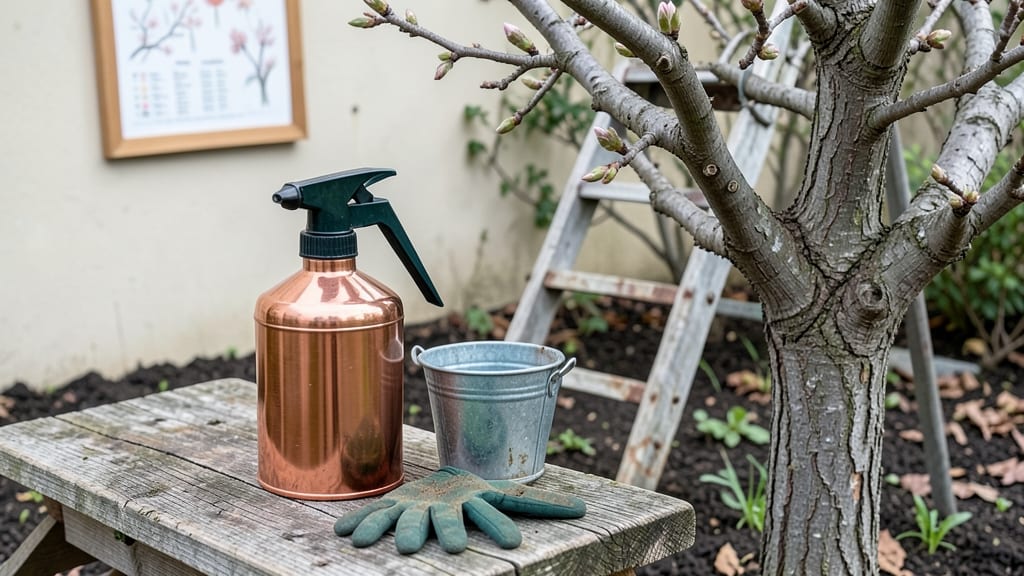
Spraying copper on fruit trees at the right time stops fungal diseases like blight and scab before they take hold—and the best window is just before buds swell in late winter.
Picture this: You’ve spent months nurturing your 🍎 trees, only for a sudden rainstorm to wash away your protective spray in minutes. That’s why timing isn’t just about the calendar—it’s about weather, too. A little planning now means fewer battles with disease later.
Most gardeners miss the pre-bloom window, when copper works best to prevent fungal spores from latching on. But even if you spray at the wrong time, I’ll show you how to adjust for rain, humidity, and even your local climate zone.
Inside, you’ll find the exact schedule for dormant-season sprays, how often to reapply after rain, and the one mistake that makes copper ineffective—plus safety tips so you don’t harm your trees.
Optimal copper spray timing for fruit trees: pre-bloom & post-rain windows
Copper fungicide is one of the most effective organic tools for preventing apple scab, peach leaf curl, and fire blight in fruit trees. But the timing of application determines whether it works or washes away uselessly.
I’ve learned through years of trial-and-error that pre-bloom and post-rain windows are the sweet spots for maximum protection.
The key is understanding when fungal spores are most active. Copper works by creating a protective barrier on leaves and buds, but it needs to be applied just before spores germinate—not too early (wasted copper) or too late (missed window).
For most fruit trees, this means late winter to early spring, right before buds swell but before pink buds appear.
Here’s where climate plays a role. In humid zones like the Pacific Northwest, fungal spores thrive year-round, so I start copper sprays as early as late February.
In arid regions like the Southwest, I wait until March when moisture increases. The goal is to hit the dormant-to-active transition when fungal pressure peaks.
Rain complicates things because copper can wash off within 24-48 hours of heavy rain. That’s why I always check the 5-day forecast before spraying. If rain is predicted within 48 hours, I delay application.
This post-rain timing is equally critical—spraying 24 hours after a downpour ensures the copper has a chance to bond before the next shower.
| Timing Window | Best For | Climate Adjustments | Frequency |
|---|---|---|---|
| Dormant Season (Late Winter) | Preventing overwintering spores | Humid: Feb-March | Arid: March-April | 1-2 applications, 7-14 days apart |
| Pre-Bloom (Bud Swell) | Blocking primary infection | Wait until buds swell but before pink | 1 application, 7-10 days before bloom |
| Post-Rain (24-48 Hours After) | Re-establishing protective layer | Critical in humid zones; less urgent in arid | 1 application per rain event (>0.5 inch) |
| Post-Bloom (Petal Fall) | Secondary infection control | 7-10 days after bloom ends | 1 application if high disease risk |
The dormant season (late winter) is your first line of defense. This is when fungal spores like apple scab overwinter on tree bark and leaves. A copper spray at 50% bud swell creates a protective shield before spores germinate.
I use copper hydroxide (like Bonide Copper Fungicide) because it’s less likely to burn new growth than copper sulfate.
For post-rain applications, think of it as a maintenance spray. Rain can remove up to 90% of copper from leaves within 24 hours, leaving your trees vulnerable. After a 0.5-inch rain, I spray again to rebuild the protective layer.
In humid climates, this might mean weekly sprays during spring rains, while dry regions may only need 2-3 applications total.
One common mistake I see is spraying during bloom. While copper is safe for bees when dry, it can harm pollinators if applied while flowers are open.
Always wait until petal fall for a second application if needed. And never spray when temperatures exceed 85°F, as copper can cause leaf burn.
Regional adjustments matter. In Pacific Northwest orchards, I’ve seen apple scab outbreaks if copper isn’t applied by late February. But in Arizona’s dry heat, I might skip dormant sprays entirely and focus on post-bloom applications.
Always monitor local fungal pressure reports from your agricultural extension office for tailored advice.
Pro tip: Mix copper fungicide with a sticker spray (like horticultural oil) to help it adhere better. This extends the protective window by 30-50%, especially in rainy seasons. And always calibrate your sprayer to deliver 100-200 gallons per acre for even coverage.
Remember, copper isn’t a cure-all. It’s a preventive measure that works best when combined with proper pruning, sanitation (removing infected leaves), and resistant varieties. But when timed right, it’s the secret weapon in my organic orchard toolkit. 🌱
How to adjust your copper spray schedule for rainy vs. dry seasons
Rainy seasons can turn your copper spray into a short-lived shield for fruit trees. Heavy rain within 24 hours of application washes away the protective layer, leaving your trees exposed.
I’ve learned the hard way—skipping a reapplication after a downpour means inviting apple scab or peach leaf curl back into the orchard. The key is adjusting your schedule based on weather forecasts and understanding the 'wash-off window'.
In dry seasons, copper lingers longer on foliage, but overapplication can cause phytotoxicity. I’ve found that every 7-10 days works well in arid climates, but always check for leaf burn signs like brown edges. The goal is to balance protection with plant health—never let copper become a liability.
🔍 When to Spray Copper on Fruit Trees: Rainy vs. Dry Season Guide
- 1. After Rain: Wait 24-48 hours before reapplying copper. If rain exceeds 0.5 inches, treat as a fresh application window.
- 2. Pre-Bloom (Dry Season): Apply copper 3-5 days before buds swell. This 3-week window is critical for preventing fungal spores from latching on.
- 3. Post-Harvest (Rainy Season): Spray immediately after harvest if rain is forecasted within 72 hours. This seals wounds from fruit removal.
- 4. Dry Season Frequency: Every 10-14 days during active growth. Reduce to bi-weekly if humidity drops below 40%.
- 5. Humid Conditions: Increase frequency to 7-day intervals if relative humidity stays above 70% for 3+ days.
🌧️ Pro Tip: Use a weather app to track rainfall forecasts—it’s your best tool for timing!
For gardeners in variable climates, I recommend keeping a simple log. Note the date of last application, rainfall amounts, and temperature trends.
For example, if you sprayed on a 75°F day and it rained 0.3 inches 12 hours later, you’re safe to wait 48 hours before reapplying. But if the rain was heavy and prolonged, treat it like a fresh start.
One common mistake I see is spraying right before rain. Copper needs time to bind to leaf surfaces, and a sudden downpour can rinse it away before it works.
Always check the 5-day forecast—if rain is predicted within 24 hours, hold off until after the storm passes. Patience here saves you from wasted copper and frustrated trees.
In dry seasons, focus on early morning applications to avoid rapid evaporation from afternoon heat. I’ve noticed that copper lasts 2-3 days longer when applied before 9 AM, giving it time to dry and adhere properly.
Pair this with mulching around the base to retain moisture—this creates a microclimate that slows fungal growth naturally.
Remember, copper isn’t a one-and-done solution. It’s a preventive shield that requires strategic timing. By adjusting your schedule for rainy vs. dry seasons and using the 'wash-off window' rule, you’ll keep your fruit trees protected year-round without overdoing it. Your orchard—and your sanity—will thank you. 🌳