
How To
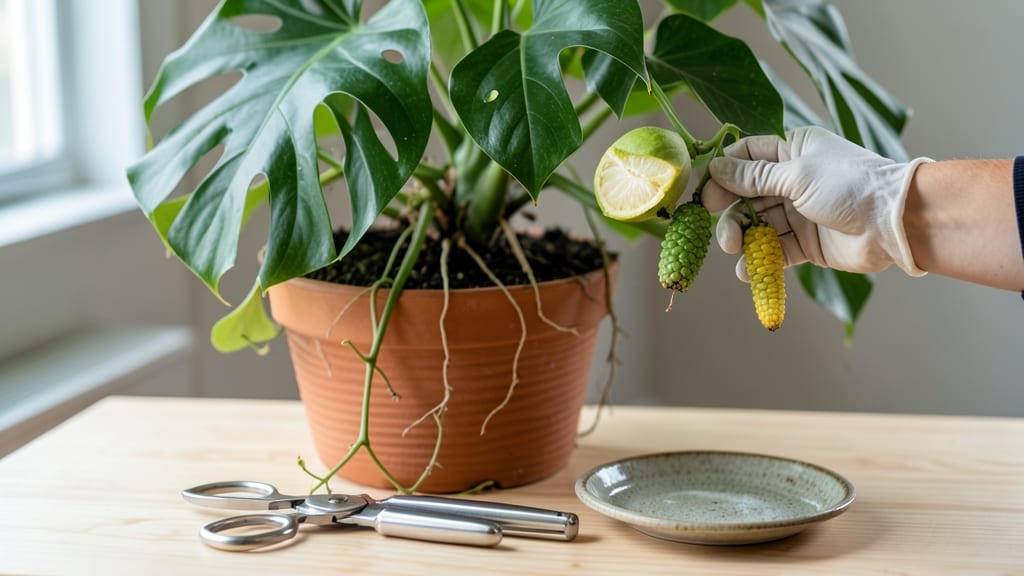
Picking Monstera fruit at the right time means waiting 8-12 months after flowering for that perfect balance of sweetness and texture.
Imagine slicing into a fruit that’s still rock-hard or letting it rot on the vine—both are easy mistakes when you don’t know the signs. The key? Watch for those telltale yellow-green splits and a sweet, tropical aroma wafting from the fruit.
Miss these cues, and you might end up with something closer to a mealy disappointment than a juicy reward.
Most home gardeners never get to taste Monstera fruit because their plants focus energy on lush leaves instead. But with the right care—bright, indirect light and a steady feeding schedule—you can coax your 🍍 Monstera Deliciosa into producing fruit.
Once it does, timing your harvest becomes the difference between a flavorful treat and a wasted effort.
In this guide, I’ll walk you through the exact ripeness cues—color shifts, scent changes, and even the texture of the skin—to know when to pick. You’ll also learn how different varieties ripen at their own pace and how to avoid common pitfalls that turn sweet fruit into a bitter letdown.

Visual & tactile ripeness cues for picking Monstera fruit
Harvesting Monstera fruit at the right moment transforms a bland, seedy snack into a sweet, tropical treat. Unlike many fruits, Monstera deliciosa relies on visual and tactile cues rather than uniform color changes.
The key is watching for skin texture shifts, aroma development, and seed maturity—all signs the fruit is ready to pick.
Most gardeners overlook the scent test, which is the most reliable indicator. A ripe Monstera fruit releases a sweet, pineapple-like aroma when gently squeezed near the stem. This happens 2-4 weeks before the skin naturally splits open, so start checking your fruit monthly once flowering occurs.
Here’s how to evaluate ripeness using four key indicators—each one a checkpoint toward perfect timing:
| Ripeness Cue | Underripe Signs | Perfectly Ripe Signs | Overripe Signs |
|---|---|---|---|
| Skin Color | Fully green, glossy | Yellowish-green with partial splits | Dull brown or blackened patches |
| Texture | Hard, firm when pressed | Skin softens near stem; slightly mushy when squeezed | Skin collapses easily; flesh liquefies |
| Aroma | No scent or mild vegetal smell | Sweet, tropical (pineapple/coconut) when near stem | Fermented or sour odor |
| Seed Development | Seeds hard and white | Seeds turn brown and soften slightly | Seeds disintegrate or mold |
| Stem Attachment | Stem tight to fruit | Stem softens and may detach with gentle twist | Stem rotted or dry |
The skin splitting is often the most dramatic cue, but don’t wait for it to fully open. Once the skin cracks open 25-50%, the fruit is at peak ripeness—ready to harvest within 24-48 hours.
If you miss this window, the flesh will turn brown and develop an off-flavor.
For tactile testing, press the fruit gently near the stem. A ripe Monstera fruit will yield slightly under pressure, while unripe fruit feels wood-like. Overripe fruit, however, will crush like overcooked potatoes. This simple test eliminates guesswork and ensures you pick at the sweetest stage.
Pro tip: Harvest in the morning when temperatures are coolest. This preserves the fruit’s natural sugars and prevents premature spoilage. Store unripe fruit at room temperature to ripen slowly, but never refrigerate—cold temperatures destroy flavor.
If your Monstera fruit never develops these cues, check your plant’s light conditions and fertilizer balance. Fruiting requires bright indirect light and a balanced NPK fertilizer (like 10-10-10) applied every 6-8 weeks during growing season.
🍍
Harvest windows by Monstera variety: from deliciosa to Albo Variegata
Not all Monstera varieties produce fruit, but those that do—like Monstera deliciosa and Monstera adansonii—offer unique harvest windows. The key difference lies in ripening speed, flavor intensity, and growing conditions.
For example, Monstera deliciosa fruits take 8-12 months to mature, while Albo Variegata varieties may never fruit reliably due to their energy focus on foliage. Understanding these timelines helps you plan for a successful harvest.
Fruit production in Monstera plants depends heavily on maturity, light exposure, and pollination. Mature plants (3+ years old) in USDA Zones 10-12 with bright indirect light are most likely to bear fruit.
Even then, hand-pollination with a soft brush may be needed to encourage fruiting. Without proper conditions, you might wait years—or never—see a harvest.
Here’s how harvest windows, flavor profiles, and growing needs vary across popular Monstera varieties to help you strategize:
If you’re growing Monstera deliciosa, mark your calendar 8-12 months after flowering to track ripening. The fruit’s skin will split naturally, revealing creamy white or green flesh—this is your cue to harvest.
For Monstera adansonii, fruits ripen faster (6-10 months) but are smaller and milder in flavor. Meanwhile, variegated varieties like Albo Variegata rarely produce fruit because their energy goes into leaf variegation instead.
To encourage fruiting, focus on consistent care: use a balanced fertilizer (like 10-10-10) every 4-6 weeks during spring and summer, and maintain 60-70% humidity. Avoid overwatering, as soggy soil can stunt fruit development.
If your plant flowers but doesn’t set fruit, try gentle hand-pollination with a paintbrush to transfer pollen between blooms.
Once harvested, store Monstera fruit in the fridge for up to 5 days to preserve freshness. The deliciosa variety’s flavor peaks when the flesh turns fully white—don’t wait until it browns! For best results, harvest in fall or winter, when the plant’s energy shifts toward fruit maturation.
With the right variety and care, you’ll enjoy a tropical harvest straight from your living room jungle. 🌿