
How To
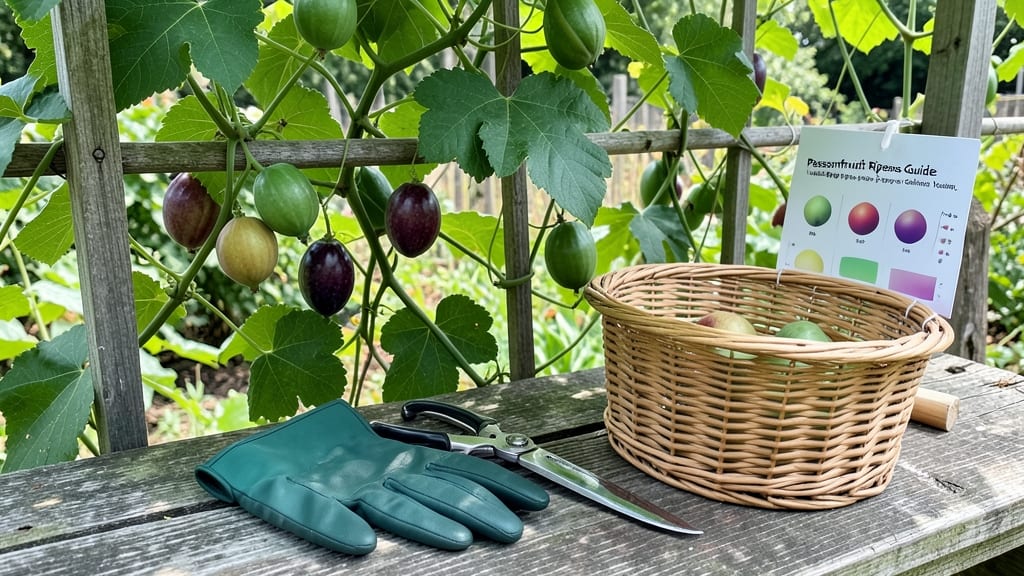
Harvesting passionfruit 🍈 at the right moment means the difference between a sweet, juicy treat and a mealy, bitter disappointment.
Picture this: You’ve waited a year for your passionfruit vine to produce, and now the fruits are hanging heavy with promise. But if you pick too soon, you’ll end up with tart, underripe fruit that’s barely edible.
On the flip side, leaving them too long risks dropping them before they’re ready—wasting all that effort. The key is knowing exactly when to twist that fruit free from the vine for peak flavor.
This guide breaks down the visual cues you need to watch for—color shifts, size thresholds, and even the scent test that tells you it’s time to harvest.
Whether you’re growing purple or yellow passionfruit, these signs will help you avoid common mistakes and ensure a harvest full of rich, tropical goodness.
Ready to master the art of harvesting? You’ll learn how to check for ripeness, when to pick for the best flavor, and how to handle the fruit once it’s off the vine. Let’s get started!

Passionfruit ripeness checklist: color, size & texture guide
Harvesting passionfruit at the right moment transforms your vine into a tropical treasure trove. The key lies in watching for three critical visual cues: color, size, and texture. Each variety—whether purple or yellow passionfruit—has distinct ripening signs, so knowing what to look for prevents bitter disappointments.
First, let’s address the most common mistake: waiting for the fruit to fall. By then, it’s often overripe and mushy. Instead, check your fruits daily during peak season (late summer to early fall) for these telltale signs of readiness.
The earlier you spot them, the sweeter your harvest will be.
Purple passionfruit typically ripen to a deep purple hue with occasional yellow patches, while yellow varieties turn a bright golden-orange. Both should have no green remnants—this is your first green light to investigate further. Ignoring this step means risking underripe fruit with harsh, seedy flavors.
Next, size matters. A fully ripe passionfruit should measure 3 to 5 inches in diameter, about the size of a large tennis ball. Smaller fruits are still developing and won’t deliver that burst of tropical sweetness you crave.
Use a ruler or compare to common objects to gauge accurately.
Texture is where many gardeners trip up. Gently squeeze the fruit—it should feel slightly soft but not mushy. Think of a ripe avocado rather than a hard apple.
If the skin gives too easily, it’s overripe; if it’s firm, it needs more time on the vine. This tactile check is non-negotiable for perfect ripeness.
Don’t overlook the stem test, a foolproof method I swear by. Gently twist the fruit—if it detaches cleanly with a slight pop, it’s ready. If the stem resists, leave it another 2-3 days. Forcing detachment can damage the vine and future fruit production, so always twist, never cut.
Regional climate plays a surprising role in ripening. In hotter zones (USDA 9-11), passionfruit ripen faster—sometimes in as little as 90 days after flowering. Cooler areas (USDA 7-8) may need an extra 2-3 weeks. Adjust your harvesting schedule accordingly to avoid missing the window.
One pro tip: Harvest in the morning when fruits are cool
Scent & taste test: the secret signs of perfectly ripe passionfruit
When your passionfruit vine bursts with color, don't rush to harvest—your nose and taste buds hold the final clues to perfect ripeness. The sweet floral aroma wafting from a ripe passionfruit is unmistakable, signaling its peak sugar content and juicy texture.
But timing matters: harvest too early, and you'll get bitter, seedy pulp; wait too long, and the fruit may overripen and rot on the vine.
I've learned through trial and error that color alone isn't enough—the aroma test is your secret weapon. A ripe passionfruit should smell like a mix of tropical flowers and citrus, almost like a cross between jasmine and lemon.
If it smells sour or fermented, it's past its prime. This scent test works for both purple and yellow varieties, though their flavors differ slightly—purple passionfruit tastes more tangy and complex, while yellow leans sweeter and milder.
Never harvest if the fruit smells like vinegar or alcohol—this means fermentation has begun, and the flesh will be mushy and inedible. Overripe passionfruit also drops easily from the vine, often splitting open and attracting pests. When in doubt, cut it open—ripe passionfruit should have bright, glossy seeds surrounded by juicy, translucent pulp. If the pulp looks dry or discolored, it's past its peak.
For the ultimate test, I recommend the "finger squeeze method" combined with a taste sample. Gently press the passionfruit—it should yield slightly under pressure, like a ripe avocado. Then, cut open a small section near the stem.
The perfectly ripe fruit will have bright yellow or orange pulp (depending on variety) that's juicy but not watery. Take a tiny taste: the flavor should be balanced between sweet and tart, with a burst of tropical aroma on your tongue.
Common mistakes include harvesting based on size alone—some passionfruit stay small but ripen fully, while others grow large but remain underripe inside. I've seen gardeners pick fruit that's fully colored but still hard, only to find it tasteless and seedy.
The key is combining all three tests: color, aroma, and texture. For example, a yellow passionfruit might be fully colored but still greenish at the base—wait until the entire fruit changes hue.
Pro tip: Harvest in the early morning when flavors are most concentrated. Store ripe passionfruit in the fridge for up to 5 days to slow ripening, but never refrigerate unripe fruit—it won't ripen properly.
If you're unsure, harvest a few fruits at different stages and taste-test them over 2-3 days to train your palate. Over time, you'll develop an instinct for perfect passionfruit ripeness that's unmatched by any color chart.
Remember, passionfruit don't continue ripening well after picking, so harvest at peak ripeness for the best flavor. The sweetest, most aromatic fruits come from vines that receive consistent care—think balanced fertilizer, regular watering, and full sun exposure.
With practice, you'll go from guessing to growing passionfruit that taste like a tropical vacation every time you bite in. 🍈