
Picking
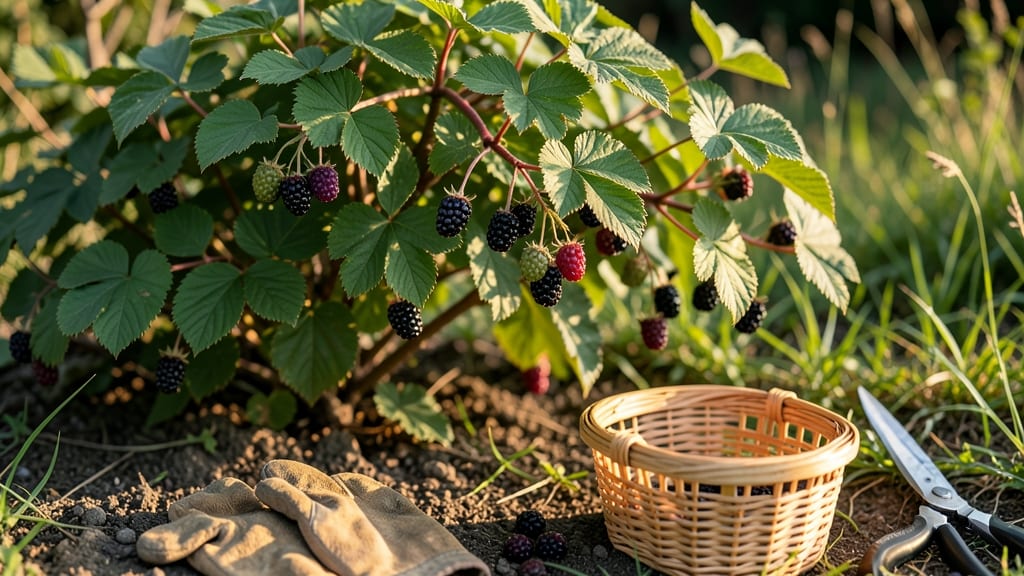
Blackberries fruit between July and September, but the exact timing depends on your variety and growing zone — and missing that window means a crop of tart, underripe berries instead of sweet perfection.
Picture this: you’ve spent months tending to your 🍇 blackberry patch, and now the moment of truth arrives. Knowing when to harvest isn’t just about waiting for color—it’s about catching that perfect balance of flavor and texture.
One day too early, and you’re left with mealy berries; one day late, and they’re mushy and overripe.
In USDA Zone 6a, most varieties ripen in late July, but fall-bearing types might stretch into September. The key is watching for fully black, glossy berries that yield slightly when gently squeezed—no red or green hints allowed.
Below, I’ll break down the ripeness cues, variety-specific timelines, and pro tips to extend your harvest season.
Ready to turn your blackberry patch into a flavor-packed success? Let’s dive into the signs of perfect ripeness, how to adjust for your climate, and how to avoid the most common picking mistakes that waste your hard work.
Blackberry ripeness signs: how to tell when fruit is ready to pick
Picking blackberries at the wrong time can turn your sweet harvest into a tart disappointment. The secret to juicy, flavorful berries lies in recognizing the visual, tactile, and flavor cues that signal peak ripeness.
Whether you're growing Thornless Chester or Triple Crown varieties, these signs apply across all blackberries.
First, focus on the color transformation. Unripe berries start green or reddish, but fully ripe blackberries turn a deep, uniform black color. Some varieties like Natchez may have a slight sheen when ripe, while others like Ouachita stay matte.
Don't be fooled by berries that are only partially colored—they won't be fully sweet.
| Ripeness Sign | What to Look For | Action to Take |
|---|---|---|
| Color | Deep, uniform black (no red/green patches) | Harvest immediately for best flavor |
| Firmness | Yields slightly when gently squeezed (like a ripe peach) | Pick when berries separate easily from stem |
| Stem Test | Detaches cleanly with light pressure (no tearing) | Harvest in morning hours for best texture |
| Size | Fully swollen and plump (no wrinkling) | Avoid overripe berries that feel mushy |
| Flavor Test | Sweet-tart balance (no sour aftertaste) | Taste a few berries to confirm ripeness |
Don't rely solely on color—tactile cues are just as important. Gently squeeze a berry between your thumb and forefinger. A ripe blackberry will feel plump and slightly yielding, almost like a ripe avocado. If it feels hard or mushy, it's not ready.
The stem test is another foolproof method: grasp the berry and give it a slight tug. If it detaches cleanly from the plant, it's perfect for picking.
Flavor is the ultimate test, so when in doubt, taste a berry. Ripe blackberries should have a balanced sweet-tart flavor with no lingering sourness.
Some varieties like Black Satin develop a richer flavor when left slightly longer on the vine, while others like Apache should be picked at peak ripeness for the best texture. Remember that blackberries continue to ripen slightly after picking, so don't wait too long if you see these signs.
Timing matters too—harvest in the morning when temperatures are cooler. This preserves the berries' firmness and flavor longer. Avoid picking after rain, as wet berries bruise easily and may develop mold.
If you notice birds or wildlife feasting on your berries, it's a sure sign they're ripe and ready for harvest!
One common mistake is picking berries that are still partially red. These will taste tart and underdeveloped. Conversely, overripe berries that feel mushy or have moldy spots should be left on the plant.
The goal is to harvest when 80-90% of the berries on a cane are fully black—this ensures you get the most fruit without sacrificing quality.
For fall-bearing varieties, you'll often see two harvests: an early season crop on primocanes (first-year canes) and a larger crop the following year on floricanes (second-year canes). Pay attention to which canes are producing fruit—primocanes bear smaller, earlier berries, while floricanes produce larger, sweeter fruit.
This dual harvest means you'll need to check ripeness signs twice per season for these varieties.
If you're growing everbearing varieties like Chester or Arapaho, you'll get a continuous harvest throughout the season. In this case, focus on picking every other day to keep up with the fruit production.
Use a harvest basket with a lid to prevent bruising during transport, and store picked berries in the refrigerator for up to 3-5 days for best quality.
Remember that climate and variety affect ripening times. In cooler regions, blackberries may take 2-3 weeks longer to ripen than in warm climates. If your berries
Best harvest times by blackberry variety and USDA growing zones
Timing your blackberry harvest is everything—especially when you're dealing with spring-bearing and fall-bearing varieties that thrive in different USDA growing zones. The right moment can mean the difference between juicy, flavorful berries and sour, underripe fruit.
Understanding these seasonal differences ensures you're picking at peak ripeness, whether you're in Zone 5 or Zone 9.
Spring-bearing varieties, like Triple Crown and Chester, produce fruit on second-year canes and ripen just once per season, typically between late July and early September. Fall-bearing types, such as Natchez and Ouachita, offer a second harvest on current-year canes in late summer to fall.
Your local climate and microclimate will also shift these windows by weeks.
Zone-specific adjustments are critical—cooler zones like Zone 6 may see harvests start in mid-July, while warmer Zone 8 gardens might extend fruiting into October. Below, I’ve broken down the ideal harvest windows for popular varieties by zone, so you can plan accordingly.
For gardeners in cooler zones (5-6), expect your spring-bearing varieties to ripen 2-3 weeks earlier than in warmer zones (8-9). In Zone 9, fall-bearing varieties like Natchez can produce fruit into November if temperatures stay mild.
To extend your harvest, consider mulching heavily in fall to protect fruit from early frosts.
Pro tip: Monitor your plants weekly starting in mid-July—this is when most varieties begin ripening. Watch for color shifts from red to deep black and easy detachment from the stem.
If you’re in a transition zone (7-8), you might see staggered harvests over 4-6 weeks, so plan to pick frequently to avoid overripe fruit.
Adjust your expectations based on your local microclimate. A south-facing trellis in a sunny zone will ripen berries faster than a shady spot or high-altitude garden.
Keep an eye on weather forecasts—cool nights can delay ripening, while hot, dry spells may concentrate flavors and speed up harvest time.