
Trees
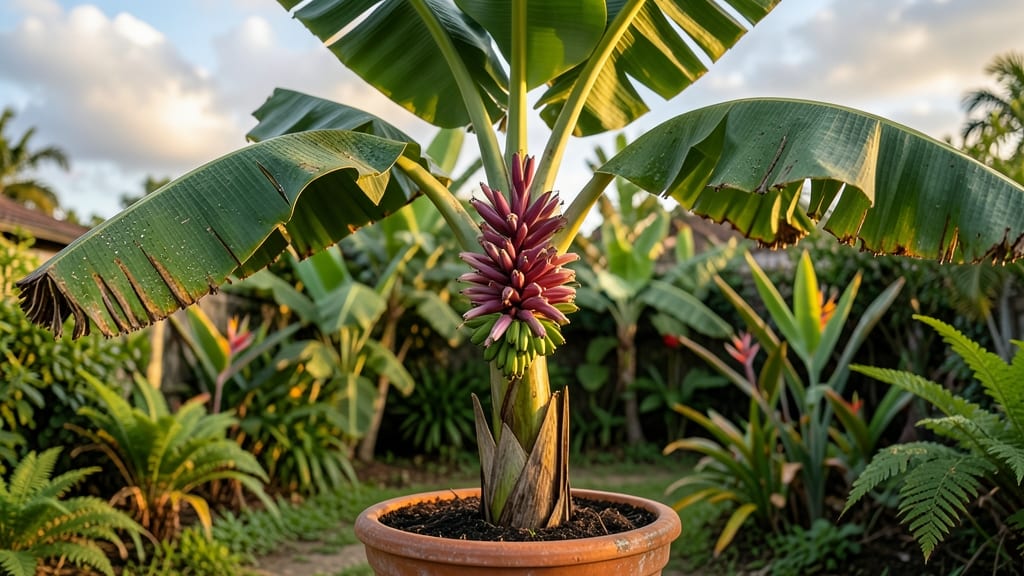
Banana trees produce fruit approximately 9–12 months after planting, but this varies by variety—dwarf bananas fruit in 12–18 months, while larger types like Cavendish take 18–24 months. Climate, soil quality, and care also determine timing, with tropical regions accelerating growth and fruiting.
Understanding when banana trees bear fruit depends on their growth cycle, which begins with strong root development and continues through rapid pseudostem growth. 🌱 The key transition happens when the tree reaches maturity and produces an inflorescence—the flower cluster that eventually becomes fruit.
Dwarf varieties like 'Lady Finger' fruit faster because they grow more compactly, while larger varieties need extra time to build structural strength. Even in perfect conditions, patience is key, as rushing care can delay fruiting by months.
Your growing environment plays a bigger role than most gardeners realize.
Tropical climates with consistent warmth and humidity create ideal conditions, while cooler regions may see delayed fruiting unless you provide greenhouse protection or use heat-loving varieties. Soil fertility matters too—banana trees thrive in well-draining, slightly acidic soil (pH 5.5–7.0) rich in organic matter.
Regular feeding with potassium and phosphorus during the growing season helps trigger flowering, but over-fertilizing can cause problems like excessive leaf growth at the expense of fruit production.
💡 In This Article
- Banana Tree Growth Stages Before Fruiting
- Optimizing Banana Tree Conditions for Faster Fruit Production
Banana tree growth stages before fruiting
The journey from planting to fruiting begins with the root system, which establishes within the first 3–4 months. Unlike true trees, banana plants grow from a corm (underground stem) that sends out fibrous roots.
These roots spread aggressively to anchor the plant and absorb nutrients, but they’re also shallow—typically reaching only 12–18 inches deep. This makes them sensitive to drought and poor drainage, which can delay growth by up to 2–3 months if not managed properly.
Once roots stabilize, the pseudostem (the false trunk made of leaf sheaths) starts elongating at a rate of 1–2 feet per month. This phase is critical because the pseudostem must reach a height of 6–10 feet before flowering can occur.
Dwarf varieties like 'Red Dwarf' grow more compactly, reaching fruiting height in 9–12 months, while larger types such as 'Gros Michel' need 18–24 months to develop the structural strength required. Temperature plays a key role here—ideal growth occurs between 75–85°F, with humidity above 60%.
Below 65°F, growth slows dramatically, potentially adding 3–6 extra months to the timeline.
The final stage before fruiting is the emergence of the inflorescence, a massive flower cluster that can weigh up to 20–40 pounds. This happens when the plant detects long daylight periods (typically 12+ hours) and sufficient nutrient reserves.
The inflorescence grows from the center of the plant, pushing through the pseudostem like a spear. What most people don’t realize is that the first flowers that appear are actually male—only after they wither do the female flowers (which develop into bananas) emerge.
This biological process takes 4–8 weeks and requires precise environmental conditions to proceed smoothly.
Varieties like 'Lady Finger' (a dwarf banana) produce fruit 12–18 months after planting because their compact growth habit conserves energy for flowering. In contrast, 'Cavendish' bananas—common in supermarkets—take 18–24 months due to their larger size and slower maturation.
The difference comes down to genetic growth rates: dwarf varieties prioritize fruiting over vertical growth, while larger types invest more in structural development first. 🌿 This is why your choice of variety can shave off 6–12 months from the fruiting timeline.
One often-overlooked factor is leaf emergence. Banana trees produce new leaves in a spiral pattern, and each leaf unfurls roughly every 2–3 weeks. The number of mature leaves (typically 8–12) signals that the plant is ready to flower.
If leaves appear yellow or stunted, it’s a sign of nutrient deficiency—particularly a lack of potassium or magnesium—which can delay fruiting by 2–4 months. This is why regular soil testing and targeted fertilization are essential for home growers aiming to speed up the process.
Finally, the flowering trigger itself is influenced by the plant’s internal clock. Banana trees are short-day plants, meaning they flower in response to specific day-length cues. In tropical regions, this happens naturally, but in cooler climates, growers may need to supplement with artificial light to mimic long daylight periods.
Without this trigger, even well-cared-for plants may take 6–12 extra months to produce fruit. Understanding these stages helps explain why some banana trees fruit earlier than others—it’s not just about age, but the perfect alignment of biology, environment, and care.