
Trees
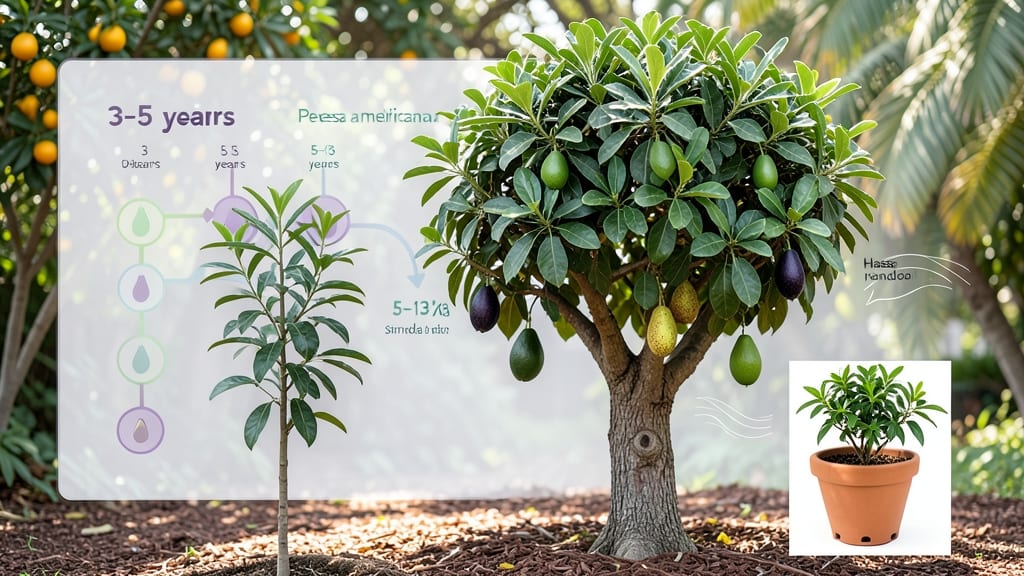
Avocado trees bear fruit typically 3 to 4 years after planting for grafted varieties and 5 to 13 years for seed-grown trees, depending on climate, variety (e.g., Hass matures faster than Fuerte), and care. Warm, frost-free regions accelerate fruiting, while cooler zones may delay production by years.
Grafted avocado trees reach fruiting age much faster than those grown from seed because their genetic makeup is already optimized for productivity. 🌱 The variety you choose plays a huge role—Hass trees, for example, often produce fruit within 3 years, while seed-grown trees can take over a decade to mature.
Climate is another critical factor: regions with consistent temperatures above 60°F and minimal frost create ideal conditions for early fruit set.
For gardeners eager to enjoy homegrown avocados sooner, selecting a grafted tree from a nursery and providing consistent care (like proper watering and pollination support) can cut years off the waiting period.
The key is patience combined with the right growing conditions—once established, these trees can become prolific producers for decades.
💡 In This Article
- Factors Affecting Avocado Tree Fruit Production Timelines
- How to Speed Up Avocado Tree Fruiting in Your Garden
Factors affecting avocado tree fruit production timelines
Avocado trees follow a biological timeline influenced by their genetic heritage and environmental conditions. Grafted trees—where a desired variety's scion is attached to a rootstock—enter fruiting phase faster because their genetic code already contains optimized traits for productivity.
Seed-grown trees, however, must undergo years of genetic stabilization, which is why they take 5 to 13 years to bear fruit. The Hass variety, for instance, typically fruits in 3 to 4 years when grafted, while seed-grown Hass trees may take 10+ years to mature. 🌱
Climate plays a pivotal role in fruiting timelines, particularly temperature thresholds. Avocados require consistent warmth, with ideal pollination occurring between 60°F and 85°F. Regions like California's coastal areas (USDA Zone 10+) provide perfect conditions, allowing trees to fruit annually.
In contrast, subtropical zones with cooler winters may see delayed fruiting or irregular production. For example, Florida's avocado groves often experience 2-3 year cycles due to temperature fluctuations affecting flower development.
Soil composition and watering practices further influence fruit production. Avocados thrive in well-draining, slightly acidic soil (pH 6.0-6.5) with high organic matter. Overwatering or poor drainage can stress the tree, delaying fruiting by 1-2 years as the plant diverts energy to root health.
In arid climates, drip irrigation systems that deliver 1-1.5 inches of water weekly during dry seasons help maintain consistent growth and flowering patterns.
Pollination is another critical factor, as avocados require cross-pollination between Type A and Type B flowers (which open at different times). In regions with insufficient bee activity, fruit set can be minimal, extending the time to first harvest.
Hand-pollination or planting complementary varieties (like Hass paired with Reed) can accelerate fruiting by ensuring proper pollination. This mechanical intervention mimics natural processes, reducing delays caused by environmental factors. 🌿
Nutrient availability also impacts fruiting timelines. Avocados are heavy feeders, requiring balanced fertilization with nitrogen, phosphorus, and potassium. A deficiency in zinc or boron—common in sandy soils—can stunt flower development, pushing back fruiting by 2+ years.
Regular soil testing and targeted amendments (like zinc sulfate) help correct these imbalances, ensuring trees reach maturity sooner.
Finally, tree age and size matter. Smaller trees (under 10 feet tall) may take longer to fruit because they lack the energy reserves of mature trees.
Pruning strategies that encourage a strong central leader while maintaining an open canopy can redirect energy toward fruit production, shaving off 1-2 years from the timeline. The combination of these factors—genetics, climate, soil, pollination, and nutrition—explains why fruiting timelines vary so dramatically between gardens and commercial groves.