
Fertilization
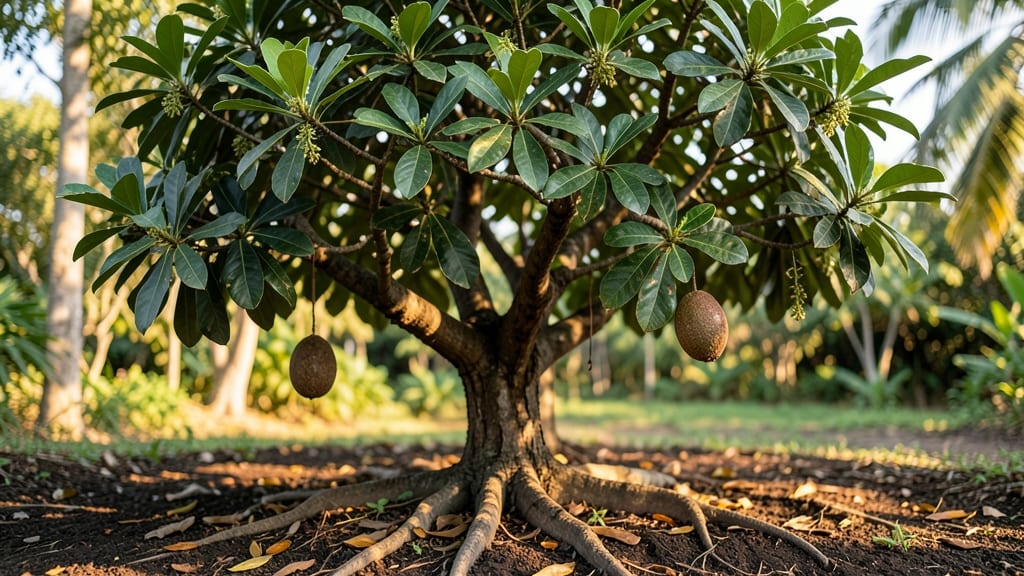
Sapodilla fruit is a tropical, sweet, brown-skinned fruit with grainy, caramel-like flesh that originates from Mexico and Central America. Its rich, honeyed flavor and distinctive texture make it a favorite in desserts and smoothies, while the sapodilla tree thrives in warm climates with well-drained soil.
Sapodilla fruit, known as chikoo in some regions, stands out for its unusual texture—soft when ripe but firm when unripe, almost like a cross between a pear and a persimmon. 🌿 The tree itself is a slow grower but incredibly resilient, producing fruit year-round in tropical zones.
Its latex-rich bark has even been used traditionally for chewing gum, adding another layer to its fascinating history. Whether you're growing one or just curious about its taste, sapodilla offers a unique tropical experience.
This fruit isn't just delicious—it's also packed with nutrients like dietary fiber and vitamin C, though it's naturally low in calories. The key to enjoying it is picking it at the right stage: too firm, and it's tasteless; too soft, and it turns mushy.
I always recommend buying sapodillas that yield slightly to gentle pressure—they're usually at peak sweetness.
💡 In This Article
- Sapodilla Fruit Origins and Botanical Characteristics
- How to Grow and Harvest Sapodilla Trees
Sapodilla fruit origins and botanical characteristics
The sapodilla (Manilkara zapota) belongs to the sapotaceae family, a group of tropical trees also including the mango and star apple. Its scientific name reflects its complex origins—Manilkara comes from the Mayan word for "tree," while zapota derives from the Nahuatl tzapotl, meaning "sapodilla."
This fruit has been cultivated for over 1,000 years in Mesoamerica, where it was prized by the Maya and Aztecs for both its flavor and medicinal properties. Archaeologists have even found sapodilla seeds in ancient burial sites, suggesting its cultural significance long before European contact. 🌿
The sapodilla tree itself is a slow grower, typically reaching 30-50 feet in height but taking 5-7 years to bear fruit. Its bark contains a milky latex that hardens when exposed to air—a trait that historically led to its use in natural chewing gum production.
The tree thrives in tropical climates with temperatures between 68-86°F and requires well-drained, slightly acidic soil (pH 5.5-7.0). Unlike many tropical fruits, sapodilla trees are remarkably drought-resistant once established, making them adaptable to regions with seasonal dry spells.
What makes sapodilla unique botanically is its fruit's dual texture: the outer flesh is grainy and caramel-like, while the inner core remains firm and slightly fibrous. This contrast comes from its high starch content, which converts to sugars as the fruit ripens.
The skin's brown, rough texture develops a slight sheen when ripe, signaling peak sweetness—though it's not edible. Interestingly, sapodillas release ethylene gas as they ripen, which means storing them with other ethylene-sensitive fruits (like bananas) can speed up spoilage. 🍯
The tree's flowers are small and greenish-yellow, with a subtle fragrance that attracts pollinators like bees and wasps. Each flower produces a single fruit after successful pollination, and trees can yield 200-500 fruits per year under optimal conditions.
The fruit's honeyed flavor comes from its natural sugar content (about 15-20% by weight), along with trace compounds like terpenes that give it a distinct aromatic profile. This chemical composition is why sapodilla is often described as tasting like a mix of pear, caramel, and brown sugar.
Culturally, sapodilla has played a role beyond food. In traditional medicine, its latex was used to treat wounds and skin irritations, while the fruit itself was believed to aid digestion.
Today, sapodilla trees are grown commercially in countries like Mexico, India, and the Philippines, where they're valued for both their fruit and shade-providing canopies. The tree's ability to grow in poor soil conditions also makes it an excellent candidate for agroforestry projects in developing regions. 🌱
For gardeners, sapodilla trees offer a rewarding but patient endeavor. While they're not cold-hardy (they can't tolerate temperatures below 32°F), their adaptability to various soil types and resistance to pests make them a low-maintenance option for tropical and subtropical climates.
The key to successful cultivation lies in mimicking their natural habitat: partial shade during the hottest hours and consistent moisture during the first few years of growth. 🌳