
Propagation
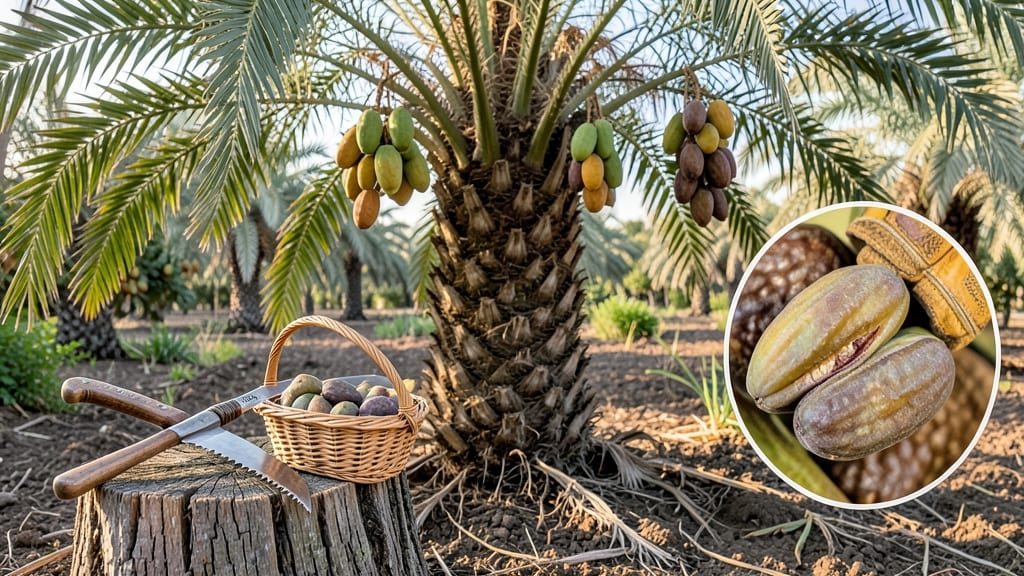
Dates are made from the fruit of the date palm tree (Phoenix dactylifera), a sweet, fibrous seed pod that ripens from green to golden-brown as it matures naturally on the tree.
Dates come from the date palm tree's fruit, which starts as a small, green, and tart pod before transforming into the sweet, chewy treat we know. 🌱 The ripening process involves natural sugar concentration, turning the fruit from bitter to richly sweet over several months.
What makes this fruit unique is its dual role—as both a seed and a fruit—since the edible part surrounds the hard seed core. This botanical quirk is why dates are classified as drupes, similar to peaches or cherries, but with a distinctly fibrous texture.
Understanding this process helps explain why some dates taste creamier or drier—the variety and growing conditions play a huge role. For example, Medjool dates are prized for their caramel-like sweetness, while Deglet Noor dates offer a firmer bite.
The key to great-tasting dates lies in proper pollination and harvesting at the right stage, which I'll dive into next.
💡 In This Article
- How Date Palm Fruit Develops into Edible Dates
- Best Date Palm Varieties for Growing and Harvesting
How date palm fruit develops into edible dates
The date palm fruit begins its life as a tiny, green flower cluster that develops into a seed pod called a "date."
This transformation starts with pollination, where male flowers release pollen to fertilize female flowers on the same tree. 🌿 Unlike many fruits, dates require cross-pollination between male and female flowers, which is why date palms are often grown in pairs or groups.
The fertilized ovary then swells into a fruit that undergoes four distinct ripening stages: Kimri (unripe, green, and bitter), Khalal (ripe, red, and tart), Rutab (soft, yellow, and sweet), and finally Tamr (fully ripe, brown, and chewy).
During these stages, the fruit's sugar content increases dramatically—starting at around 10% in the Kimri stage and peaking at 70-80% in the Tamr stage. This sugar concentration is what transforms the fruit from inedible to the sweet, energy-rich treat we enjoy.
The fibrous texture comes from the fruit's thick pericarp (outer layer) and the fleshy mesocarp (middle layer), which surrounds the hard endocarp (seed). This structure is why dates are classified as drupes, like peaches or cherries, but with a unique fibrous texture that sets them apart.
What makes dates so special is their ability to concentrate sugars while retaining moisture.
At 375°F or higher, the fruit's natural pectin breaks down, releasing more sugars and creating that caramelized flavor we love. 🍯 The ripening process also involves enzymatic changes that soften the fruit's texture, turning it from firm to tender.
This is why dates harvested at the Rutab stage are often used in cooking (like in tagines or energy bars), while Tamr dates are best enjoyed fresh or dried.
Not all date varieties follow this exact timeline—some, like the Medjool, take longer to ripen and develop a creamier texture, while others, like Deglet Noor, mature faster with a firmer bite.
The key factor here is the balance of water and sugar: too much water makes the fruit mushy, while too little results in a hard, dry texture. This is why date growers carefully monitor humidity levels and harvesting times to ensure the perfect balance.
Interestingly, dates are also a type of "false fruit"—the edible part isn't the ovary but the fleshy pericarp surrounding the seed. This botanical quirk is why dates are often called "seed pods" in culinary contexts.
The seed itself is inedible and typically discarded, though it can be used for propagation. This dual nature (fruit + seed) is what gives dates their unique structure and nutritional profile.
Understanding these stages helps explain why some dates taste sweeter or creamier than others. For example, Medjool dates are harvested at the Tamr stage but are often picked slightly earlier to preserve their moisture and caramel-like flavor.
Meanwhile, Deglet Noor dates are left to ripen fully for a firmer texture. This careful control over ripening is what makes commercial date farming both an art and a science.