
Pruning
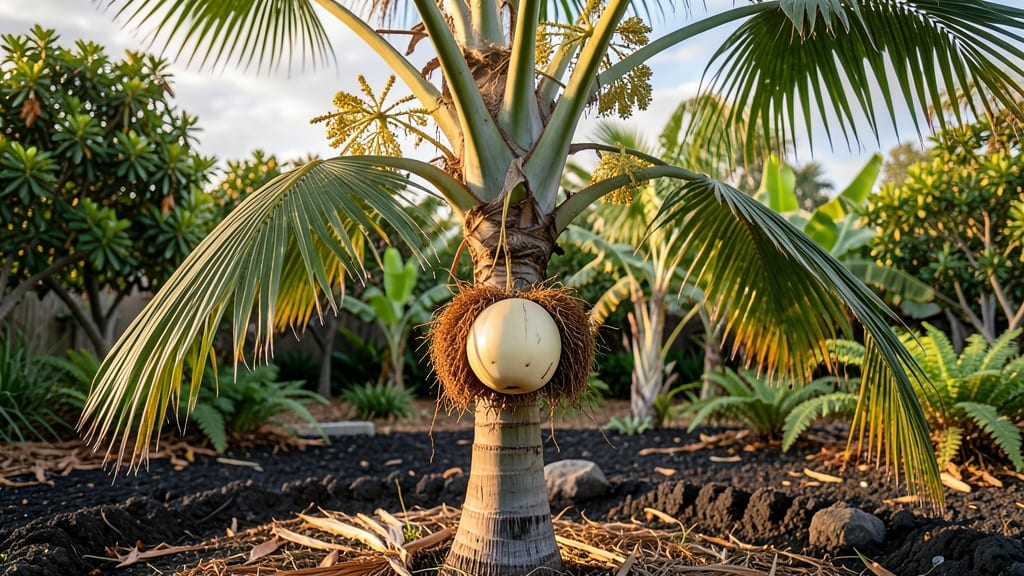
The palm tree fruit name varies by species, but the most accurate term is palm fruit or palm drupe, with common examples like dates (from date palms) or coconuts (from coconut palms). Many mislabel them as 'nuts,' though botanically, they’re fruits with hard outer shells or husks.
The confusion around palm tree fruit names stems from their diverse structures—some resemble drupes (like coconuts with their fibrous husks), while others are berries (such as acai). 🌿 For example, dates are actually drupes with a fleshy mesocarp, while coconuts are technically fibrous drupes with a hard endocarp.
This botanical diversity explains why people often call them "nuts," but the scientific term palm fruit covers all varieties accurately.
Understanding these distinctions helps when shopping or cooking—knowing whether you're dealing with a berry, drupe, or fibrous husk fruit affects preparation methods. For instance, acai berries are typically consumed fresh or processed, while coconuts require cracking their hard shells to access the edible endosperm.
💡 In This Article
- Botanical Classification of Palm Tree Fruits
- Identifying Common Palm Fruits by Tree Type
Botanical classification of palm tree fruits
The scientific term "palm fruit" encompasses a diverse group of botanical structures because palm trees produce fruits that defy simple categorization. Unlike true nuts—which are hard-shelled seeds with minimal fleshy tissue—palm fruits develop from a single ovary and contain one or more seeds surrounded by fleshy or fibrous layers.
For example, a date is a drupe, meaning it has a fleshy outer layer (mesocarp), a hard inner shell (endocarp), and a seed (the pit).
The confusion arises because the endocarp in some palms, like coconuts, is so thick and fibrous it mimics a nut's hardness, but it's still technically a fruit.
Coconuts are a prime example of this botanical complexity. Their "husk" (the fibrous outer layer) is actually the mesocarp, while the hard, brown "shell" is the endocarp—both parts of the fruit, not the seed.
The true seed is the white, edible "meat" (endosperm) inside, surrounded by the liquid endosperm. 🌴 This structure aligns with the botanical definition of a fibrous drupe, where the mesocarp is modified into fibrous tissue instead of soft flesh.
In contrast, açaí berries from the açaí palm are true berries, containing multiple small seeds embedded in a thin, fleshy pericarp.
The key distinction lies in how these fruits develop: palm fruits originate from a single ovary with one or more seeds, while true nuts (like acorns) are dry fruits with a hard shell that doesn’t open to release seeds.
This structural difference explains why palm fruits can be sweet (dates), fibrous (coconuts), or pulpy (açaí), while nuts remain dry and woody. Understanding these layers—mesocarp, endocarp, and seed—helps clarify why terms like "drupe" or "berry" apply to specific palm species but not others.
Regional language also plays a role in the mislabeling. In many cultures, the hard outer shell of palm fruits leads to colloquial terms like "nut" (e.g., "coconut" vs. "coconut fruit"). However, botanically, a nut must have a hard shell that doesn’t open at maturity, which palm fruits don’t fit.
For instance, the palm oil fruit (from oil palms) is a drupe with a single seed, while the peach palm fruit resembles a small, fleshy drupe with a large seed. These variations highlight why "palm fruit" is the most inclusive term.
To further complicate things, some palm fruits undergo post-harvest changes that alter their classification. For example, a green coconut is technically a drupe, but as it matures, the fibrous mesocarp hardens, making it resemble a nut.
This transformation is why even scientists sometimes debate whether certain palm fruits should be reclassified as "pseudonuts"—a term used for fruits that mimic nuts but aren’t true nuts. 🌱 The takeaway?
Palm fruits are a fascinating blend of botanical structures, and their names depend on both science and cultural context.
For practical purposes, remember this rule of thumb: If the "fruit" has a hard shell but also contains a fleshy or fibrous layer surrounding a seed, it’s a palm fruit—not a nut.
This applies to everything from dates (drupes) to coconuts (fibrous drupes) and even peach palm fruits (small, fleshy drupes). The next time you see a palm fruit, take a closer look at its layers—you’ll see why the term "palm drupe" is so precise!