
Trees
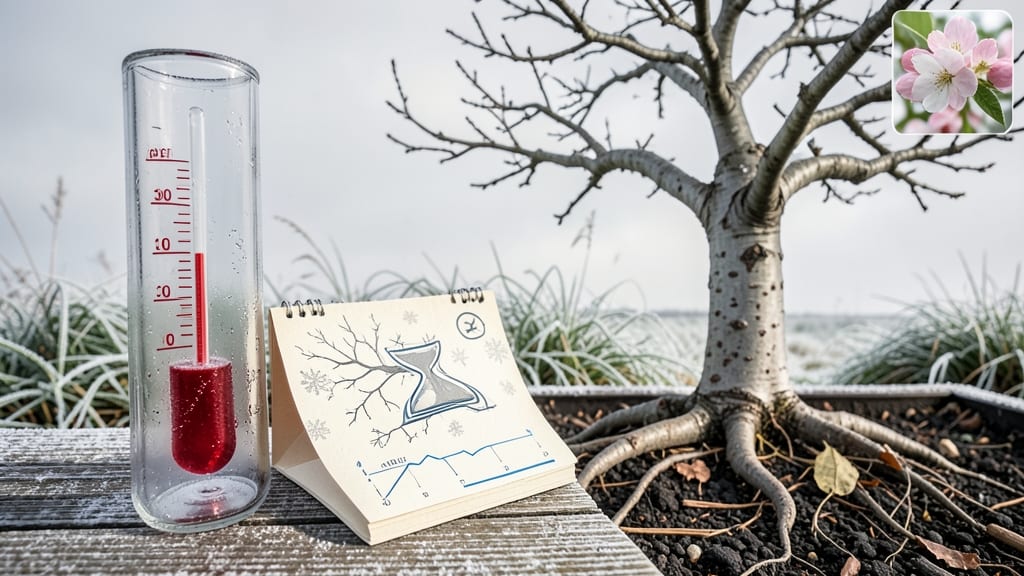
Chilling hours for fruit trees are the total number of hours below 45°F (7°C) that trees need during winter dormancy to produce blooms and fruit the following season. Most varieties require between 200–1,000 hours, depending on the species.
These cold exposure requirements act like a biological reset button for trees, breaking their winter dormancy and signaling when to bloom. 🌸 Without enough chilling hours, fruit trees may produce sparse flowers or no fruit at all.
For example, peach trees typically need around 400–600 hours, while apples often require 800–1,000 hours. The exact threshold varies by cultivar and growing region, which is why matching trees to your climate zone is crucial for successful fruit production.
Understanding your local chill hours helps you select the right varieties—some newer cultivars are bred to thrive in warmer climates with fewer chilling hours.
For instance, in areas with only 200–300 hours of winter chill, you might opt for low-chill peach varieties like 'Redhaven' or 'Elberta' instead of traditional varieties that need more cold exposure.
💡 In This Article
- How Chilling Hours Work in Fruit Tree Dormancy
- Choosing Fruit Trees for Your Climate’s Chill Requirements
How chilling hours work in fruit tree dormancy
Chilling hours trigger a biological process called vernalization, where trees undergo hormonal changes that break their winter dormancy. During cold exposure, trees produce higher levels of abscisic acid (which signals dormancy) while gradually reducing ethylene production—this shift prepares the tree to transition from survival mode to growth mode.
The cold exposure also stabilizes cell membranes and prevents frost damage, ensuring the tree can handle fluctuating spring temperatures. 🌱
Temperature thresholds matter more than just the number of hours. For example, peach trees require 400–600 hours below 45°F (7°C), but temperatures between 32–45°F (0–7°C) are most effective.
If winter temperatures hover around 50°F (10°C) for too long, the chilling process stalls, leaving trees in a state called partial dormancy. This is why regions with mild winters (like coastal California) often struggle with traditional fruit trees—they simply don’t get enough true chilling hours.
Different fruit types have evolved distinct chilling requirements due to their natural habitats. Apples and cherries typically need 800–1,000 hours of chilling, reflecting their origins in colder climates. In contrast, peaches and plums often thrive with 300–500 hours, showing how their ancestral regions had shorter winters.
Even within species, varieties can vary—some low-chill peaches are bred to need as few as 200–300 hours, making them ideal for warmer zones.
What happens if a tree doesn’t get enough chilling? Without proper cold exposure, trees may bloom late or not at all, leading to poor fruit set. In extreme cases, they might produce flowers that get damaged by late frosts.
This is why growers in mild climates often use artificial chilling methods, like hydrocooling or dormancy sprays, to trick trees into thinking they’ve experienced winter. The process is delicate—too little chilling leaves trees confused, while too much can exhaust their resources.
Here’s how the process works step-by-step:
- Stage 1 (Endodormancy): Trees enter deep dormancy, triggered by shortening daylight and cooling temperatures. This stage requires the most chilling hours.
- Stage 2 (Ecodormancy): Trees remain dormant but can respond to environmental cues like temperature fluctuations. This is when buds begin preparing for spring.
- Stage 3 (Active Growth):** Once enough chilling is achieved, trees transition to active growth, producing flowers and leaves.
The transition between these stages is controlled by phytohormones, with abscisic acid and gibberellins playing key roles. For example, gibberellins promote flower bud development, but only after the tree has satisfied its chilling requirements.
This hormonal ballet is why timing is everything—too early, and the tree might bloom in winter and get frost-damaged; too late, and you miss the optimal pollination window. 🌿