
Pruning
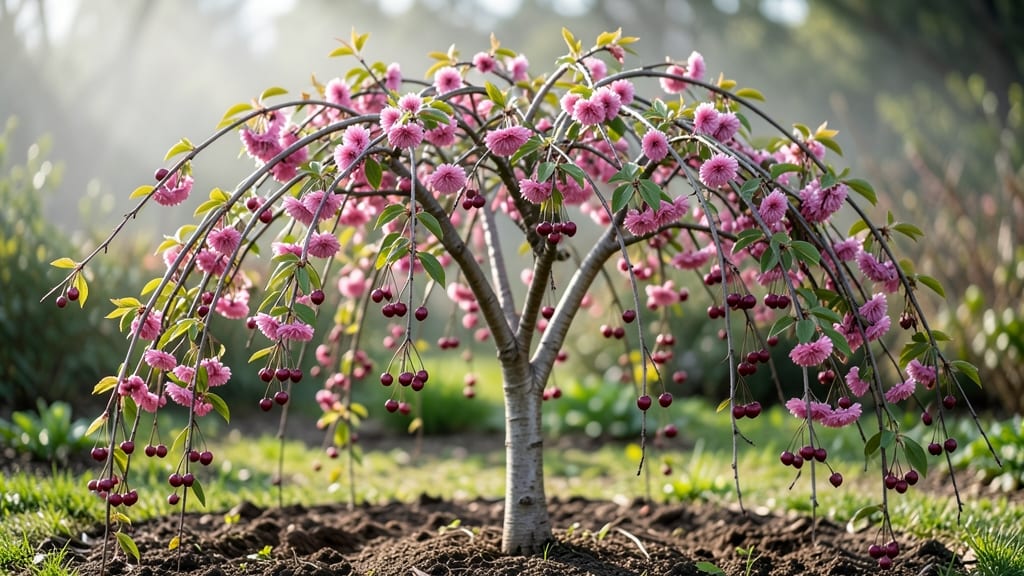
Pink weeping cherry tree fruit ripens in late spring to early summer, typically between May and June, when the fruit turns deep red and easily detaches from the stem. Harvest when fully colored but still firm for peak sweetness and flavor.
Timing your harvest is everything for these delicate cherries—wait too long, and they'll lose their signature tart-sweet balance. 🌸 The deep red hue signals full ripeness, but the real test is the stem: if it pulls away cleanly, you're golden.
I've found that harvesting on cooler mornings preserves the fruit's vibrant color and prevents bruising when you handle them.
These cherries are best enjoyed fresh, but if you need to store them, refrigerate in a single layer with a paper towel to absorb moisture and extend freshness for up to a week.
What makes these cherries special is their unique flavor profile—less sweet than supermarket varieties but packed with complex notes that shine in desserts or as a fresh snack.
The weeping branches make them stunning in landscapes, but their fruit rewards patience with a burst of flavor that's hard to beat when picked at the right moment.
💡 In This Article
- Identifying the Perfect Ripeness of Pink Weeping Cherry Fruit
- Step-by-Step Guide to Harvesting Pink Weeping Cherries
Identifying the perfect ripeness of pink weeping cherry fruit
The biological process of cherry ripening begins when the fruit's chlorophyll breaks down, revealing its true color. For pink weeping cherries, this transition happens gradually—starting as a pale pink and deepening to a vibrant deep red as sugars accumulate.
The key chemical change involves the conversion of starches to simple sugars, which peaks when the fruit reaches its optimal 12-15% sugar content. This is what transforms the tartness into that balanced sweet-tart flavor we love.
One of the most reliable indicators is the stem detachment test: gently grasp a cherry and pull upward.
When fully ripe, the fruit will separate cleanly from the stem without resistance—this happens because the fruit's cell walls weaken as pectin breaks down. 🌸 Another visual cue is the fruit's size consistency; ripe pink weeping cherries typically measure 1/2 to 3/4 inch in diameter.
However, don't rely solely on size—some years may produce slightly smaller fruit with perfect ripeness due to environmental factors like temperature fluctuations or water availability.
What most people don't realize is that the flavor development continues even after the fruit changes color. The tartness that characterizes these cherries actually mellows as the fruit ripens, with the peak flavor window occurring just before the fruit becomes too soft.
This is why harvesting when the cherries are still slightly firm is crucial—they'll continue to soften and sweeten slightly after picking, but overripe cherries lose their structure and develop a mealy texture.
Temperature plays a surprising role in ripening too. Pink weeping cherries develop best in regions with moderate spring temperatures (60-75°F), where daytime warmth accelerates sugar production while cooler nights help maintain acidity levels.
In hotter climates, the fruit may ripen faster but can become less flavorful due to accelerated water loss. This is why morning harvests are ideal—the cooler temperatures preserve the fruit's moisture and vibrant color, preventing the cherries from becoming shriveled or dull.
For those growing pink weeping cherries, pay attention to the tree's overall health. A well-nourished tree with proper pruning will produce fruit with more consistent ripening and better flavor. The branches' weeping habit actually helps by improving air circulation, which reduces disease pressure that could affect ripening.
When you see clusters where most cherries have reached that deep red hue and pass the stem test, that's your harvest window—typically a 3-5 day period when conditions are optimal.
One advanced tip: use a refractometer to measure the fruit's sugar content if you're serious about maximizing flavor. A reading of 10-12° Brix indicates perfect ripeness for these cherries.
This tool gives you precise data beyond just visual cues, especially useful when growing multiple trees where ripening times may vary slightly. 💫
Remember that these cherries are best eaten fresh within 24-48 hours of picking for peak flavor, so plan your harvest accordingly. The sooner you can enjoy them after picking, the more vibrant their taste and aroma will be.