
Blooming
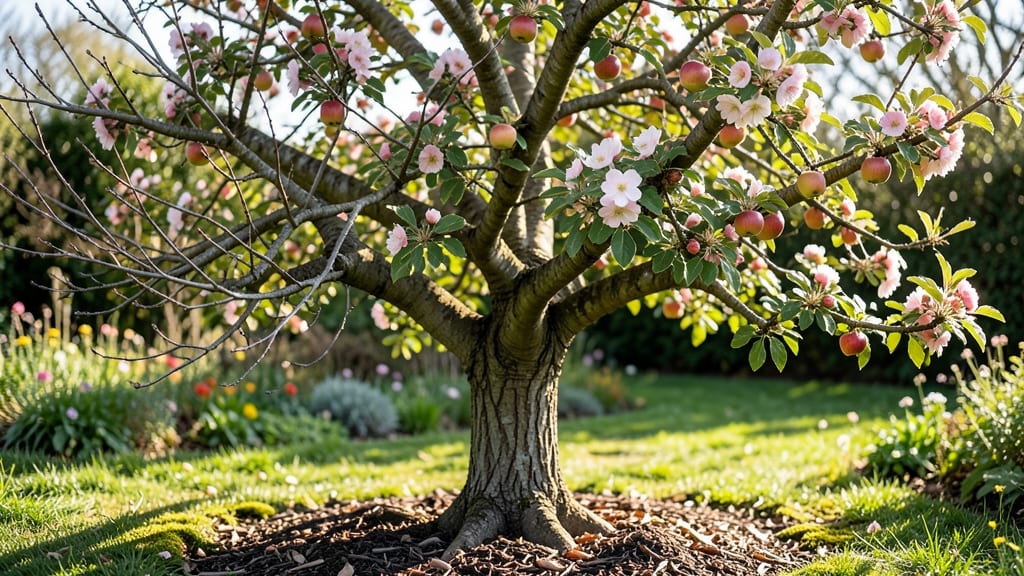
Knowing how long until an apple tree produces fruit depends on whether you plant a dwarf variety (ready in 2 years), standard tree (up to 7 years), or a semi-dwarf (3-5 years). Climate, care, and rootstock all play key roles in this timeline.
Apple trees aren't known for instant gratification, but the wait pays off with delicious harvests. 🍏 The rootstock you choose makes all the difference—dwarf varieties grafted onto semi-dwarf or standard rootstocks mature faster because they focus energy on fruit production rather than tree growth.
For example, a 'Gala' on a semi-dwarf rootstock might bear fruit in 3 years, while the same variety on a standard rootstock could take 6. Even within dwarf trees, some precocious varieties like 'Honeycrisp' can surprise you with fruit in just 2 years if given ideal conditions.
Don't overlook the importance of pollination—most apple trees need a second variety blooming at the same time for proper fruit set. 🌸 I've seen growers rush to plant companion trees only to realize too late that their chosen varieties bloom at different times.
Also, young trees need consistent care: regular pruning to open the canopy, balanced fertilization (too much nitrogen delays fruiting), and protection from late frosts that can damage blossoms. In colder climates, some varieties might take an extra year or two to mature compared to warmer regions.
💡 In This Article
- Apple Tree Variety Timeline: Dwarf vs Standard Bearing Years
- Critical Factors That Speed Up or Delay Apple Tree Fruit Production
Apple tree variety timeline: dwarf vs standard bearing years
The rootstock you choose determines how quickly an apple tree produces fruit. Dwarf varieties, often grafted onto semi-dwarf or standard rootstocks, mature fastest because their growth is genetically restricted.
For example, a 'Fuji' apple tree on a dwarf rootstock like M.9 can bear fruit in just 2 years, while the same variety on a standard rootstock (like MM.106) may take 6-7 years.
The rootstock controls the tree's energy allocation—dwarf rootstocks prioritize fruit production over vertical growth, which is why they're ideal for small gardens or containers.
Climate zones also play a critical role in fruiting timelines. Trees in warmer regions (USDA zones 6-8) often mature faster than those in colder zones (4-5) due to longer growing seasons.
For instance, 'Granny Smith' apples typically fruit in 4-5 years in California's mild climate but may take 6 years in upstate New York. Early blooming varieties like 'Gala' or 'Honeycrisp' tend to produce fruit sooner in optimal conditions, while late bloomers like 'Braeburn' may take an extra year to establish.
Tree size directly impacts fruiting speed. A standard apple tree (12-16 feet tall) can take 7 years to produce fruit because it focuses energy on developing a large canopy.
In contrast, dwarf trees (6-8 feet tall) reach maturity in 3-5 years since their smaller stature allows for quicker energy redirection toward fruit production. This size difference also affects pollination efficiency—dwarf trees often require closer planting of companion varieties to ensure cross-pollination.
Pollination needs create another layer of complexity. Most apple varieties require a second tree of a compatible variety blooming at the same time. Without proper pollination, trees may produce blossoms but no fruit.
For example, planting a single 'McIntosh' tree won't yield apples unless you add a 'Cortland' or 'Empire' nearby. This cross-pollination requirement adds 1-2 extra years to the fruiting timeline if you start with only one variety.
Consider these key factors when selecting your apple tree:
- Rootstock: Dwarf (M.9) = 2-3 years to fruit; Standard (MM.106) = 6-7 years
- Climate: Warmer zones (-2°F to 10°F) = faster maturation; Colder zones (-30°F) = delayed fruiting
- Variety: Early bloomers ('Gala') = 3-4 years; Late bloomers ('Braeburn') = 5-6 years
- Pollination: Single variety = potential 1-2 year delay without companion tree
The science behind this involves a tree's hormonal balance. Young trees prioritize root and trunk development, only shifting energy to fruit production once they've established a stable structure. This biological process explains why even well-cared-for trees may take longer than expected—sometimes up to 10% longer in suboptimal conditions. 🌱