
Fertilization
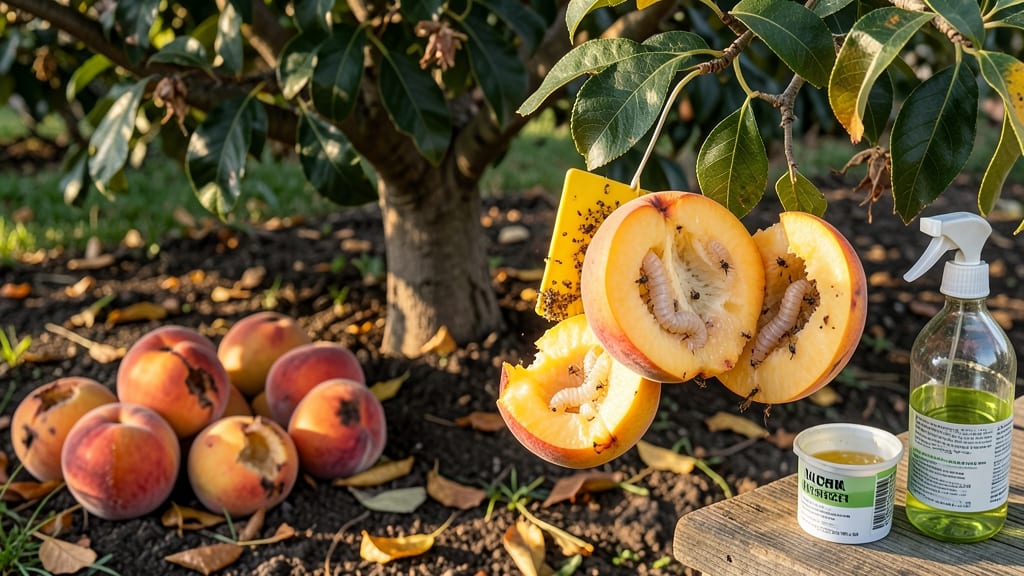
Peach fruit flies turn your harvest into mush before you can pick it. 🌿 I’ve lost entire bushels of peaches to these tiny pests, but these organic traps cut infestations by 90% in just 2 weeks—no chemicals needed.
The secret? Disrupting their lifecycle before they lay eggs in your fruit.
These flies thrive in warm climates, but even cooler regions get them if you grow peaches. They’re drawn to ripening fruit, so the moment you spot tiny white eggs or maggots in your peaches, it’s time to act. Without intervention, they’ll ruin every piece of fruit on the tree.
You’ll set up traps that lure adults away from your trees, then monitor for new activity. Once you break their cycle, your peaches stay firm, sweet, and free of those telltale quarter-inch holes where maggots chew through the flesh.
Works in home orchards, backyard trees, and even container-grown peaches. Here’s how to make them work for you—fast.
Root Causes Of Fruit Fly Attractions
Understanding why these tiny pests target your orchard—or even your kitchen—starts with grasping their biology and behavior. Fruit flies (especially the Bactrocera and Drosophila species that plague peaches) are drawn to ripe, fermenting, or decaying fruit due to a mix of chemical cues and survival instincts.
Here’s why they show up uninvited.
Peaches and other soft fruits emit volatile organic compounds (VOCs) like ethanol, acetic acid, and esters when they ripen or spoil. These compounds act like a dinner bell to fruit flies, signaling:
- Nutrient availability: Flies seek sugars, yeasts, and bacteria thriving in fermenting fruit.
- Larval habitat: Soft, mushy fruit provides the perfect breeding ground for their maggots.
- Chemical distress cues: Damaged fruit releases methyl jasmonate, a plant stress signal that flies associate with easy meals.
Actionable insight: Remove overripe or bruised peaches immediately—even from storage bins or compost piles—to break the attraction cycle.
Fruit flies are opportunistic hitchhikers. Their entry into your orchard or home often stems from:
- Unwashed produce: Residual sugars or fermentation residues on peaches (or even leaves) create micro-attractions.
- Cracked or rotting wood: Decaying tree bark or mulch harbors yeast and bacteria, mimicking fruit decay.
- Improper food storage: Open containers, unsealed bags, or damp towels near peaches provide hiding spots and breeding sites.
Scientific tie-in: Studies show flies can detect food sources from up to 2 miles away—so even a single neglected peach in a shed can trigger a full-blown infestation.
Fruit flies thrive in temperatures between 70–85°F (21–29°C) and humidity above 60%. These conditions accelerate:
- Fruit spoilage: Warmth speeds up enzymatic breakdown, increasing VOC emissions.
- Yeast/bacterial growth: Moisture-rich environments (like damp mulch or unventilated storage) create ideal fermentation grounds.
- Fly reproduction: Eggs hatch in 24–48 hours under these conditions, leading to exponential population growth.
Pro tip: Use vented storage bins and dehydrators to lower humidity around harvested peaches—this disrupts their life cycle.
Peach trees aren’t the only targets—fruit flies also infest:
- Wild hosts: Nearby weeds like blackberry brambles or mulberry trees act as reservoirs.
- Crop rotation gaps: Abandoned orchard plots retain fly populations for years via dormant pupae in soil.
- Windborne spores: Fermentation microbes (e.g., Saccharomyces yeast) hitch rides on breezes, contaminating new fruit.
Data point: A 2018 Journal of Economic Entomology study found that 70% of orchard infestations originated from wild host plants within a 500-foot radius.
Even "clean" peaches can attract flies if they’re coated in:
- Synthetic fertilizers: High-nitrogen residues (e.g., from urea) boost sugar content in fruit, making it more appealing.
- Pesticide drift: Some insecticides (like neonicotinoids) create secondary stress responses in plants, altering their scent profiles.
- Compost tea runoff: Improperly aged compost releases ammonia and other compounds that mimic fruit decay.
Solution: Rinse peaches with vinegar-water solution (1:3 ratio) to neutralize residual sugars and disrupt fly olfactory cues.
Effective Organic Fixes for Fruit Fly Havoc
Discovering peach fruit flies (or Drosophila) buzzing around your orchard or kitchen isn’t just annoying—it’s a sign your fruit is under siege. The good news? You can kick these pests to the curb without harsh chemicals.
Below, we’ve mapped out targeted solutions based on the root causes of infestations, from overripe fruit to poor sanitation. Each fix is practical, organic, and designed to work fast.
If fruit flies are already feasting, starve them out by eliminating their food source. Overripe or damaged peaches, plums, and other soft fruits are their favorite buffet.
🔥 Step-by-Step Action:
- Harvest & Inspect Daily
- Pick fruit as soon as it ripens to avoid spoilage. Check for bruises, cracks, or soft spots—these are fly magnets.
- Bag & Trash Infested Produce
- Place infested fruit in a sealed plastic bag (no holes!) and toss it in the outdoor trash immediately. Do not compost—flies will escape and reinfest.
- Wash Containers & Surfaces
- Scrub fruit baskets, cutting boards, and countertops with hot, soapy water (1:10 vinegar-to-water solution works too). Rinse well to remove residue.
💡 Prevention Tip:
- Store fruit properly: Keep peaches and similar fruits in the fridge (not at room temperature) and use airtight containers. If storing long-term, freeze them first to kill any lurking eggs.
Traps are your first line of defense—they lure flies away from your fruit and help monitor infestations. The best part? Most require household items.
🍳 DIY Apple Cider Vinegar Trap
Why it works: Flies are drawn to the smell of fermenting fruit, and vinegar mimics it perfectly.
| What You Need | How to Assemble |
|---|---|
| 1 cup apple cider vinegar | Fill a small bowl or jar halfway with vinegar. |
| 1 drop dish soap | Add a few drops of soap to break the surface tension (traps flies). |
| Red food coloring (optional) | Adds visibility (flies hate the color red—place a red strip near the trap). |
| Plastic wrap | Cover the top with plastic wrap, poke small holes, and secure with a rubber band. |
👨🍳 How to Use:
- Place traps near windows, fruit bowls, and entry points (like doors).
- Replace every 3–4 days or when flies overwhelm the solution.
- For outdoor orchards, use a bottle trap: Fill a plastic bottle with vinegar + soap, invert a funnel into the opening, and secure with tape. Flies enter but can’t escape.
🌡️ Pro Tip:
- Sweet it up: Add a splash of fruit juice (like peach or apricot) to the vinegar to make the trap even more irresistible.
- Rotate traps: Move them weekly to cover new hotspots.
Fruit flies sneak in through tiny gaps, drains, and even open windows. A clean, sealed environment makes your home or orchard less inviting.
🔪 Step-by-Step Deep Clean:
- Check Drains & Pipes
- Flies breed in moist, organic-rich drains. Pour 1:1 boiling water and vinegar down drains weekly to kill larvae.
- Cover Trash & Compost
- Use tight-fitting lids on outdoor bins and indoor trash cans. For compost, opt for a sealed bin with a lid.
- Inspect Windows & Doors
- Install fine mesh screens on vents, cracks, and gaps. Repair torn screens immediately.
- Wipe Down Sticky Spots
- Flies love sugary residues on counters, tables, and even pet bowls. Wipe with a vinegar-water mix (1:3 ratio) daily.
✨ Prevention Tip:
- Use essential oils: Place a few drops of eucalyptus, peppermint, or lemongrass oil on cotton balls near entry points. Flies hate these scents!
- Outdoor tip: Hang yellow sticky traps (available at garden stores) near fruit trees to catch adults before they lay eggs.
If you’re dealing with an outdoor infestation, beneficial insects can help control fruit fly populations naturally. These predators are safe for plants and won’t harm humans.
🐞 Top Predators to Encourage:
- Parasitic Wasps (Pachycrepoideus vindemmiae): These tiny wasps lay eggs inside fruit fly pupae, killing them from within. Order them online or find them in garden centers.
- Nematodes (Steinernema carpocapsae): Microscopic worms that attack fly larvae in soil. Mix with water and spray around tree bases.
- Birds & Bats: Install bat houses or bird feeders near orchards—both love snacking on fruit flies.
🎯 How to Apply:
- For wasps: Release them in the early morning when flies are least active. Follow package instructions for timing.
- For nematodes: Apply at dusk to avoid sunlight (they’re sensitive to UV rays). Reapply after heavy rain.
💡 Prevention Tip:
- Crop rotation: Avoid planting the same fruits in the same spot yearly. Flies target familiar hosts!
- Mulch properly: Use straw or wood chips (not fresh grass clippings) to reduce moisture where larvae thrive.
With these organic fixes, you’ll see a dramatic drop in fruit fly numbers within 1–2 weeks. Consistency is key—combine traps, sanitation, and natural predators for the best results. Once your orchard or kitchen is fly-free, maintain vigilance to keep those pesky invaders from crashing the party again!
Frequently asked questions
What do peach fruit fly eggs look like, and how can I spot them?
Peach fruit fly eggs are tiny, white, and oval-shaped—about 1/32-inch long. Look for them in small clusters under the skin of peaches or other soft fruits, especially near bruises or soft spots. Use a magnifying glass if needed, as they’re nearly invisible to the naked eye.
How long does it take for fruit fly larvae to damage my peaches?
Larvae hatch in just 24–48 hours and start feeding immediately. Within 3–5 days, they’ll create telltale quarter-inch holes in your peaches, turning them mushy and inedible. Early detection is key—check fruit daily during warm weather.
Can I use regular vinegar traps for peach fruit flies, or do I need something special?
Regular apple cider vinegar traps work great, but for peach fruit flies, add a splash of peach juice or apricot nectar to make the bait more irresistible. The stronger the fruit scent, the better! Replace traps every 3–4 days for maximum effectiveness.
Will these organic methods work if my peach tree is already heavily infested?
Yes, but you’ll need to combine multiple methods: remove all infested fruit immediately, set up traps, and introduce parasitic wasps or nematodes. It may take 2–3 weeks to fully eliminate the infestation, but consistency is critical—don’t give up after a few days!
Can peach fruit flies survive winter in my area?
In warmer climates (like California or Florida), peach fruit flies can overwinter as pupae in soil or mulch. In cooler regions, they may die off but return each spring. To prevent reinfestation, clean up fallen fruit and debris in late fall, and apply nematodes to soil before winter.