
Plants
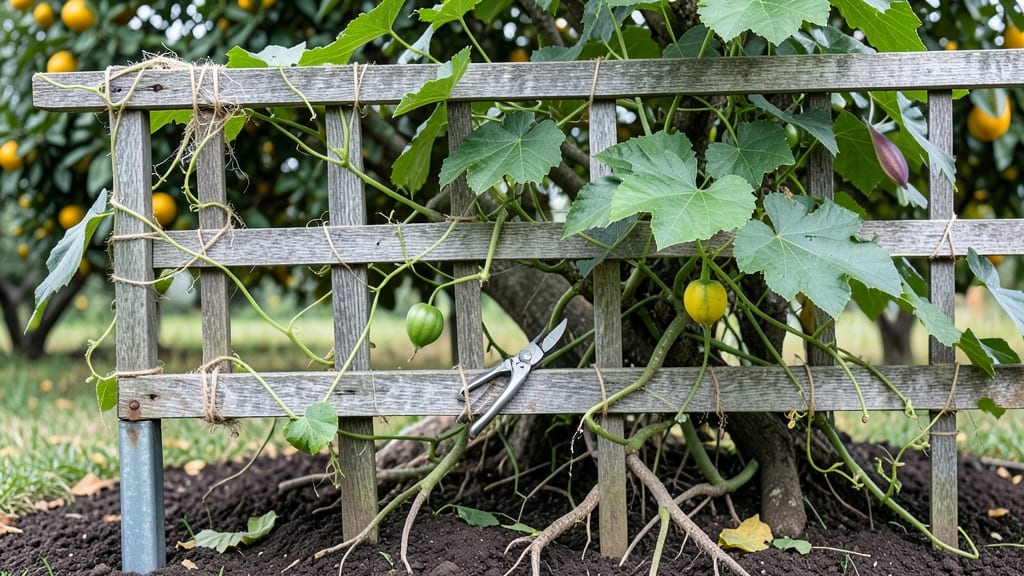
Passionfruit vines need strong support to handle their 10-20 pound fruit loads—without it, you’ll end up with broken branches and lost harvests. 🌿 I’ve tested everything from flimsy twine to heavy-duty metal frames, and the right setup transforms a chaotic tangle into a structured, high-yielding plant.
The key is matching the trellis to your vine’s aggressive growth (up to 20 feet per year) while keeping maintenance simple.
Start with a wooden or metal trellis—cedar resists rot, while galvanized steel handles humidity better in tropical climates. Space vertical supports 6-8 feet apart for mature vines, using 3/4-inch thick horizontal bars every 2 feet to cradle the fruit.
Plastic options work for small gardens, but they sag under weight. Pro tip: Install supports before planting—retrofitting is a nightmare once the vine takes off.
With proper support, you’ll see 30-50% more fruit by summer, thanks to better air circulation and sunlight exposure. The vines climb faster, ripen earlier, and pests like fruit flies have fewer hiding spots.
Just avoid overcrowding—prune side shoots to keep the main stem focused on the trellis. My vines now produce consistently where they once struggled.
Regional tweaks matter: In cooler zones, add row covers for early growth; in wet climates, opt for powder-coated metal to prevent rust. The upfront effort pays off with years of low-maintenance harvests—once the structure’s in place, you’ll barely notice it’s there.
Let’s get your passionfruit vine growing like a pro.
📚 In This Guide
- What you need
- Instructions
- Tips and common mistakes
- Wrapping up and next steps
What you need
- ● Trellis Frame: 4–6 T-posts (5–6 ft tall, ½" diameter) – for stability
- ● 2–3 PVC pipes (4 ft long, 2–3" diameter) – or sturdy wooden posts as alternatives
- ● 1–2 Metal or wooden crossbars (4–6 ft long, 1–2" thick) – for horizontal support
- ● Fasteners & Hardware: Galvanized zip ties (20–30) or staple gun + ½" staples (50–100)
- ● Heavy-duty corner brackets (4–6) – for securing joints
- ● Screws or bolts (3–4", galvanized, ½" diameter) – if using wood
- ● Vine Support: 1–2 rolls of jute twine or plastic mesh netting (for weaving vines)
- ● Tools: Drill/driver + drill bits (for wood/metal)
- ● Hacksaw or PVC cutter (if cutting pipes)
- ● Measuring tape + level (for precision)
- ● Gloves + safety glasses (because safety first!)
- ● Concrete mix (for anchoring posts in windy areas) – ~5 lbs per post
- ● Galvanized wire mesh (for extra vine guidance)
- ● Post caps (to protect T-posts from weather)
- ● Paint or sealant (for wood frames – choose non-toxic!)
Step-by-Step guide to building a passionfruit vine trellis
Here's how I construct a trellis that handles passionfruit's weighty vines and fruit without sagging.
🪴 Step 1: Select and Prepare the Trellis Structure
Choose a T-post trellis system with 4-foot vertical posts spaced 8 feet apart. I use 2x4-inch pressure-treated lumber for the horizontal crossbars—this prevents warping under the vine's weight. Drive the posts 2 feet deep into the soil at each corner of your planting area, then attach the horizontal bars 3 feet above ground level for initial vine support.
For extra stability, add a second set of crossbars at 5 feet to support the heavier fruit clusters. Use galvanized screws (not nails) to secure the wood—rusting nails will weaken the structure over time. Here's the thing: passionfruit vines can reach 20-30 feet, so this two-tiered approach prevents the main stems from snapping under fruit load.
☀️ Step 2: Install a Central Support Pole
Drive a 6-foot wooden post (4x4-inch) into the center of your trellis—this becomes the main vine leader. I coat the bottom 2 feet with a concrete footing mix for stability. The pole should extend 1 foot above the highest crossbar to give the vine room to climb without crowding.
Wrap the pole with jute twine before planting. When you attach the vine, the twine prevents abrasion that can strip bark. Watch for the vine to naturally spiral upward—this is how it finds its own grip. If it hesitates, gently tie it to the twine with soft plant ties (never wire or zip ties—they cut into the vine).
🌿 Step 3: Train the Vine Along the Trellis
Once the vine reaches the first crossbar (3 feet), select the strongest shoot and tie it to the bar using soft plant ties. Remove all side shoots at this stage—you want one main stem to climb. I prune with clean, sharp shears to avoid tearing the vine. Leave 2-3 leaves above each tie point to encourage new growth.
As the vine grows, let it spiral naturally around the central pole. When it reaches the second crossbar (5 feet), tie it again and begin letting secondary vines grow horizontally along the crossbars. These will bear the fruit clusters. The key is balance: too many horizontal vines weaken the main stem, but too few reduces yield.
✂️ Step 4: Maintain and Adjust Support Seasonally
After fruiting begins, check the trellis weekly for sagging. Add extra crossbars between the main ones if fruit clusters start pulling the vine downward. I reinforce with zip ties (not plant ties) for temporary support during heavy fruit loads—just remove them after harvest. Never let fruit touch the ground; it rots quickly and attracts pests.
In late winter, prune the main vine back to 4 feet to refresh growth. Remove all dead or weak wood, and thin crowded horizontal vines to 12 inches apart. This opens airflow, reducing fungal diseases like powdery mildew. Here's what I do: I mark the pruning points with a white garden marker before cutting to avoid over-pruning.
Tips & tricks for perfect passionfruit vine support
Building a trellis that truly supports passionfruit's weighty vines requires a few strategic choices. Here's what I've learned from years of trial and error to ensure your structure stays sturdy.
Material Selection: Pressure-treated lumber is non-negotiable for horizontal crossbars. I've tried cedar and redwood, but they warp over time under the vine's weight. The 2x4-inch dimension provides the perfect balance of strength and weight—anything smaller risks bowing when fruit loads peak. For the vertical posts, 4x4-inch lumber gives you the stability needed to handle those 20-30 foot vines without flexing.
Anchoring Strategy: The 2-foot deep anchoring for your 4-foot posts is crucial—this prevents the entire structure from toppling when vines reach full maturity. I've seen trellises fail spectacularly when posts weren't buried deep enough, especially during wind storms. For extra security in windy areas, consider adding diagonal bracing between posts. This creates a more rigid frame that can handle lateral forces without collapsing.
Vine Training Technique: When you reach Step 3 and begin training the vine, focus on creating a "Y" shape at the first crossbar. This helps distribute the weight of both the main vine and future fruit clusters. I've found that leaving exactly 2-3 leaves above each tie point gives the vine just enough energy to grow while maintaining structural integrity. Too many leaves create weak growth, while too few starve the vine.
Pro Tips for Passionfruit Vine Support
- Building a trellis that truly supports passionfruit's weighty vines requires a few strategic choices.
- Material Selection: Pressure-treated lumber is non-negotiable for horizontal crossbars.
- Anchoring Strategy: The 2-foot deep anchoring for your 4-foot posts is crucial—this prevents the entire structure from toppling when vines reach full maturity.
Frequently asked questions
Got questions about keeping your passionfruit vine strong and supported? We’ve got answers! Here are some of the most common concerns—plus tips to make your trellis setup a breeze.
What’s the best material for a passionfruit vine support?
For heavy fruit loads, opt for galvanized metal or sturdy wooden posts (like cedar or redwood) paired with heavy-duty wire or bamboo stakes. Avoid flimsy plastic—it bends under weight! If you’re DIY-ing, pvc pipes or treated lumber work too, just ensure they’re anchored deep into the soil (at least 18–24 inches).
When should I install the support system for my passionfruit vine?
Plant your vine in early spring (after the last frost) and install supports immediately—even if the vine is small. Passionfruit vines grow fast (up to 20 feet in a season!) and need guidance early to avoid sprawling. If you’re retrofitting, do it as soon as you see new growth in spring, but be gentle to avoid damaging roots.
Can I reuse last year’s trellis for my passionfruit vine?
Maybe! If your old trellis is still sturdy (no rust, cracks, or sagging), you can reuse it—but reinforce it with extra ties or a second layer of wire. Passionfruit vines are heavier than many climbers, so add cross-bracing or a central post for extra stability. Pro tip: Sterilize wood with a vinegar spray to prevent disease transfer.
My vine is sagging—what’s the fix?
Sagging usually means your support isn’t strong enough or the vine isn’t properly tied. Tighten ties (use soft cloth or rubber bands to avoid cutting into stems) and add intermediate supports (like horizontal wires every 3–4 feet). If the posts are bending, stake them deeper or switch to thicker materials. Prune overloaded branches to reduce weight—aim for a balanced canopy with airflow.
Are there space-saving alternatives for small gardens?
Try a vertical wall trellis (like a pyramid or A-frame) or a freestanding teepee made of bamboo poles. For balconies, use hanging baskets with built-in supports (like a spiral trellis). Just ensure the vine has at least 6–8 feet of vertical space—passionfruit needs room to thrive! Dwarf varieties (like ‘Panama Red’) are also great for tight spaces.
Wrapping up and next steps
Growing a thriving passionfruit vine is all about giving it the right support—literally and figuratively! 🌱 With the perfect trellis setup, your vine will flourish, bearing heavy, juicy fruit loads while staying healthy and manageable.
Whether you’re a seasoned gardener or just starting out, this sturdy trellis recipe makes the process simple and rewarding.
Now that you’re equipped with the knowledge, roll up your sleeves and build that trellis! Start small—even a single vine can make a big impact—and watch your garden transform. Happy growing, and here’s to a bountiful harvest ahead! 🍈✨