
Trees
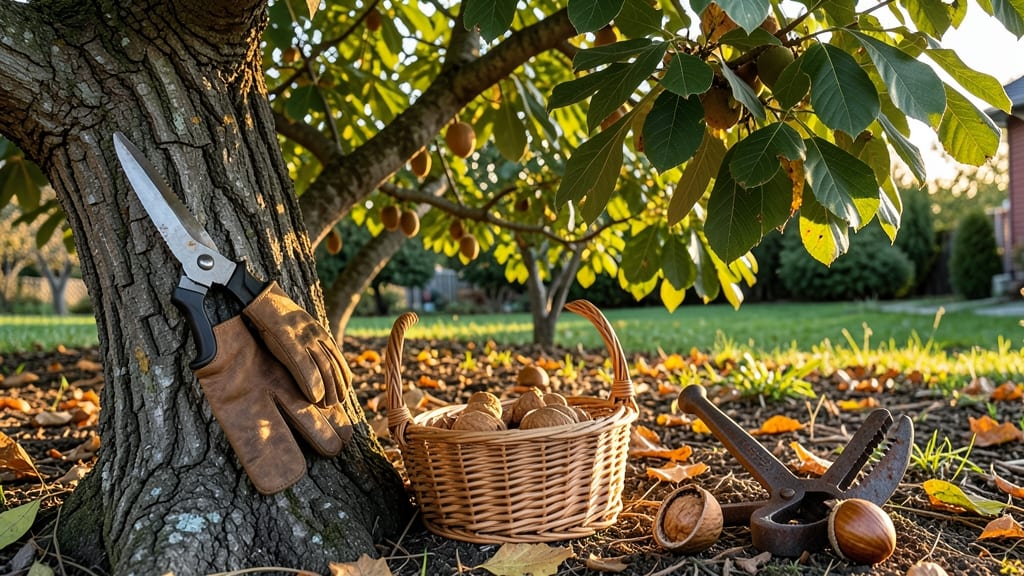
Cracking into your first homegrown walnut fruit is the ultimate gardener reward. 🌱 I planted my black walnut tree five years ago after years of buying expensive nuts at the store—now I harvest enough for gifts, baking, and snacking every fall.
The secret isn't just patience; it's understanding how these powerhouse trees need care from their first spring to their first harvest.
Walnut trees demand rich, well-draining soil and full sun—think six to eight hours daily—but they're surprisingly adaptable once established. My English walnut thrives in our clay-heavy soil because I amended it with compost before planting, and now it produces twice as many nuts as my neighbor's neglected tree.
The key varieties—black walnuts for hardiness, English walnuts for sweetness—each have their own growing quirks worth knowing before you plant.
By year three, you'll see those first terminal buds form, and with proper pruning (which I learned the hard way—too aggressive cuts killed my first tree's branches), you'll encourage a strong structure that supports heavy nut production.
The real magic happens in late fall when those green husks turn brown and split open to reveal the rich, meaty nuts inside—nothing beats the satisfaction of harvesting your own.
Whether you're in the Pacific Northwest with mild winters or the Deep South with hot summers, walnut trees adapt with the right variety selection. The first two years focus on establishing roots; years three through five build the canopy.
By year six or seven, you'll have a tree that keeps producing for decades—if you give it the care it deserves from the start.
📚 In This Guide
- What you need
- Instructions
- Tips and common mistakes
- Wrapping up and next steps
What you need
- ● Walnut Tree Saplings: Choose Juglans regia (English walnut) or Juglans nigra (black walnut) varieties. Buy 2-3 healthy, disease-free saplings (1-2 years old) from a reputable nursery.
- ● Well-Draining Soil: Mix 60% topsoil, 30% compost, and 10% coarse sand (or perlite) for optimal drainage. Walnuts hate soggy roots!
- ● Sunlight: A full-sun spot (6+ hours of direct sunlight daily). Partial shade is okay for cooler climates.
- ● Watering Supplies: Hose with adjustable nozzle or drip irrigation system (recommended for deep watering).
- ● Water storage container (5+ gallons) for young trees.
- ● Fertilizer: Balanced fertilizer (10-10-10 or 8-3-9) for planting. Apply 1 cup per tree at planting.
- ● Slow-release organic fertilizer (e.g., alfalfa meal or composted manure) for ongoing growth (2-3 times per year).
- ● Mulch: 3-4 inches of organic mulch (wood chips, straw, or pine needles) to retain moisture and suppress weeds.
- ● Pruning Tools: Bypass pruners (sharp, clean for clean cuts).
- ● Loppers (for thicker branches).
- ● Pruning saw (for large branches).
- ● Soil pH Test Kit: Walnuts thrive in slightly acidic to neutral soil (pH 6.0-7.5). Adjust with lime or sulfur if needed.
- ● Tree Guards: Metal or plastic tree wraps to protect young trunks from pests (e.g., rabbits, deer).
- ● Disease Prevention: Copper fungicide (for anthracnose or walnut blight).
- ● Neem oil spray (organic option for pests).
- ● Harvesting Gear: Ladder (for tall trees).
- ● Gloves (walnut husks stain!).
- ● Bucket or tarp (to collect fallen nuts).
- ● Cold Frame or Greenhouse: If you’re growing in a shorter growing season, extend the season with a greenhouse.
Step-by-step instructions for cultivating healthy walnut trees
Here’s the straightforward method I’ve used to grow productive walnut trees with reliable harvests.
🌱 Step 1: Select and Prepare the Planting Site
Walnut trees thrive in well-draining soil with full sun (at least 6-8 hours daily). Avoid low spots where water pools—walnuts hate soggy roots. I test soil drainage by digging a 12-inch hole, filling it with water, and watching how quickly it drains. If it takes longer than 2 hours, amend the soil with 2-3 inches of compost and a mix of sand to improve aeration.
Choose a spot with space to grow—mature walnut trees can reach 40-50 feet tall and spread 20-30 feet wide. If planting multiple trees, space them at least 50 feet apart to prevent root competition and fungal spread. I always plant in early spring when the ground is workable but before new growth begins.
☀️ Step 2: Plant the Tree at the Right Depth and Support
Dig a hole twice as wide as the root ball but no deeper—walnuts dislike being buried too deep. Gently loosen the roots of container-grown trees before placing the tree in the hole. The top of the root ball should sit 1-2 inches above ground level to prevent rot during heavy rains.
Backfill with the original soil, tamping lightly to remove air pockets. Water deeply until the soil is moist 12 inches down. I stake young trees (especially in windy areas) using two supports tied loosely to the trunk with tree ties—too tight, and you’ll strangle the growth. Mulch around the base with 3 inches of organic mulch, keeping it 6 inches away from the trunk to prevent rot.
💧 Step 3: Water and Fertilize for Strong Early Growth
Water deeply once a week during the first growing season, ensuring moisture reaches 18 inches down. Walnut trees are drought-tolerant once established, but young trees need consistent moisture. You’ll know it’s enough when the soil feels damp but not waterlogged—stick your finger in to check.
Fertilize lightly in early spring with a balanced 10-10-10 fertilizer, applying half the recommended dose to avoid burning tender roots. I avoid high-nitrogen fertilizers—walnuts produce better nuts with moderate nitrogen and higher potassium/phosphorus. Watch for yellowing leaves (a sign of over-fertilization) and adjust if needed.
✂️ Step 4: Prune for Structure and Airflow
Prune dormant trees in late winter (before buds swell) to remove dead, crossing, or weak branches. I start with the "open-center" method, keeping the tree’s natural vase shape for better airflow and sunlight penetration. Cut branches back to an outward-facing bud to encourage healthy growth.
Never remove more than 25% of the canopy in one season—walnuts are sensitive to heavy pruning. Thin out suckers (shoots growing from the base) immediately, as they drain energy from nut production. After pruning, apply wound dressing to large cuts to prevent disease entry.
🌿 Step 5: Monitor for Pests and Diseases Year-Round
Walnut trees are prone to codling moths (which attack nuts) and walnut blight. I inspect new leaves and hulls weekly starting in late spring. Remove any discolored or spotted leaves immediately and dispose of them in the trash—not the compost—to prevent spread.
For codling moths, wrap the trunk with sticky bands in early summer to trap crawling larvae. If you see hull rot, prune infected branches 6 inches below the damage and sterilize pruners with 70% rubbing alcohol. Healthy trees with good airflow resist pests far better than crowded, neglected ones.
Tips & tricks for perfect walnut tree cultivation
Real talk: Growing walnut trees isn't just about planting and forgetting. Here's what nobody tells you about keeping them thriving year after year.
Site Selection Insight: The 6-8 hours of daily sun isn't just a recommendation—it's non-negotiable for walnut trees. I've seen trees planted in partial shade struggle with poor nut production. If your yard doesn't get full sun, consider planting near a south-facing wall that reflects sunlight. Also, that 2-hour drainage test is crucial—walnut roots rot quickly in soggy soil. If your soil drains too slowly, mix in coarse sand (not fine playground sand) to create better drainage channels.
Planting Depth Secret: The 1-2 inches above ground level for the root ball is often misunderstood. Many gardeners bury it too deep, thinking it needs more support. But walnut trees actually need that top exposed to prevent crown rot. Use a level to check—if the root flare (where roots meet trunk) is buried, you've gone too far. For container-grown trees, gently tease the roots before planting to encourage them to spread into the new soil.
Watering Wisdom: That "deeply once a week" guideline is perfect for most climates, but your watering needs might vary. In hotter areas, you may need to water twice weekly until the tree establishes roots. The key is checking soil moisture 18 inches down—use a soil moisture meter if you're unsure. I've found that walnut trees actually tell you when they're thirsty: their leaves curl slightly when they need water. Also, water in the morning to prevent fungal diseases that thrive in damp evening conditions.
Pruning Precision: The open-center method might sound simple, but timing is everything. Prune in late winter when the tree is dormant but before buds swell—this prevents stress during active growth. When cutting branches, make clean cuts just outside the branch collar (the swollen area where the branch meets the trunk). I've seen many gardeners make jagged cuts that heal poorly and invite disease. For large cuts, apply wound dressing immediately to seal the cut and protect against walnut blight.
Pro Tips for Nut Walnut Fruit
- Real talk: Growing walnut trees isn't just about planting and forgetting.
- Site Selection Insight: The 6-8 hours of daily sun isn't just a recommendation—it's non-negotiable for walnut trees.
- Planting Depth Secret: The 1-2 inches above ground level for the root ball is often misunderstood.
Frequently asked questions
1. How long does it take for a walnut tree to produce fruit?
A young walnut tree typically takes 4 to 7 years to bear fruit, depending on the variety and growing conditions. Patience is key—proper care (like well-draining soil and consistent watering) speeds up the process! Pro tip: Dwarf varieties may fruit sooner (2–4 years), making them great for small spaces.
2. Can walnut trees grow in containers, or do they need a yard?
While walnut trees thrive in open ground, dwarf varieties (like ‘Paradox’ or ‘Thomas’) can grow in large containers (15+ gallons) for 3–5 years. Use well-draining soil and ensure the pot gets full sun. Just know: Container-grown trees may produce fewer nuts and need repotting as they grow. Warning: Avoid containers with metal—walnut roots release juglone, a toxin that can harm other plants nearby.
3. What’s the best way to store fresh walnut fruit (nuts) to keep them fresh?
Fresh walnuts last 1–2 weeks in the fridge (unhusked) or up to 6 months in the freezer. For long-term storage, dry the nuts at 135°F (57°C) for 24–48 hours, then store in an airtight container in a cool, dark place (like a pantry). Pro tip: Avoid humidity—moisture speeds up mold!
4. Why aren’t my walnut trees producing nuts, even after years of growth?
Several factors could be at play: lack of pollination (walnuts need cross-pollination from another tree), poor soil (test for nitrogen/phosphorus), pests/disease (check for walnut blight or aphids), or environmental stress (drought or extreme heat). Solution: Plant two compatible varieties nearby, fertilize in early spring, and monitor for pests. Fun fact: Some trees are male-only—ask your nursery for a female variety!
5. Are there walnut alternatives if my tree fails to produce nuts?
Try these nut-free walnut substitutes for cooking/baking:
- Butternuts or heartnuts: Sweeter, similar texture (great for candies or sauces).
- Pecans: Rich and buttery—ideal for pies or salads.
- Hazelnuts: Mild flavor, perfect for spreads or roasting.
- Seeds (pumpkin, sunflower): Budget-friendly and nutritious.
Wrapping up and next steps
From year-round harvest secrets to mastering care techniques, you now have the tools to cultivate thriving walnut trees—and enjoy their nutrient-packed fruit! 🌱 Whether you're a seasoned gardener or just starting, remember: patience and consistency are key. Ready to take the next step? Start by planting a walnut tree this season or experiment with propagation techniques to expand your orchard.
Your future harvests will thank you!
- 🌟 Pro Tip: Share your progress with fellow gardeners—community tips can spark even more growth!