
Propagation
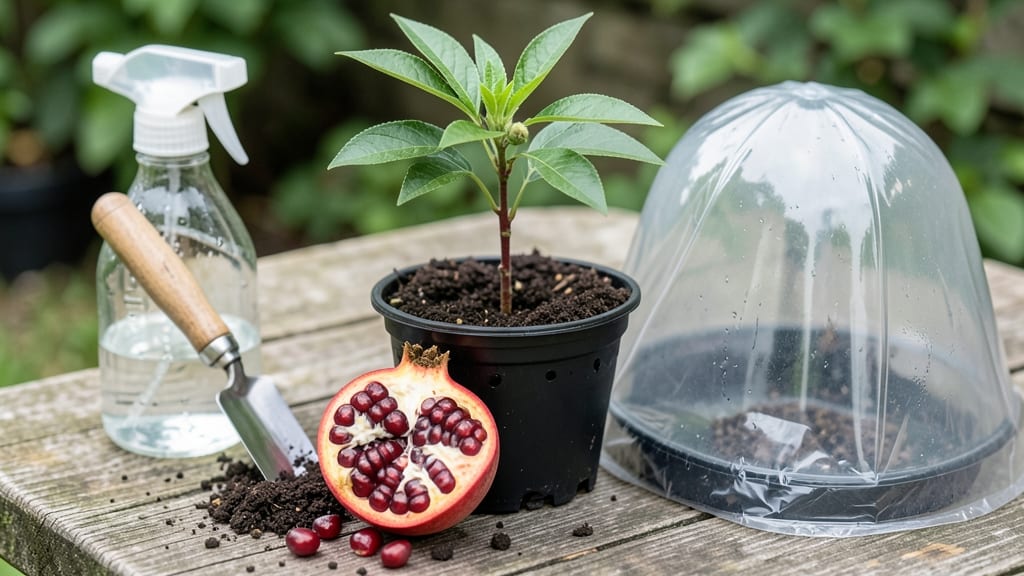
Growing a pomegranate tree from fruit starts with a single seed and a little patience—something that rewards you with ruby-red jewels by year three. 🌱 I’ve turned store-bought pomegranates into thriving trees by following a few key steps, and you can too, even if you’ve never grown one before.
The secret isn’t fancy equipment; it’s knowing when to plant, how deep to bury those seeds, and how to coax them through their slow start.
The process begins indoors, where you’ll soak seeds overnight to soften their tough shells, then plant them just ½ inch deep in moist potting mix. Keep the soil damp (not soggy) and place them in a warm, sunny spot—think kitchen windowsill or a seedling heat mat.
Germination can take 3-6 weeks, so don’t give up if nothing sprouts right away. Once seedlings hit 4-6 inches, they’re ready to move outside, where they’ll need full sun and well-draining soil to thrive.
By year two, your tree will look like a bushy shrub, and by year three, you could be harvesting your first pomegranates—though it might take five years for full-sized fruit.
The real magic happens when you see those bright red flowers in spring, a sign that your patience is paying off. These trees are drought-tolerant once established, so they’re perfect for dry climates or low-maintenance gardeners.
Here’s the thing—pomegranates love heat and hate cold drafts, so if you’re in a cooler zone, grow yours in a large pot and bring it indoors during winter.
The first few years are about nurturing strong roots; after that, your tree will reward you with year-round interest, from winter bark texture to summer shade and fall fruit. Ready to start?
📚 In This Guide
- What you need
- Instructions
- Tips and common mistakes
- Wrapping up and next steps
What you need
- ● 1-2 fresh pomegranates – Choose organic or seed-only varieties (like Wonderful or Eversweet) for best results.
- ● Paper towels or a clean cloth – For drying seeds (2-3 sheets).
- ● Small containers or seed trays – 3-4 shallow, well-draining pots (4-6 inches deep) or a seed-starting tray with drainage holes.
- ● Potting mix – A lightweight, well-draining blend (e.g., 50% peat moss, 30% perlite, 20% sand). Avoid heavy garden soil.
- ● Spray bottle with water – For gentle hydration (avoid soaking seeds).
- ● Plastic wrap or humidity dome – To retain moisture while seeds germinate.
- ● Pruning shears or scissors – For cutting open pomegranates and trimming seedlings later.
- ● Fertilizer (balanced, 10-10-10 or organic) – A small bag (5-10 lbs) for when seedlings are 3-4 inches tall.
- ○ Grow lights or sunny windowsill – A 6-12 inch LED grow light (optional but helpful for indoor starts).
- ● Mulch (straw or wood chips) – Once transplanted outdoors, to retain moisture.
- ○ Support stake (1-2 feet tall) – For young pomegranate trees (optional but recommended).
Step-by-step instructions for growing pomegranate from fruit
Here's my foolproof method for turning store-bought pomegranate seeds into thriving seedlings.
🌱 Step 1: Extract and Prepare the Seeds
Start with a fresh pomegranate—never use seeds from a fruit that's been refrigerated for weeks, as they won't germinate. Scoop out the seeds and rinse them thoroughly under running water to remove any remaining pulp. Spread them on a paper towel to dry completely, which prevents mold and speeds up germination.
Once dry, place the seeds in a small bowl and cover them with warm water for 24 hours. This softens the tough outer coating and encourages faster sprouting. I like to use a bowl with a lid to keep the water temperature steady—around 70-75°F works best. Drain and rinse the seeds one last time before planting.
🪴 Step 2: Plant the Seeds in Moist Potting Mix
Fill small pots—around 3-4 inches deep—with a well-draining potting mix. I prefer a blend of 50% potting soil and 50% perlite to ensure good aeration. Moisten the mix until it's damp but not soggy, then plant the seeds about ½ inch deep. Space them 1 inch apart in each pot to avoid overcrowding as they grow.
Gently press the soil around the seeds to ensure good contact, but don’t pack it down too tightly. Place the pots in a warm, sunny spot—like a south-facing windowsill—or under a grow light if natural light is limited. Keep the soil consistently moist by misting it lightly every 2-3 days, but avoid soaking it.
☀️ Step 3: Provide Warmth and Light for Germination
Pomegranate seeds need warmth to germinate, so place the pots in a spot where the soil stays around 75-80°F. A seedling heat mat can help maintain this temperature, especially if your home runs cooler. You should see tiny sprouts in 2-4 weeks, though some seeds may take longer—patience is key.
Once the seedlings emerge, move them to a bright, indirect light spot immediately. Direct sunlight can scorch young leaves, so start with 4-6 hours of filtered light and gradually increase exposure. Watch for the first set of true leaves—these are the second set of leaves that appear after the initial seed leaves. This is your signal to start fertilizing lightly with a balanced liquid fertilizer diluted to half strength.
🌿 Step 4: Transplant and Care for Young Seedlings
When the seedlings are 4-6 inches tall and have 4-5 true leaves, it’s time to transplant them into larger pots—around 6-8 inches deep. Use the same well-draining potting mix and handle the seedlings gently to avoid damaging the roots. Water them thoroughly after transplanting to help settle the soil.
Pomegranates thrive in full sun, so place the seedlings in a spot where they’ll get at least 6-8 hours of direct sunlight daily. If growing indoors, supplement with a grow light positioned 6-12 inches above the plants. Water the seedlings when the top inch of soil feels dry, but avoid letting them sit in waterlogged soil, as this can cause root rot.
⏰ Step 5: Prune and Prepare for Long-Term Growth
As the seedlings grow, focus on pruning to encourage a strong, bushy structure. Pinch back the tips of the new growth when the plant reaches 12-18 inches tall to promote branching. This is especially important for pomegranates, as they fruit more abundantly on well-branched plants.
By the time the seedlings are 1 year old, they’ll need to be transplanted into the ground or large containers—at least 12 inches deep—to support their growth. Pomegranates are drought-tolerant once established, but young plants benefit from regular watering during their first growing season. With proper care, you’ll see flowers in 2-3 years and fruit in 3-5 years!
Tips & tricks for growing pomegranate seedlings
These simple tricks will help you turn those pomegranate seeds into healthy, thriving plants that could bear fruit in just a few years.
Seed Preparation Secret: After rinsing your seeds, spread them on a paper towel in a single layer. Place the towel on a clean surface and gently pat them dry with another paper towel—this prevents any hidden moisture that could lead to mold during the 24-hour soaking. I've found that seeds dried this way sprout faster and more consistently. The key is to make sure they're completely dry before soaking, not just damp.
Warmth Matters: Maintaining that 75-80°F soil temperature during germination is crucial, but don't worry if your home runs cooler. Place your seed pots on top of a refrigerator or in a warm closet to create a mini greenhouse effect. You can also use a seedling heat mat set to low—just monitor the soil temperature with a small thermometer to avoid overheating. Remember, pomegranate seeds need warmth to break their dormancy.
Light Transition Strategy: When your seedlings first emerge, they're extremely sensitive to direct sunlight. Start with just 4-6 hours of bright, indirect light and gradually increase exposure over a week. I like to place my seedlings near an east-facing window first, then slowly move them toward south-facing windows. This gradual transition prevents leaf scorch and helps them develop stronger stems. Watch for the first set of true leaves—they'll be more robust than the initial seed leaves.
Transplanting Timing: Wait until your seedlings reach 4-6 inches tall with 4-5 true leaves before transplanting—this gives them enough energy to handle the shock. When moving them to larger pots, handle the seedlings by their leaves, not the stems, to avoid damaging the delicate root system. After transplanting, give them a thorough watering to help settle the soil around the roots, but don't overwater in the first few days as this can cause root rot.
Pro Tips for Grow Pomegranate From Fruit
- These simple tricks will help you turn those pomegranate seeds into healthy, thriving plants that could bear fruit in just a few years.
- Seed Preparation Secret: After rinsing your seeds, spread them on a paper towel in a single layer.
- Warmth Matters: Maintaining that 75-80°F soil temperature during germination is crucial, but don't worry if your home runs cooler.
Frequently asked questions
Got questions about growing pomegranates from fruit? You’re not alone—this method has its quirks! Below, we’ve rounded up the most common questions (and answers) to help you avoid pitfalls and grow like a pro.
How long does it take for a pomegranate seedling to bear fruit?
Patience is key! Seed-grown pomegranates typically take 3–5 years to produce fruit, depending on climate and care. Grafted trees (sold at nurseries) may fruit in 2–3 years. Choose a sunny spot and keep soil moist to speed up the process.
Can I grow a pomegranate tree indoors?
While possible, it’s not ideal. Pomegranates need full sun (6+ hours/day) and outdoor temperatures to thrive. If you’re in a cold climate, start seeds indoors in spring, then transplant outside after the last frost. A sunny windowsill won’t cut it!
Why aren’t my pomegranate seeds sprouting?
Seeds need warmth and moisture to germinate. Try these fixes:
- Soak seeds in water for 24 hours before planting.
- Use a heating mat (70–80°F) to mimic tropical conditions.
- Keep soil consistently damp (not soggy).
- Test seed viability—squeeze gently; hard seeds may be dead.
Do I need to buy a grafted tree for better fruit?
Not necessarily! Seedlings can produce wild-type fruit, but grafted trees offer faster, sweeter, and more reliable harvests. If you want commercial varieties (like ‘Wonderful’), grafting is the way to go. For fun experiments, try seed-grown trees!
What’s the best time to plant pomegranate seeds outdoors?
Wait until spring after the last frost (when soil is at least 60°F). Pomegranates hate cold—planting too early risks frost damage. In warm climates (Zones 8–11), you can plant in early fall for a head start.
How do I protect my pomegranate tree from pests?
Common pests include aphids, scale insects, and fruit borers. Try these organic solutions:
- Spray with neem oil or insecticidal soap.
- Encourage beneficial insects (ladybugs, lacewings).
- Remove damaged fruit promptly to prevent spread.
- Use row covers for young trees.
Still stumped? Drop your question in the comments—we’re happy to help!
Wrapping up and next steps
Growing a pomegranate tree from fruit is a rewarding journey that connects you to nature’s bounty—one juicy seed at a time! 🌱 With patience, the right conditions, and a dash of care, you’ll soon be nurturing a thriving plant that could one day gift you with vibrant, homegrown pomegranates.
Start small, stay consistent, and don’t forget to celebrate each tiny milestone along the way.
Now that you’re armed with the know-how, why not take the next step? Grab those seeds, prep your growing space, and watch your green thumb magic unfold. Happy planting—your future harvest awaits! 🍇✨