
Propagation
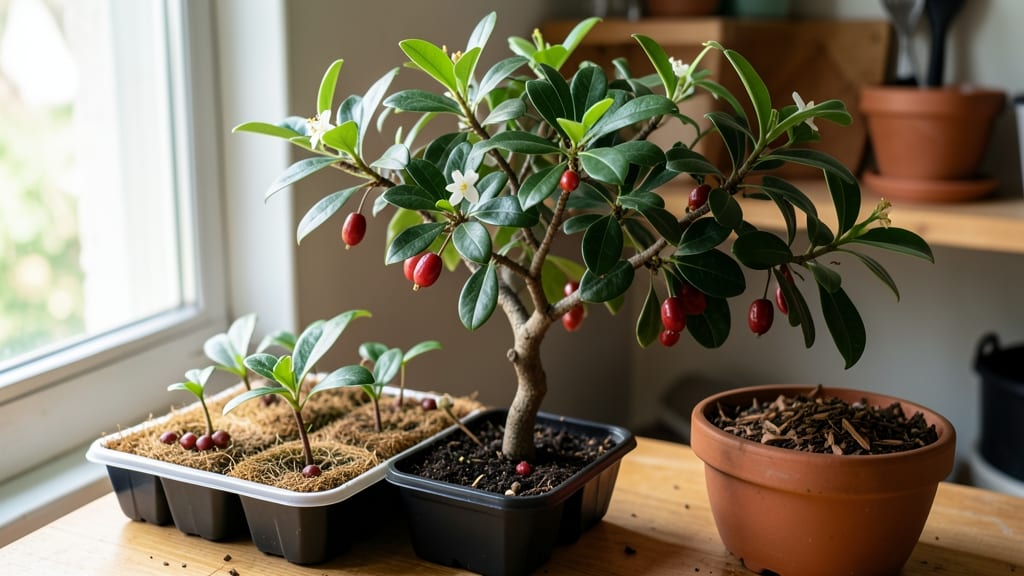
Growing miracle fruit from seeds unlocks a plant that makes sour taste sweet—literally. 🌱 I’ve grown these tiny seeds into thriving plants that produce berries capable of altering taste perception for hours, and the process is surprisingly straightforward once you know the tricks.
The magic starts with fresh seeds, which need a warm, humid environment to sprout—think 75-80°F and a humidity dome. Most seeds germinate within 2-4 weeks, but patience is key, especially if you’re starting with dried seeds. Once sprouted, they crave bright indirect light and well-draining soil to prevent rot.
By month 3, you’ll have a bushy plant ready for pruning, and with proper care, it can produce fruit within 6-12 months. The berries themselves are tiny but pack a flavor-altering punch—perfect for culinary experiments or just having fun with friends.
This plant thrives in containers, making it ideal for small spaces, and handles tropical climates best. If you’re in a cooler zone, treat it as an annual or overwinter indoors. The real reward? Watching someone’s face when they bite into a lemon and swear it tastes like pie.
📚 In This Guide
- What you need
- Instructions
- Tips and common mistakes
- Wrapping up and next steps
What you need
- ● Miracle fruit seeds (Synsepalum dulcificum) – 5-10 seeds (available online or from specialty seed vendors).
- ● Well-draining potting mix – 1 small pot (4-6 inches in diameter) filled with a blend of peat moss, perlite, and coconut coir (or a pre-mixed seed-starting mix).
- ● Spray bottle – For gentle watering to keep seeds moist without drowning them.
- ○ Clear plastic dome or ziplock bag – To create a humidity tent (optional but helpful for germination).
- ○ Heat mat (optional but recommended) – 70-80°F (21-27°C) speeds up germination (seeds germinate best in warm conditions).
- ● Small hand trowel or spoon – For planting seeds at the correct depth.
- ● Grow lights or sunny windowsill – Bright, indirect light (6+ hours/day) once seedlings sprout.
- ● Fertilizer (balanced, water-soluble) – Diluted to half-strength (e.g., 10-10-10) for young plants.
- ● Humidity tray or pebble tray – Helps maintain moisture if your home is dry.
- ● Pruning shears – For trimming leggy growth or shaping the plant as it matures.
- ● Patience & curiosity! 😄 – Miracle fruit grows slowly but rewards you with taste-transforming magic.
- ● A warm, humid environment (or a way to replicate it, like a greenhouse or kitchen counter near a window).
- ● Basic plant care knowledge (watering, light, and soil awareness).
- ● Access to patience—germination can take 2-4 weeks, and fruiting takes 3-5 years!
Step-by-step guide to growing miracle fruit from seeds
Here's how to nurture these fascinating seeds into flavor-transforming plants at home.
🌱 Step 1: Prepare Seeds for Germination
Miracle fruit seeds need a warm, humid environment to sprout. Start by soaking the seeds in warm water for 24 hours—this softens the tough outer shell and speeds up germination. I use a small glass with just enough water to cover the seeds completely. Place it in a warm spot like near a sunny window or on top of the fridge.
After soaking, gently rub the seeds between two paper towels to remove any remaining outer coating. This helps the seedling break through faster. The seeds are tiny, so I handle them with tweezers to avoid losing them. Place the prepared seeds between damp paper towels in a sealed plastic bag and store them in a warm (75-80°F) location like on top of a refrigerator or near a heat source.
🌿 Step 2: Plant Germinated Seeds
Check the seeds daily for sprouts, which typically appear in 7-14 days. Once you see a small white root emerging, it's time to plant. Fill small pots (about 3 inches deep) with a well-draining mix of 50% peat moss and 50% perlite. This lightweight mix prevents root rot while keeping moisture consistent.
Plant each seed ½ inch deep in its own pot. I use biodegradable pots so I can transplant without disturbing the roots later. Water gently until the soil is moist but not soggy. Place the pots in a warm, bright spot with indirect light—direct sun can overwhelm young seedlings. Keep the soil consistently moist by misting lightly every 2-3 days.
☀️ Step 3: Provide Optimal Growing Conditions
Once the seedlings develop their first true leaves (not the initial seed leaves), move them to a location with bright, indirect light. A south-facing window works well, but if natural light is insufficient, supplement with a grow light placed 6-12 inches above the plants. Miracle fruit thrives in 70-80°F temperatures and high humidity—ideal for a greenhouse or kitchen windowsill.
Rotate the pots a quarter turn daily to ensure even growth. You'll notice the plants start to develop small, round leaves and a woody stem within 4-6 weeks. This is when they're ready for a slightly larger pot (5-6 inches deep) to support their growing roots. Use the same peat-perlite mix for repotting to maintain drainage.
🪴 Step 4: Transition to Outdoor or Larger Pot
After 3-4 months, when the plant reaches about 12 inches tall and shows signs of new growth, it's time to move it outdoors or into a larger container. If growing outdoors, choose a location with partial shade and well-draining soil. Miracle fruit plants are tropical and can't tolerate frost—keep them in pots if you live in a colder climate and bring them indoors during winter.
Water the plant deeply when the top 1-2 inches of soil feel dry. Overwatering is the biggest risk at this stage—yellowing leaves usually mean too much moisture. Feed the plant with a balanced liquid fertilizer every 4-6 weeks during the growing season to encourage fruit production. Patience is key—it can take 1-2 years for a seed-grown plant to bear fruit.
Tips & tricks for growing miracle fruit from seeds
Here's what I learned after growing these magical plants from scratch.
Soaking Secret: Don't skip the 24-hour warm water soak—this is the most critical step for breaking through the tough seed coat. I've found that using a glass jar with just enough water to fully submerge the seeds (about 1 inch deep) creates the perfect environment. After soaking, I rinse them gently with cool water to remove any remaining fruit residue that could attract mold. This extra step has helped me avoid seed rot in every batch.
Germination Boost: The 75-80°F temperature range is non-negotiable for germination. If your home stays cooler than this, place your sealed plastic bag of seeds on top of a refrigerator or near a sunny window where indirect heat collects. I've successfully used a seedling heat mat set to low heat (around 75°F) when my kitchen stays too cool. The key is maintaining consistent warmth—fluctuations can delay or prevent sprouting entirely.
Lighting Strategy: Once seedlings appear, transition to bright but indirect light immediately. I've had the best luck with a south-facing window supplemented by a simple LED grow light on a timer (12 hours on, 12 hours off). The 6-12 inch distance guideline works perfectly for my 10-watt bulb. Too close and the leaves scorch; too far and they grow leggy. Rotating the pots daily ensures even growth—something I learned the hard way when my first plants leaned dramatically toward the light.
Transplanting Timeline: The 4-6 week mark for repotting is your cue that roots are getting crowded. I've found that using biodegradable pots makes this transition stress-free—you can plant directly into the ground or larger container without disturbing the root ball. When repotting, I always use the same 50% peat moss/50% perlite mix to maintain that perfect drainage while keeping moisture consistent. This prevents the shock that can occur when switching to different soil compositions.
Pro Tips for Miracle Fruit Seeds
- Here's what I learned after growing these magical plants from scratch.
- Soaking Secret: Don't skip the 24-hour warm water soak—this is the most critical step for breaking through the tough seed coat.
- Germination Boost: The 75-80°F temperature range is non-negotiable for germination.
Frequently asked questions
How long does it take for miracle fruit seeds to germinate?
Germination usually takes 2–4 weeks in warm, moist conditions (70–80°F). Keep seeds in a sealed container with damp paper towels or peat moss, and check daily for sprouts. Patience is key—some seeds may take up to 6 weeks! Pro tip: Soak seeds overnight before planting to speed up the process.
How long does the taste-altering effect last after eating the fruit?
The effect typically lasts 1–3 hours, depending on the fruit’s ripeness and your saliva. Sour foods (like lemons) taste sweet, while salty or bitter flavors may seem milder. Warning: Overconsumption can cause nausea—stick to 1–2 berries per session! Fun fact: Scientists call this "sour suppression," and it’s 100% natural.
Can I grow miracle fruit from seeds bought online?
Yes! Many sellers offer viable seeds, but check reviews for germination rates. Start with 3–5 seeds to increase success odds. Store-bought seeds may be dried—soak them first. Alternative: Buy a live plant and harvest seeds from its fruit for guaranteed results.
What if my miracle fruit plant isn’t producing berries?
Patience! Miracle fruit plants (Synsepalum dulcificum) take 3–5 years to bear fruit. Ensure it gets bright, indirect light and well-draining soil. Overwatering or low humidity can stress the plant. Troubleshooting: Prune leggy growth and fertilize lightly in spring. Bonus: Female plants need cross-pollination—plant two for better fruit chances!
Are there non-fruit alternatives to experience the "miracle" effect?
No natural alternatives replicate the exact effect, but some products mimic it:
- Miracle Berry Extract (powder/capsules): Chewable, but effects are shorter-lived (30–60 mins).
- Sour candy + baking soda: Neutralizes acidity, but lacks the "sweetness" illusion.
- Genetically modified foods: Some lab-altered foods block sour tastes, but they’re not widely available.
For the real deal, fresh berries are the gold standard!
Wrapping up and next steps
Discovering the magic of miracle fruit seeds opens a world where sour becomes sweet—and growing your own plants makes it even more rewarding! 🌱 Whether you're a seasoned gardener or a curious beginner, these tiny seeds pack a flavor-transforming punch.
With the right tools and patience, you can cultivate your own miracle fruit bushes to enjoy their unique effects and share them with others.
Ready to take the next step? Start by planting your seeds today and watch as your garden becomes a taste-altering wonderland. Share your journey with fellow plant enthusiasts or experiment with recipes—your culinary adventures are just beginning!