
Fertilization
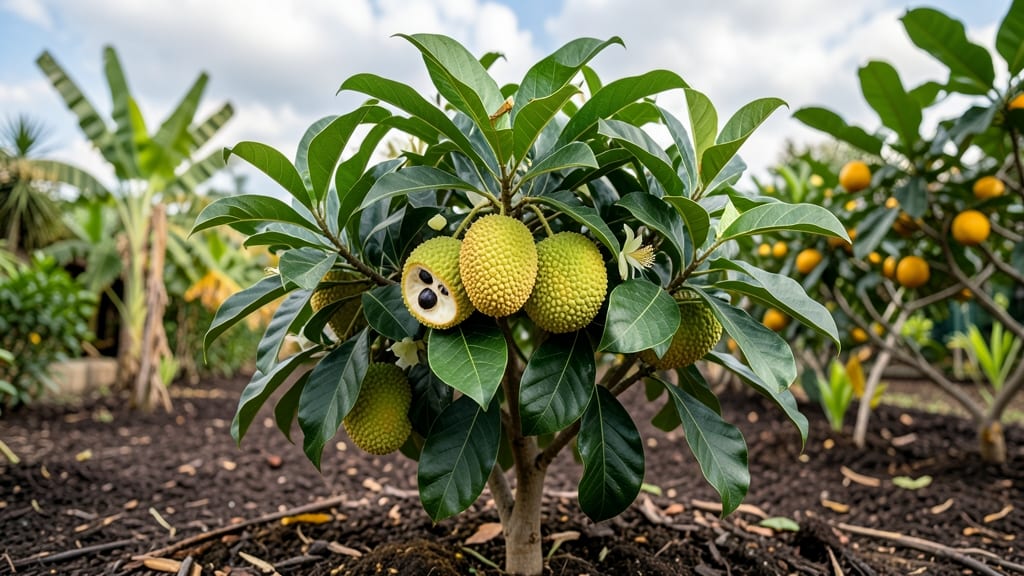
Yes, sugar apple is a tropical fruit that thrives in warm climates like Central and South America, Southeast Asia, and parts of Florida. Its botanical name, Annona squamosa, identifies it as a tropical evergreen tree producing sweet, custard-like fruit commonly used in tropical cuisines.
Sugar apple trees are classified as tropical because they require consistent warmth and humidity to grow. 🌿 Unlike citrus fruits that tolerate some cooler temperatures, sugar apples cannot survive frost and need year-round heat to produce fruit.
This makes them a staple in regions like Puerto Rico, Thailand, and parts of Australia where temperatures stay above 60°F year-round.
What sets sugar apple apart is its dual nature as both a fruit and a tree—its thick, leathery leaves and slow growth rate are classic traits of tropical evergreens.
The fruit itself, often called "sweet sop," contains multiple seeds embedded in a creamy, honey-like pulp that's impossible to find in temperate climates. This unique combination of botanical features solidifies its place in the tropical fruit category.
💡 In This Article
- Botanical Classification of Sugar Apple as a Tropical Fruit
- Best Regions and Climates for Growing Sugar Apple Trees
Botanical classification of sugar apple as a tropical fruit
The sugar apple (Annona squamosa) belongs to the Annonaceae family, a group of plants native to tropical regions. Its classification as a tropical fruit stems from its botanical traits: the tree is an evergreen with glossy, leathery leaves that never fully drop, even in dry seasons.
This adaptation conserves moisture in hot climates where water is scarce for part of the year. The tree's slow growth rate and shallow root system are also characteristic of tropical species that prioritize spreading horizontally to access surface moisture.
The fruit's internal structure reinforces its tropical nature. Sugar apples develop from flowers that bloom directly on the tree's trunk and branches—a trait called cauliflory common in tropical trees like avocado and mango. Their thick, scaly rind protects the delicate, custard-like interior from both pests and temperature fluctuations.
The pulp contains multiple black, kidney-shaped seeds embedded in a matrix of soft, honey-sweet flesh that's impossible to replicate in temperate fruits like apples or pears. 🌴 This combination of traits demonstrates why sugar apple cannot thrive outside tropical zones.
Comparing sugar apple to subtropical fruits reveals key differences. Unlike citrus (which tolerates brief cold snaps) or figs (which can grow in Mediterranean climates), sugar apple trees cannot survive temperatures below 32°F. Their leaves lack the cold-hardiness of temperate species, and their flowering cycle depends on consistent warmth.
Even in Florida's warmest microclimates, sugar apple trees require protection during rare freezes—a clear indication of their tropical origins.
The tree's reproductive biology further cements its tropical status. Sugar apples rely on specific pollinators like beetles and flies that thrive only in warm, humid environments. These pollinators are absent in temperate regions, making natural fruit set nearly impossible outside tropical zones.
This ecological dependency explains why sugar apple cultivation remains concentrated in regions like Southeast Asia, where temperatures average 75-85°F year-round and humidity stays above 60%.
What's fascinating is how sugar apple's classification bridges the gap between true tropical fruits and those that can adapt to subtropical edges. While it can't survive frost, it does better in marginal climates than other tropical fruits like durian or rambutan.
This makes it a "transitional" tropical fruit—one that pushes the boundaries of what's possible in slightly cooler regions when given proper care. 🌍
For gardeners curious about growing sugar apple, understanding these botanical limits is crucial. The tree's sensitivity to cold means even short exposures to 40°F temperatures can cause leaf damage, while prolonged exposure below 50°F will kill the plant.
This explains why commercial cultivation exists only in frost-free zones, despite the fruit's global popularity in cuisines.