
Aphids
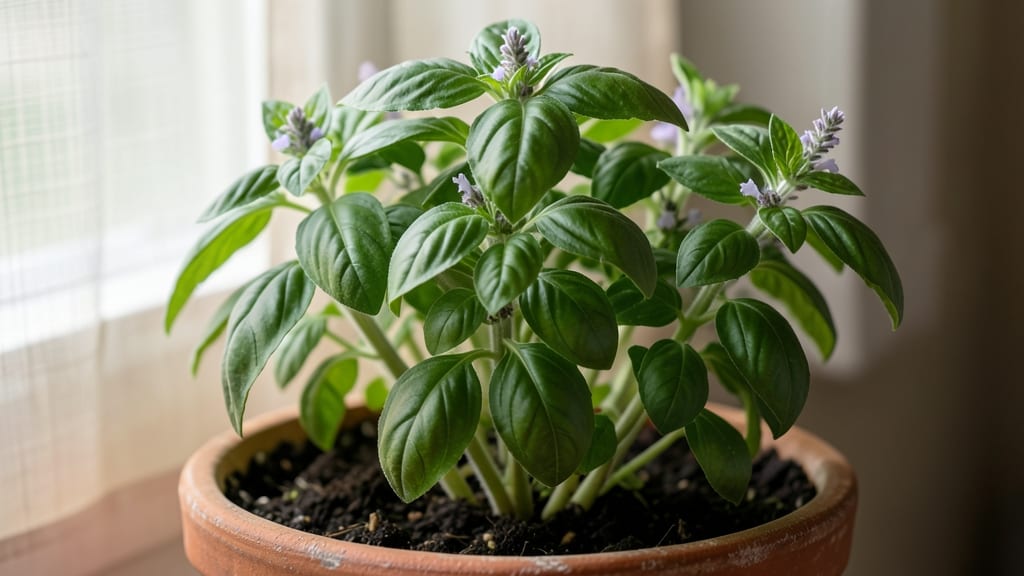
Basil is not a fruit—it’s an aromatic herb from the mint family (Lamiaceae), grown for its leaves and culinary uses. Botanically, it produces small flowers and seeds but is classified as a vegetable/herb in culinary and gardening contexts due to its leaf-based applications.
Basil gets mistaken for a fruit because it produces seeds and flowers, but botanically, it's all about what we use—and that's the leaves. 🌿 The confusion comes from how we categorize plants: fruits develop from flowers and contain seeds, while herbs are plants valued for their leaves, stems, or flowers.
Basil fits the latter perfectly, even though it technically has all the parts of a flowering plant.
In the kitchen, basil thrives as a herb because its leaves pack the most flavor.
Whether you're making pesto, tossing it in salads, or simmering it in sauces, those tender leaves are the star. 🌱 Gardeners also treat it as a herb since it's an annual (or tender perennial in warm climates) that needs regular harvesting to stay productive—something you'd never do with a fruit.
💡 In This Article
- Botanical Classification of Basil: Fruit vs Herb Definitions
- Culinary and Gardening Uses of Basil as a Herb
Botanical classification of basil: fruit vs herb definitions
Basil belongs to the mint family (Lamiaceae), where it produces small white or purple flowers that develop into seeds—this is what often leads people to confuse it with fruits. 🌸 However, botanically, fruits are defined as structures that develop from fertilized flowers and contain seeds, while herbs are non-woody plants used primarily for flavor, medicine, or fragrance.
Basil fits the herb category because its primary culinary value comes from its leaves, not its seeds or flowers.
The key difference lies in how we use the plant: fruits like tomatoes or peppers are harvested for their mature ovaries (the fruit part), while basil is harvested for its tender leaves. 🌿 Even though basil produces flowers and seeds, these parts aren't used in cooking—they're more relevant to its pollination cycle.
For comparison, consider dill: it produces seeds used for seasoning, but its leaves are also harvested for culinary purposes, making it a hybrid case in botanical classification.
Basil's reproductive structures are actually quite delicate. Its flowers appear in clusters at the stem tips, and each flower produces a tiny seed. 🌱 These seeds can be collected for propagation, but they're not the focus of culinary use.
The plant's growth habit—producing new leaves from the stem—means gardeners prioritize leaf harvest over seed collection. This practical focus reinforces basil's classification as a herb rather than a fruit.
What makes this classification even more interesting is how other plants blur the lines. Take cilantro: its leaves are used as a herb, but its seeds become coriander, a spice. 🌿 Basil doesn't have this duality—its seeds aren't used in cooking, which keeps it firmly in the herb category.
The International Code of Nomenclature for algae, fungi, and plants (ICN) would classify basil as an herb because its primary use doesn't involve the fruit or seed structures.
In scientific terms, basil's leaves contain high concentrations of volatile oils like eugenol and linalool, which give it that signature sweet, slightly peppery aroma. 🌿 These compounds are what make it valuable in cuisine, not its reproductive parts.
The confusion arises because many plants have multiple edible components (like okra, which has both pods and leaves), but basil's culinary focus remains squarely on its leaves.
Consider this: if you were to eat a basil flower or seed, you'd notice a much more bitter, less aromatic experience compared to its leaves. 🌱 This sensory difference highlights why botanical classification matters in culinary contexts.
The plant's entire growth cycle supports its role as a herb—from how it's cultivated to how it's prepared in dishes.