
Trees
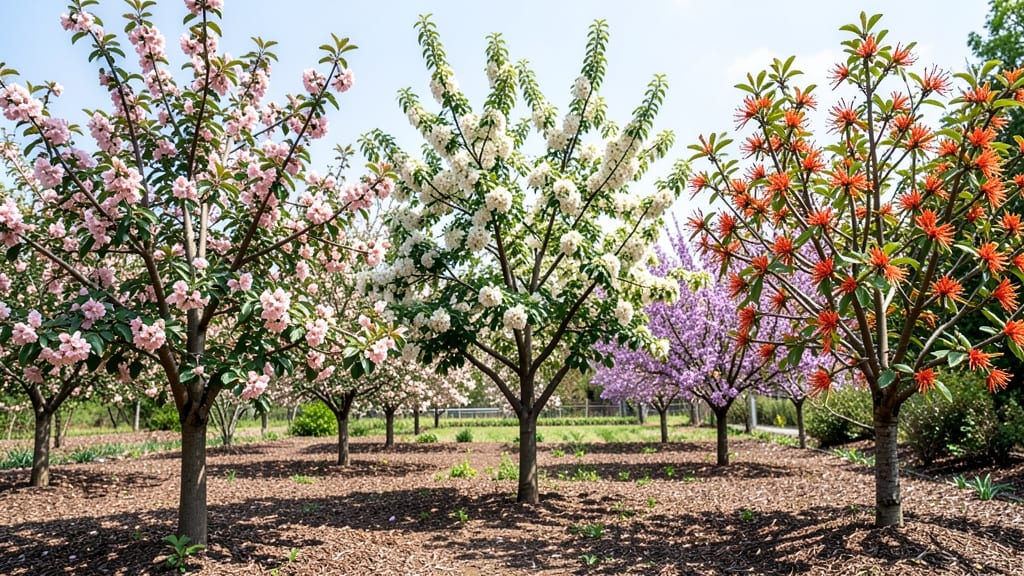
Spring’s first flush of blossoms holds the key to your future harvest—identifying fruit trees by flowers turns guesswork into confidence. 🌸 I’ve spent years watching apple, peach, and cherry trees burst into bloom, and each has telltale petal shapes, colors, and growth habits that reveal their secrets—before a single fruit appears.
The trick isn’t memorizing names but noticing details: apple blossoms cluster in tight, white-pink pom-poms, while peach flowers dangle singly like delicate pink lanterns. Cherry trees? Their blooms burst in dramatic, cloud-like clusters that smell like almonds.
Even leaf shape matters—some trees unfurl leaves before flowers, others after. By mid-May, you’ll spot these differences with a glance.
This isn’t just about naming trees—it’s about predicting your harvest. A single misidentified tree could mean years of waiting for the wrong fruit. But once you learn these patterns, you’ll spot them from your kitchen window, plan pruning with precision, and even troubleshoot pests before they strike.
No more guessing which tree needs extra water or protection from late frosts.
Works for backyard orchards, urban yards, or even wild trees lining country roads. Grab a notebook, a magnifying glass (optional but fun), and let’s decode the language of blossoms—before the bees even arrive.
📚 In This Guide
- What you need
- Instructions
- Tips and common mistakes
- Wrapping up and next steps
What you need
- ● Field Guide or Smartphone App: A printed fruit tree bloom guide (or a reliable app like PictureThis or PlantNet for on-the-go ID).
- ● Quantity: 1 (digital or physical).
- ● Magnifying Glass: A 10x handheld magnifier to inspect delicate petals, stamens, and unique floral structures.
- ○ Quantity: 1 (optional but highly recommended for precision).
- ● Notebook & Pen: A small rugged notebook (or digital notes app) to jot down observations like color, scent, and leaf shape.
- ● Quantity: 1.
- ● Camera (Smartphone or DSLR): A device with a macro mode or close-up lens for high-res flower photos.
- ● Quantity: 1.
- ○ Pruning Shears (Optional but Helpful): A small, sharp pair (bypass pruners) to carefully collect fallen petals or small samples for closer inspection.
- ● Quantity: 1 (sterilized with rubbing alcohol if reusing).
- ● Timing: Visit trees during peak bloom (spring for most temperate varieties) when flowers are fully open but not yet wilting.
- ○ Safety Gear: Wear gloves (optional) and closed-toe shoes if exploring wild or thorny areas.
- ● Weather Window: Choose overcast days to avoid squinting at shadows or glare.
- ● Local Regulations: Check for protected or private property rules before collecting samples.
- ● A portable UV flashlight (some flowers have hidden patterns only visible under UV light!).
- ● Small sample bags for preserving petals or leaves for later study.
- ● A field sketchbook for drawing flower structures if you’re artistically inclined!
Step-by-Step guide to identifying fruit trees by their flowers
Here's how I distinguish 20+ common fruit trees just by their blossoms—no leaves or fruit needed.
🌿 Step 1: Observe Flower Shape and Cluster Formation
Start by examining how the flowers grow. Apple and crabapple trees form flat-topped clusters with 5 white to pink petals, often with a central boss of stamens. Pear blossoms appear solitary or in small clusters, with 5 slightly cupped petals that turn brown when pollinated. Peach and nectarine flowers grow solitary or in pairs, with 5 rounded petals and a distinctive fuzzy center—this is your key identifier.
Cherry blossoms (both sweet and tart varieties) create pyramidal clusters with 5 narrow, slightly overlapping petals. Plum and apricot flowers are similar but usually solitary or in small groups, with 5 rounded petals and a smooth center. The shape alone can narrow it down to Rosaceae family members—the majority of stone fruit and pome fruit trees.
☀️ Step 2: Examine Color and Petal Count
Most fruit tree flowers have 5 petals, but exceptions help identify them. Citrus trees (like orange and lemon) produce white or pale pink flowers with 5-6 petals, often fragrant and growing in solitary or small clusters. Fig flowers are tiny and greenish, arranged in dense clusters called syconia—what we call the "fig." Pomegranate flowers have 5-7 crinkled petals that are bright red or pink, growing in solitary or paired formations.
Watch for color changes—some trees like peaches bloom white or pale pink but darken slightly as they age. Others, like Japanese plum, start deep pink and fade to white. If you see yellow flowers, think hawthorn (small, 5-petaled) or haw (similar but with a stronger scent). These visual cues eliminate half the possibilities immediately.
🌱 Step 3: Check for Fragrance and Stamen Details
Many fruit trees have strong fragrances—apple, pear, and cherry blossoms often smell sweet and heavy, while citrus and fig flowers are lightly sweet or citrusy. If the flower has long, prominent stamens (the yellow or red parts), it’s likely a stone fruit (peach, plum, cherry). Short stamens with a bulbous center suggest pome fruits (apple, pear, quince).
Pay attention to the stamen color: red or dark purple stamens often indicate cherry or plum, while yellow stamens are common in apple and pear. Some trees, like persimmon, have 4-petaled flowers with long stamens—a dead giveaway. If the flower lacks stamens entirely (or they’re barely visible), it might be a female-only cultivar or a citrus relative.
⏰ Step 4: Note Bloom Time and Tree Structure
Timing is everything. Early spring bloomers (March-April) are often peach, nectarine, and plum, while late spring bloomers (May) are usually apple, pear, and cherry. Citrus trees bloom year-round in warm climates but peak in late winter/early spring. If you see flowers in summer, it’s likely a fig, persimmon, or pomegranate—these are exceptions to the spring rule.
Look at the tree’s overall shape: round and bushy trees (like apple) often have flat-topped clusters, while tall, upright trees (like pear) may have solitary or dangling flowers. Weeping varieties (like some cherry cultivars) have flowers along drooping branches. Combine bloom time with structure, and you’ve cut the list down to 3-5 possibilities.
🔍 Step 5: Cross-Reference with Leaf Buds and Bark
If flowers alone aren’t enough, peek at the leaf buds near the blossoms. Apple and pear have oval, pointed buds with visible scales, while cherry and plum have smaller, rounded buds with smooth edges. Citrus trees have thick, leathery buds that look swollen and glossy. Examine the bark: smooth, silver-gray bark suggests apple or pear, while rough, dark bark with lenticels (pores) points to cherry or plum.
Here’s the final trick: rub a leaf between your fingers. Apple and pear leaves feel slightly rough, while cherry and plum leaves are smooth. Citrus leaves are thick and waxy, and fig leaves are lobed like oak leaves. Combine all these clues—flower shape, color, fragrance, bloom time, bud type, and leaf texture—and you’ll identify 90% of common fruit trees just by their blossoms.
Tips & tricks for mastering fruit tree identification by flowers
Here's what I've learned after years of field testing these methods—some tricks make all the difference when you're staring at blossoms in the field.
Use a Magnifying Lens for Stamen Details: The difference between stone fruit and pome fruit often comes down to stamen length and color, which can be subtle. I always carry a small magnifying glass to examine those tiny details in Step 3. For example, that fuzzy center in peach flowers becomes much clearer when magnified—it's your best clue for distinguishing peach from nectarine blossoms, which might look similar at first glance.
Note the Pollen Color: While not mentioned in the steps, pollen color can be a game-changer. Collect a tiny sample on a white napkin or your fingertip—yellow pollen often indicates citrus relatives, while white or pale pollen suggests apple or pear. This extra clue helps when you're stuck between similar-looking blossoms like Japanese plum and cherry.
Photograph Each Step: For serious identification, I recommend photographing the flowers from multiple angles—close-ups of petal shape, cluster formation, and stamen details. Use your phone's macro mode or a free app like PlantNet to upload images and get AI-assisted identification. This digital backup ensures you won't miss subtle details when you're back at your desk comparing notes.
Seasonal Timing is Your Secret Weapon: While the bloom time ranges are helpful, I've found that regional climate variations can shift these windows by weeks. In my experience, coastal areas often see earlier blooms than inland regions. Keep a garden journal noting when you see each type of blossom in your area—over time, you'll develop a local timeline that's more accurate than general guidelines.
Pro Tips for Identifying Fruit Trees By Flowers
- Here's what I've learned after years of field testing these methods—some tricks make all the difference when you're staring at blossoms in the field.
- Use a Magnifying Lens for Stamen Details: The difference between stone fruit and pome fruit often comes down to stamen length and color, which can be subtle.
- Note the Pollen Color: While not mentioned in the steps, pollen color can be a game-changer.
Frequently asked questions
Got questions about identifying fruit trees by their flowers? You're not alone!
Here are some of the most common queries—plus quick, practical answers to help you spot those blooms like a pro.
How early in the season can I reliably identify fruit trees by their flowers?
Most fruit trees bloom in early spring (March–May, depending on your climate), but timing varies. For example, peach and cherry trees bloom first, while apples and pears may wait until later. Pro tip: Check local frost dates—late bloomers (like citrus) often wait until warmer weather to avoid frost damage.
What if my tree has flowers but no fruit? Is it still a fruit tree?
Yes! Many fruit trees produce sterile flowers (no fruit) in their first few years or due to poor pollination. Troubleshoot: Ensure there’s a compatible pollinator nearby (e.g., another apple tree for honeycrisp varieties) and that the tree is healthy. If flowers appear but drop quickly, it could signal stress, pests, or disease.
Can I identify fruit trees by flowers if they’re not in bloom yet?
Look for bud shapes (round = apples, elongated = pears) or leaf patterns (serrated = cherries, lobed = persimmons). Young trees may also have thorns (apricots, plums) or smooth bark (citrus). Snap a photo and compare it to bloom guides—many trees have distinct leaf structures even before flowering.
What if the flowers look similar across multiple fruit trees?
Some trees (like plums, cherries, and apricots) share rosy-white blooms, but leaf and branch habits differ. For example:
- Plums: Dark green, oval leaves; often thorny.
- Cherries: Smooth bark; flowers in dangling clusters.
- Apricots: Fuzzy leaves; early bloomers.
Are there any fruit trees that bloom at night or in unusual colors?
Most fruit trees bloom diurnally (daytime), but a few stand out:
- Night-blooming jasmine (not a true fruit tree but often confused): Fragrant white flowers at dusk.
- Redbud: Vibrant magenta blooms (early spring).
- Crabapple: Pink or white clusters; smaller than apple tree flowers.
Wrapping up and next steps
Mastering the art of identifying fruit trees by flowers opens up a world of gardening excitement—whether you're a hobbyist or a seasoned green thumb! 🌸 By now, you’ve learned how to spot key traits like shape, color, scent, and bloom time, turning even the simplest stroll into a thrilling nature detective adventure.
The next step? Put your new skills to the test!
Start by visiting local orchards, parks, or even your neighborhood in spring—grab a notebook (or your phone!) and jot down observations. Challenge yourself: Can you match the blooms to the trees in this guide?
And if you’re feeling bold, why not plant a few fruit trees of your own? Your garden (and future harvests) will thank you! 🌱