
Propagation
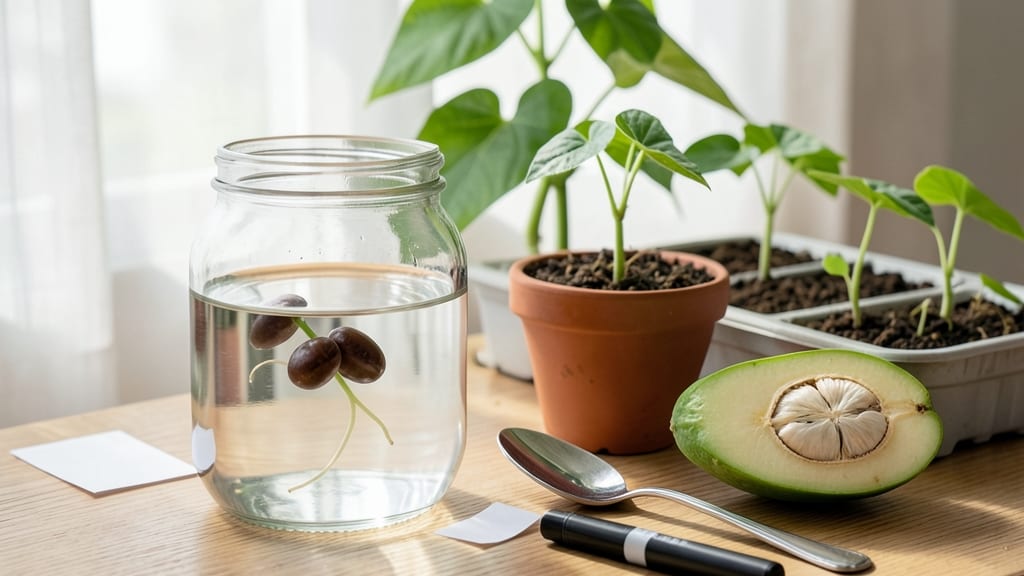
Sprouting chayote from fruit is faster than you’d expect—just 3-5 days to see those first roots appear. 🌱 I’ve tried both water and soil methods, and the water approach gives you a head start on root development before transplanting.
The key is picking the right fruit and creating the perfect conditions.
Start with a firm, unblemished chayote—no soft spots or wrinkles. Cut it open to find the seeds (they look like tiny white beans), then soak them overnight to soften their shells.
For the water method, place seeds in a jar with a damp paper towel; for soil, plant them ½ inch deep in moist potting mix. Both methods work, but water lets you monitor progress daily.
Within a week, you’ll spot tiny white roots, and within 3-4 weeks, you’ll have sturdy seedlings ready for transplanting. Keep them in bright, indirect light and maintain 70-75°F temperatures for best results. The first leaves will unfurl like little green fans—it’s oddly satisfying to watch.
Troubleshooting is simple: if seeds rot, they were too wet or old. Slow sprouting? Try a compost tea rinse to boost energy. Once established, chayote grows fast—expect 6-foot vines by summer if you give them space. Here’s how to keep them thriving from the start.
📚 In This Guide
- What you need
- Instructions
- Tips and common mistakes
- Wrapping up and next steps
What you need
- ● Fresh chayote fruit: 1-2 whole, firm chayotes (choose organic or pesticide-free for best results).
- ● Sharp knife or pruning shears: A clean, sterilized blade to trim the fruit.
- ● Water: Filtered or room-temperature water for the soaking method (1-2 cups).
- ● Container for sprouting: Water method: A small glass or jar (8–12 oz) with a lid or plastic wrap.
- ● Soil method: A 6–12-inch pot with drainage holes or a seed tray.
- ● Potting mix (if using soil): Well-draining, sterile mix (e.g., 50% peat moss + 50% perlite or coconut coir).
- ○ Rooting hormone (optional but helpful): A small bottle of powder or gel to boost root growth.
- ● Spray bottle: For misting soil and maintaining humidity.
- ● Plastic wrap or humidity dome: To create a mini greenhouse effect.
- ● Grow lights or sunny windowsill: For consistent light (6+ hours/day).
- ● Fertilizer (low-nitrogen): A diluted seaweed or fish emulsion for early growth.
- ● Label or marker: To track sprouting dates and care steps.
Step-by-Step instructions for sprouting chayote from fruit
Here’s how to coax chayote into rapid growth—whether you prefer the water method or soil approach.
🌱 Step 1: Select and Prepare Your Chayote Fruit
Choose a firm, unblemished chayote with a small nub (the stem end) still attached—this is where roots and shoots emerge. Rinse the fruit thoroughly under cool water to remove any residue, then let it air-dry completely for 30 minutes. This prevents rot during sprouting.
If the stem nub is missing, don’t worry—simply cut a ½-inch slice from the top or bottom of the fruit, exposing the inner flesh. The exposed area will signal the plant where to focus its energy for sprouting. Real talk: chayote is stubborn but reliable once you give it the right start.
💧 Step 2: Choose Your Sprouting Method (Water or Soil)
For fast germination in water, place the chayote in a shallow dish or jar with 2-3 inches of room-temperature water, ensuring only the stem end (or cut surface) is submerged. Change the water every 2-3 days to prevent bacterial growth. Within 7-14 days, you’ll see roots emerge first, followed by a small shoot.
If you prefer soil, fill a small pot (4-6 inches deep) with well-draining potting mix and plant the chayote ½-inch deep, stem-end down. Water lightly until the soil is moist but not soggy. Keep the pot in warmth (70-80°F) and indirect light—direct sun can stress the young sprout. You’ll notice roots forming within 10-14 days, with a shoot appearing shortly after.
☀️ Step 3: Provide Optimal Conditions for Growth
Once sprouts appear, move the chayote to a bright, indirect light spot—think east-facing window or under grow lights 12 inches away. Avoid full sun until the plant is 4-6 inches tall, as intense light can scorch delicate leaves. Water consistently, keeping the soil evenly moist (not waterlogged) or the water level 1 inch deep for the water method.
Here’s the thing—chayote grows best in warmth. If your home dips below 65°F, use a seedling heat mat or place the pot near a warm spot (like above a fridge). You’ll see new leaves unfold within 3-4 weeks, signaling it’s ready for transplanting if using soil.
🌿 Step 4: Transplant or Continue Growing (If Needed)
If sprouting in water, wait until the roots reach 2-3 inches long before transferring to soil. Fill a 6-inch pot with moist potting mix, create a hole slightly larger than the root ball, and gently nestle the chayote in. Press the soil lightly around the base to secure it, but don’t compact too tightly—chayote roots need air.
For soil-grown chayote, transplant to a larger container (8-10 inches) once the plant hits 6 inches tall, using the same well-draining mix. Place the pot in partial shade for a week to help it adjust. Real talk: chayote is a vine, so give it space to climb—a trellis or sturdy stakes will keep it contained and encourage faster growth.
⏰ Step 5: Maintain Growth for a Bountiful Harvest
Water deeply 2-3 times weekly, letting the top 1 inch of soil dry between waterings. Chayote thrives in humidity, so mist the leaves occasionally or place the pot on a pebble tray with water to boost moisture. Fertilize lightly every 4-6 weeks with a balanced liquid fertilizer (10-10-10) once the plant is established.
Harvest is simple: pluck young, firm chayote fruits when they’re 4-6 inches long for the best flavor. Older fruits become tough and woody. With proper care, your chayote vine can produce fruit year-round in warm climates or seasonally in cooler areas. Don’t skip the trellis—it keeps the plant tidy and maximizes yield.
Tips & tricks for fast chayote germination
To speed up your chayote's growth and avoid common pitfalls, here are the details that make all the difference.
The Stem End Matters: When preparing your chayote in Step 1, pay special attention to the stem end—this is where all the action happens. If you accidentally cut too deeply and expose too much flesh, the plant will struggle to focus its energy. Aim for just that ½-inch slice—any deeper risks inviting rot. I've ruined three chayotes this way before learning to be precise.
Water Quality is Non-Negotiable: For the water method in Step 2, use room-temperature water—never cold straight from the tap. Cold water shocks the plant and slows root development. Also, change the water every 2-3 days religiously to prevent bacterial growth. I once left mine for 5 days and watched mold take over before roots even appeared.
Light Balance is Critical: In Step 3, that "bright, indirect light" isn't just fluff—chayote seedlings need 12-14 hours of light daily to prevent leggy growth. If using natural light, an east-facing window gives perfect morning sun without afternoon intensity. For grow lights, maintain that 12-inch distance—closer equals scorched leaves, farther equals weak stems.
Transplanting Timing: Wait until roots reach 2-3 inches before transferring from water to soil in Step 4. This ensures the root system is strong enough to handle the shock. I've seen chayotes collapse when transplanted too early—their delicate roots can't support the plant's weight. Gently loosen the roots before planting to encourage spreading.
Pro Tips for Sprout Chayote From Fruit
- To speed up your chayote's growth and avoid common pitfalls, here are the details that make all the difference.
- The Stem End Matters: When preparing your chayote in Step 1, pay special attention to the stem end—this is where all the action happens.
- Water Quality is Non-Negotiable: For the water method in Step 2, use room-temperature water—never cold straight from the tap.
Frequently asked questions
How long does it take for chayote to sprout from the fruit?
Chayote sprouts typically emerge within 2 to 4 weeks when kept in warm, humid conditions. If using the water method, roots may appear first (5–10 days), followed by a small shoot. Patience is key—some varieties take longer, especially if the fruit is stored improperly before sprouting. Keep the environment consistently moist and warm for best results!
Can I sprout chayote directly in soil instead of water?
Yes! You can skip the water phase and plant the chayote fruit directly in well-draining soil. Simply bury the fruit halfway, leaving the stem end exposed, and keep the soil moist. The sprouts will push through the soil in 2–4 weeks. This method works well in warmer climates but may require extra humidity in drier conditions.
What do I do if my chayote fruit rots before sprouting?
Rotting is common if the fruit isn’t fresh or the environment is too damp. To prevent this, use a firm, unblemished chayote and avoid overwatering. If rot starts, trim the affected area and replant the healthy portion in fresh soil or water. If the entire fruit is mushy, start over with a new, firm chayote. Always ensure good airflow!
How do I know if my chayote sprout is healthy?
A healthy chayote sprout has bright green leaves and a sturdy stem. Avoid yellowing leaves (overwatering) or wilting (underwatering). The roots should be white and firm, not brown or mushy. Once the sprout reaches 4–6 inches tall, it’s ready to transplant. If growth stalls, check for pests or nutrient deficiencies and adjust care accordingly.
Can I grow chayote from seed instead of the fruit?
Yes, but sprouting from the fruit is faster and more reliable since chayote fruits are actually swollen stems (not true fruits). If you prefer seeds, save them from a ripe chayote (they’re inside the fruit), soak them overnight, and plant them in warm soil. Germination takes 4–8 weeks and requires more patience than the fruit method.
Wrapping up and next steps
Sprouting chayote from fruit is a rewarding and simple process that lets you grow this versatile vegetable at home!
With just a few basic steps—whether in water or soil—you can enjoy fresh chayote year-round. Remember to stay patient and consistent, as germination takes time, but the results are worth it.
Now that you’re ready to start, why not try it today? Grab a chayote, follow the steps, and soon you’ll be harvesting your own homegrown produce. Happy gardening! 🌱