
Trees
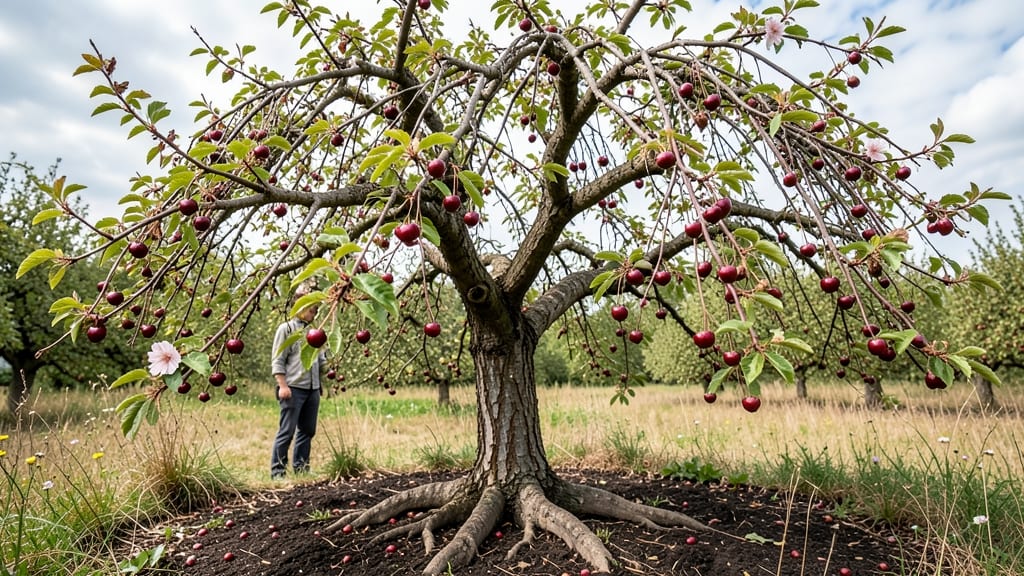
Cherry fruit trees 🍒 can grow anywhere from 8 feet to towering 40 feet tall, depending on the variety you choose.
If you're dreaming of a backyard filled with sweet, juicy cherries but wondering how much space to dedicate, knowing your cherry tree’s mature height is the first step to planning a fruitful garden.
Standard varieties like 'Bing' or 'Rainier' reach their full 20- to 40-foot height within 10-15 years, while dwarf or semi-dwarf types stay manageable at 8-18 feet—perfect for small yards or containers.
Below, I’ll break down the height ranges by variety, how pruning and soil affect growth, and the best spacing to ensure your tree thrives without crowding your neighbors’ fences.


Cherry tree height ranges by variety: dwarf to standard sizes
Choosing the right cherry tree variety depends heavily on your space constraints and long-term gardening goals. Standard cherry trees can reach towering heights of 20 to 40 feet, making them perfect for rural properties or large orchards.
However, if you're working with a smaller backyard, dwarf and semi-dwarf varieties offer excellent alternatives while still delivering abundant fruit. The key is understanding each variety's mature height to plan for proper spacing and sunlight exposure.
For home gardeners, dwarf cherry trees (typically 8 to 12 feet tall) are game-changers, fitting neatly into suburban yards or even large containers. Semi-dwarf varieties strike a balance, growing 12 to 18 feet tall—ideal for medium-sized gardens where you want a tree with presence but manageable height.
Meanwhile, standard varieties dominate the landscape, requiring ample room to thrive and produce fruit efficiently.
| Variety Type | Mature Height | Ideal Spacing | Best For |
|---|---|---|---|
| Dwarf (e.g., 'Stella', 'Compact Stella') | 8–12 ft | 10–15 ft apart | Containers, small yards, urban gardens |
| Semi-Dwarf (e.g., 'Montmorency', 'Lapins') | 12–18 ft | 15–20 ft apart | Medium yards, orchard edges |
| Standard (e.g., 'Bing', 'Rainier', 'Stella') | 20–40 ft | 25–40 ft apart | Rural properties, large orchards |
| Columnar (e.g., 'Compact Stella') | 6–10 ft | 6–8 ft apart | Narrow spaces, hedgerows |
When selecting a cherry tree, consider not just height but also spreading habits. Some varieties, like the 'Bing' cherry, can spread 15 to 20 feet wide, while dwarf varieties like 'Stella' remain more compact.
Always check the spacing recommendations for your chosen variety to ensure proper airflow, which reduces disease risk and improves fruit quality. For example, planting a standard 'Rainier' cherry too close to a fence or house can lead to overcrowding and poor yields.
Another critical factor is rootstock influence. Dwarf varieties are often grafted onto dwarfing rootstock like 'Gisela' or 'Lovell', which naturally restrict growth. Semi-dwarf trees use intermediate rootstock, while standard trees grow on their own roots or vigorous rootstock.
This means even if you plant a 'Bing' cherry, its mature height will depend entirely on the rootstock used—a detail often overlooked by beginners.
For small-space gardening, columnar cherry trees are a hidden gem. These varieties grow 6 to 10 feet tall but remain narrow, making them perfect for urban backyards or patios. Brands like 'Compact Stella' are specifically bred for tight spaces while still producing high-quality fruit.
Just ensure they receive full sun exposure and are planted in well-draining soil to prevent root rot.
If you're planning to grow multiple cherry trees, spacing is non-negotiable. Standard varieties need 25 to 40 feet between trees to avoid competition for nutrients and sunlight. Semi-dwarf trees can be spaced 15 to 20 feet apart, while dwarf trees thrive with 10 to 15 feet of space.
Proper spacing also makes harvesting and pruning much easier, reducing the risk of injury from tangled branches.
One common mistake is assuming that smaller trees require less care. In reality, dwarf and semi-dwarf varieties often need more frequent pruning to maintain their shape and encourage fruit production. Without regular pruning, even a 'Stella' cherry can grow leggy and produce fewer cherries.
I recommend scheduling a winter pruning session to remove dead wood and shape the tree, followed by a light summer trim to improve airflow.
For those in colder climates (USDA Zones 5-7), consider sour cherry varieties like 'Montmorency', which are hardier and often grow as semi-dwarf trees. These varieties are also more disease-resistant, making them a practical choice for home gardeners.
Meanwhile, sweet cherries like 'Bing' or 'Rainier' typically require warmer climates (Zones 6-9) and may need winter protection in colder regions.
Finally, don’t forget that container growing is an option for dwarf varieties. A 15-gallon pot can accommodate a young 'Stella' cherry tree, allowing you to move it to a sunny spot during the growing season. Just ensure the container has drainage holes and use a
How cherry tree height affects fruit yield and care needs
Your cherry tree’s height isn’t just about aesthetics—it directly impacts how much fruit it produces and how much care it requires. Taller trees often yield more cherries but need more sunlight, regular pruning, and vigilant pest control.
Meanwhile, dwarf varieties may produce fewer cherries but are easier to manage in small spaces. Understanding these trade-offs helps you choose the right variety for your garden’s size and your willingness to maintain it.
Sunlight exposure is critical: taller trees need full sun access to develop strong branches and heavy fruit loads, while shorter trees can thrive with slightly less direct light. Pruning requirements also shift—taller trees demand annual structural pruning, while dwarf varieties may only need light shaping.
Even pest susceptibility varies: taller trees are more vulnerable to bird damage and fungal diseases due to their height and dense foliage.
- 🌞 Sunlight Needs: Taller trees (20+ ft) require 6-8 hours of direct sun; dwarf varieties (8-12 ft) thrive with 5-6 hours.
- ✂️ Pruning Frequency: Standard trees need annual pruning; dwarf trees may only need light shaping every 2-3 years.
- 🐦 Pest Risks: Taller trees attract birds and squirrels; dwarf trees face aphids and spider mites more often.
- 💧 Watering Depth: Tall trees need deep watering (10+ gallons); dwarf trees require shallow but frequent watering.
- 🍒 Fruit Yield: Standard trees produce 100+ lbs/year; dwarf varieties yield 10-30 lbs/year.
Taller cherry trees often produce larger harvests, but their height creates challenges. For example, a 25-foot Bing cherry tree may yield 200+ pounds of fruit annually, but reaching those branches for pruning or harvesting can be difficult without a ladder.
In contrast, a 10-foot Stella cherry tree yields just 20 pounds but is perfect for small backyards or containers. Balance your space with your harvest goals—taller trees need room to spread their branches 15-25 feet wide, while dwarf varieties stay compact at 8-10 feet wide.
Pruning is another area where height matters. A standard cherry tree requires annual winter pruning to remove dead wood and open the canopy for sunlight, while a dwarf variety may only need light pruning every 2-3 years.
Proper pruning not only improves fruit production but also reduces the risk of bacterial canker and silver leaf disease, which are more common in taller, densely branched trees. Always use sterilized pruners and prune during dormant season (late winter) to minimize stress.
Pest and disease risks also scale with height. Taller trees are more vulnerable to bird damage and crown rot due to poor air circulation, while dwarf trees often struggle with aphids and powdery mildew because their branches are closer to the ground and more humid.
To protect your tree, apply organic sprays like neem oil in early spring and use bird netting during harvest season if you opt for a taller variety. Mulching around the base also helps deter pests and retain moisture, especially for dwarf trees in containers.
If you’re working with limited space, consider columnar cherry varieties like 'Compact Stella,' which grow just 8-10 feet tall but produce abundant fruit. These varieties are ideal for urban gardens or patios, as they require minimal pruning and fit neatly into small yards.
For larger properties, a semi-dwarf variety like 'Montmorency' (12-15 feet tall) offers a middle ground—enough yield for fresh eating or preserving without the maintenance of a full-sized tree.
Ultimately, your cherry tree’s height should align with your garden’s layout, your care capacity, and your fruit goals. Whether you choose a towering Bing cherry or a compact Stella, understanding these trade-offs ensures your tree thrives—and your harvest is bountiful. 🍒