
How To
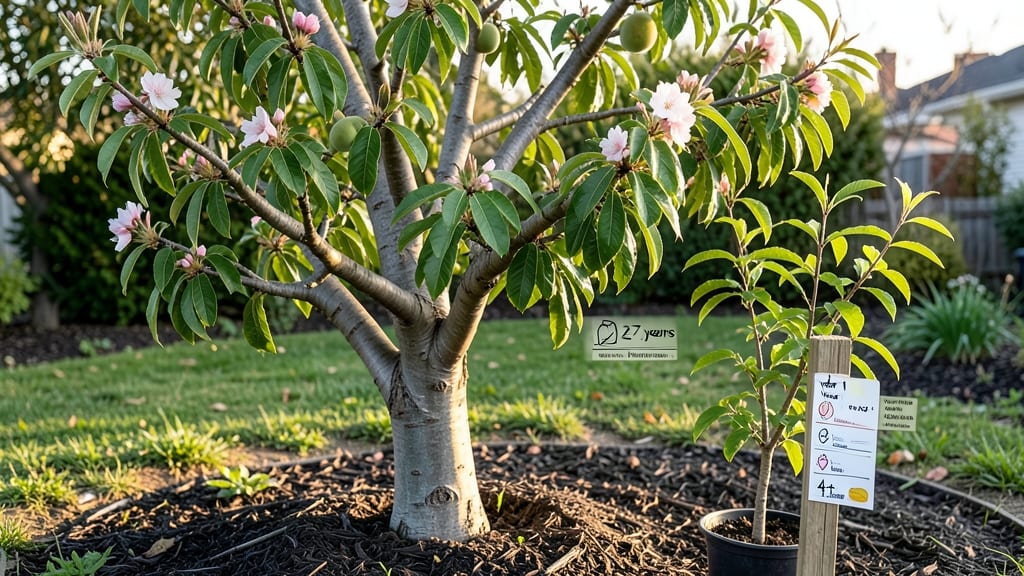
A peach tree bears fruit in 2 to 5 years, but the timeline depends on whether you planted a dwarf, semi-dwarf, or standard variety—and how well you care for it.
Picture this: You’ve spent months nurturing your 🍑, only to stare at blossoms year after year with no fruit in sight. The frustration is real, but the good news is that with the right variety, climate, and care, you can cut that wait time by nearly half.
Dwarf trees might surprise you with their first harvest in just 1 to 2 years, while standard varieties can take up to 5 years—and that’s if everything goes right.
Below, I’ll break down the exact factors that speed up (or slow down) fruiting, plus the 3 biggest mistakes that keep peach trees from producing.
You’ll learn how to choose the fastest-bearing varieties for your zone, adjust pruning for earlier blooms, and troubleshoot why your tree might still be playing the waiting game—even after years of growth.
Peach tree fruiting timeline by variety: fastest to slowest producers
If you planted a peach tree hoping for quick rewards, you’re likely wondering: how long for a peach tree to bear fruit? The answer depends entirely on the variety, rootstock, and growing conditions.
Dwarf trees can produce fruit in just 1–2 years, while standard trees may take 4–5 years to reach maturity. Let’s break down the timelines so you can set realistic expectations—and plan for that first harvest!
Rootstock plays a huge role in fruiting speed. Trees grafted onto Lovell rootstock (vigorous) mature slower, while those on Nemaguard rootstock (dwarfing) bear fruit faster. Even within the same size category, early-bearing varieties like 'Redhaven' or 'Elberta' can outpace late bloomers like 'Contender' by 1–2 years.
Choosing the right variety for your climate zone (USDA 5–9) also accelerates fruiting.
Here’s a clear breakdown of fruiting timelines by tree type, so you can compare and plan accordingly:
The 'Bonanza' peach tree, for example, is a dwarf variety that can bear fruit in as little as 1 year if planted in ideal conditions (full sun, well-draining soil, and proper winter chilling). Meanwhile, standard varieties like 'O'Henry' may take 4–5 years before producing their first meaningful harvest.
This delay isn’t just about patience—it’s about the tree’s energy being directed toward root and branch growth before flowering.
Climate also shifts these timelines. Trees in USDA Zone 8–9 (warmer climates) often fruit 6–12 months earlier than those in Zone 5–6, where colder winters delay blooming.
If you’re in a cooler zone, prioritize varieties with lower chilling hour requirements (e.g., 'Reliance' needs only 300–500 hours, while 'Elberta' requires 800–1,000 hours).
Proper pruning in the first 2 years can also nudge your tree toward earlier fruiting. Focus on removing water sprouts and suckers to redirect energy to fruit production. Avoid heavy pruning in late summer, as this can stress the tree and delay flowering.
Instead, prune in late winter or early spring to encourage robust blooms for the next season.
Soil health is another game-changer. Peach trees thrive in slightly acidic soil (pH 6.0–6.5). If your soil is too alkaline, amend it with sulfur or compost to speed up nutrient uptake.
A balanced fertilizer (10-10-10) applied in early spring and again after harvest can also boost fruiting by 20–30% in the following year.
Don’t forget that cross-pollination is critical for most peach varieties. If you’re planting just one tree, choose a self-pollinating variety like 'Bonanza' or 'Reliance'. For standard varieties, plant two compatible trees (e.g., 'Redhaven' and 'Elberta') within 50 feet of each other to ensure fruit set.
Without this, you might see flowers but no peaches!
With the right variety, care, and a little patience, your peach tree could be heavy with fruit in as little as 1–2 years. Track your tree’s progress with a simple journal noting bloom dates, fruit set, and harvest readiness.
Soon, you’ll be enjoying homegrown peaches straight from your backyard! 🍑
5 Climate and care hacks to make your peach tree bear fruit faster
Patience is key when growing peach trees, but with the right strategies, you can cut fruiting time by 20–50%. The secret lies in matching your tree’s needs to your climate and care routine.
From selecting the right USDA zone to mastering pruning techniques, these hacks will help your peach tree bloom and fruit sooner than expected.
Peach trees thrive in USDA zones 5–9, where they receive adequate winter chilling hours (300–1,000 hours below 45°F). Without enough cold exposure, blooms may fail to set fruit. Even in warmer zones, proper chilling can be mimicked with strategic winter care or variety selection.
- 🌡️ Zone Matching: Plant in USDA 5–9 for optimal growth. Zones 6–8 yield fastest fruiting.
- ❄️ Chilling Hours: Ensure 300–1,000 hours below 45°F. Southern varieties need 200+ hours.
- ✂️ Pruning for Blooms: Prune in late winter to remove suckers and open canopy for sunlight.
- 🌱 Soil pH: Aim for 6.0–7.0. Test soil and amend with lime or sulfur as needed.
- 🚫 Nitrogen Warning: Too much nitrogen = leafy growth, no fruit. Use balanced fertilizer (10-10-10).
Pruning isn’t just about shaping your tree—it’s about encouraging fruit production. In late winter, remove dead or crossing branches and thin out dense foliage to improve airflow. This reduces disease risk and directs energy toward flower and fruit development instead of excessive leaf growth.
Soil health is another game-changer. Peach trees prefer well-draining, slightly acidic soil (pH 6.0–7.0). If your soil is too alkaline, amend it with elemental sulfur or peat moss.
Overly acidic soil? Add lime to raise the pH. A simple soil test kit will save you guesswork and ensure your tree gets the nutrients it craves.
Watch out for the nitrogen trap: Many gardeners over-fertilize with nitrogen-rich amendments, thinking it’ll speed up growth. But too much nitrogen leads to lush leaves and no fruit. Instead, use a balanced fertilizer (like 10-10-10) and focus on phosphorus and potassium to boost flowering and fruiting.
With these hacks, your peach tree could bear fruit in as little as 1–3 years instead of the standard 3–5 years. Start with the right variety and zone, then refine your care routine. Before you know it, you’ll be picking homegrown peaches straight from your backyard tree! 🍑