
Planting
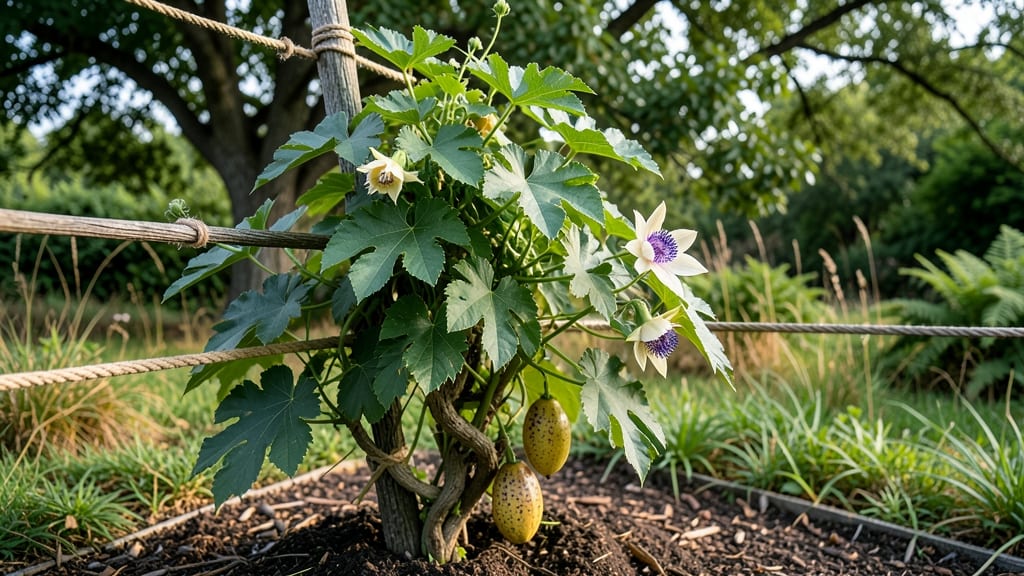
Passion fruit thrives in USDA Zones 8 through 11, where warm climates and frost-free conditions create the perfect environment. Purple Passionfruit (Passiflora edulis) prefers Zones 9-11, while Banana Passionfruit (P. tripartita) can handle cooler Zones 7-10 with winter protection.
Passion fruit plants are tropical vines that need consistent warmth to flourish, so USDA Zones 8-11 are critical for optimal growth. 🌿 In cooler zones, gardeners often grow passion fruit in containers and bring them indoors during winter to prevent frost damage.
Purple Passionfruit, the most common variety, struggles in temperatures below 30°F, while Banana Passionfruit can tolerate slightly cooler nights with proper care. The key is matching your local climate to the right variety—some even produce fruit in Zone 7 with winter mulching or greenhouse protection.
For those in marginal zones, microclimates matter just as much as the official USDA zone. South-facing walls, greenhouse setups, or even large pots that can be moved indoors during cold snaps can extend your growing season.
I’ve seen gardeners in Zone 7 successfully grow Banana Passionfruit by providing heavy mulch and temporary row covers during winter. The trade-off? These varieties may take longer to mature or produce smaller fruit compared to their tropical counterparts.
💡 In This Article
- USDA Zone Requirements for Passion Fruit Varieties
- Best Passion Fruit Varieties for Different Climates
USDA Zone requirements for passion fruit varieties
Passion fruit plants are tropical vines with specific temperature thresholds that determine their survival and productivity. The critical factor is frost sensitivity—most varieties die when exposed to temperatures below 30°F, as ice crystals form in their cells, rupturing membranes and killing the plant.
Purple Passionfruit (Passiflora edulis) thrives in Zones 9-11, where winters rarely drop below 40°F, while Banana Passionfruit (P. tripartita) extends the range to Zones 7-10 by entering partial dormancy in cooler months.
The difference comes down to cellular adaptations.
Tropical varieties like Purple Passionfruit lack cold-hardiness genes, while Banana Passionfruit has evolved to handle short-term exposure to 25°F through a process called "cold acclimation," where sugars and proteins in its leaves act as natural antifreeze. 🌱 This is why gardeners in Zone 8 often grow Banana Passionfruit in containers—they can be moved to sheltered spots when nighttime temps dip below 45°F.
Without this protection, even a single frost event can devastate the plant.
Seasonal dormancy plays a key role in cooler zones. Banana Passionfruit may slow growth or drop leaves in winter, but with proper mulching (4-6 inches of straw or wood chips), roots stay insulated.
Purple Passionfruit, however, remains active year-round in its ideal zones, producing fruit continuously if given 6-8 hours of sunlight daily. The trade-off? In Zone 7, Purple Passionfruit requires greenhouse conditions or winter indoor care, while Banana Passionfruit can survive outdoors with heavy mulch and wind protection.
Microclimates create exceptions to the zone rules. A south-facing wall can raise temperatures by 5-10°F compared to open ground, potentially allowing Purple Passionfruit to thrive in Zone 8b. Similarly, large containers (15-gallon pots) with heat-retaining materials like black plastic liners can buffer temperature swings.
I’ve seen gardeners in Zone 7b grow Granadilla Passionfruit (P. ligularis) successfully by combining these microclimate tricks with row covers during late spring frosts.
Here’s what the science shows: Passion fruit vines grow best when daytime highs stay between 75-95°F and nighttime lows don’t fall below 55°F.
Below 60°F, photosynthesis slows dramatically, reducing fruit set. 🌡️ In cooler zones, gardeners must balance this with winter survival strategies—like wrapping vines in burlap or using greenhouse plastic—to maintain these temperature thresholds year-round.
For those pushing the limits, consider these zone-specific adjustments:
- Zones 7-8: Grow Banana Passionfruit in containers with winter indoor lighting (grow lights for 12+ hours/day)
- Zone 8b-9: Purple Passionfruit benefits from trellising against south walls for heat retention
- Zones 10-11: Provide afternoon shade (40-50% coverage) to prevent heat stress above 95°F