
Trees
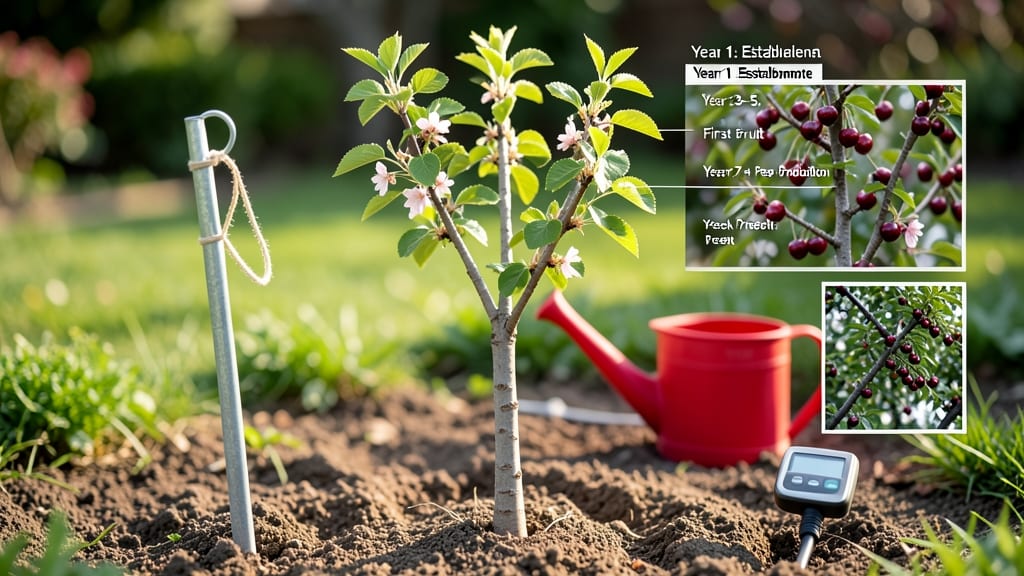
Before cherry trees 🍒 produce fruit, you’ll need to know the timeline—some varieties bear in just 2 years, while others take a decade, depending on the type and care.
If you’ve ever planted a cherry tree hoping for quick rewards, you’ll want to know the truth: patience is key—some varieties take just 2 years, while others wait a decade. But the wait isn’t all bad news.
Sweet cherries often fruit faster than tart varieties, and dwarf trees can bear sooner than their standard counterparts. The right soil, sunlight, and pruning can shave years off that wait.
Here’s what to expect by variety, plus 5 critical factors that speed up (or delay) fruit production—so you can get those juicy cherries sooner than you think.
Cherry tree fruit production timeline by variety
Choosing the right cherry tree variety can shave years off your wait for that first sweet harvest. Some sweet cherries like Stella® or Rainier may produce fruit as early as 2-3 years, while tart cherries like Montmorency often take 4-6 years to bear.
The key difference? Sweet cherries are bred for rapid fruiting, while tart cherries prioritize hardiness and disease resistance over speed.
Dwarf varieties like Black Tartarian or Sweetheart® are the fastest producers, often bearing fruit in 3-4 years due to their compact size and focused energy. Meanwhile, standard-sized trees like Lapins® or Bing cherries may take 5-7 years or longer, especially in cooler climates.
Your choice of variety isn’t just about flavor—it’s about timing.
Here’s the breakdown of what to expect based on your cherry tree selection, including early bloomers and late producers:
If you’re eager for fruit, dwarf varieties are your best bet—they mature faster and produce earlier harvests while still yielding high-quality fruit.
For example, the Sweetheart® cherry tree can bear fruit in just 3 years and stays under 10 feet tall, making it perfect for patios or small yards. These varieties also require less pruning, which means less work for you.
On the other hand, standard-sized trees like Lapins® or Bing cherries take longer but reward you with larger harvests and longer production spans. If you have space and patience, these trees can fruit for decades, making them a long-term investment.
Just remember: the first few years are all about root and canopy establishment, so don’t expect heavy yields until the tree is fully mature.
Climate plays a huge role in timing too. In warmer USDA zones (7-9), cherry trees often fruit 1-2 years earlier than in cooler zones (5-6).
For instance, a Stella® cherry in Zone 8 might produce fruit in 2 years, while the same tree in Zone 5 could take 3-4 years. Always check your local last frost date and choose varieties suited to your area.
One common misconception is that bigger trees = faster fruit. That’s not true! A 10-foot dwarf can outproduce a 30-foot standard tree in its first few years because it focuses all its energy on fruiting instead of growing taller.
If you’re in a hurry, dwarf or semi-dwarf varieties are the way to go—just be prepared to prune regularly to maintain their shape and encourage more fruit production.
Proper soil preparation
5 Critical factors that speed up (or delay) cherry tree fruit production
If you’re eager to enjoy fresh cherries from your own tree, timing is everything. While some cherry varieties produce fruit in just 2-3 years, others may take a decade or more.
The difference often comes down to five key factors: soil quality, sunlight exposure, pruning practices, watering habits, and climate conditions. Master these, and you could shave years off your wait time—or risk delays that stretch your patience thin.
Let’s start with the most impactful factor: soil quality. Cherry trees thrive in well-draining, slightly acidic soil with a pH between 6.0 and 6.5. Poor soil can stunt growth and delay fruiting by 3-5 years.
Amending your soil with compost or organic matter before planting is a game-changer, especially in heavy clay or sandy soils. Without this step, your tree may struggle to establish the root system needed for fruit production.
Here’s how these five factors directly influence your cherry tree’s fruit production timeline:
How Long Before Cherry Trees Produce Fruit?
- Soil Quality: Rich, well-draining soil with pH 6.0-6.5 can cut fruiting time by 2-4 years. Poor soil delays production by 5+ years.
- Sunlight: 6-8 hours of full sun speeds up fruiting by 1-3 years compared to partial shade, where trees may take 5+ years longer.
- Pruning: Proper annual pruning in late winter removes deadwood and encourages fruit-bearing branches, reducing wait time by 1-2 years.
- Watering: Deep, consistent watering (15-20 gallons weekly) keeps roots healthy and can advance fruiting by 2 years vs. inconsistent watering.
- Climate: USDA Zones 5-8 are ideal. Harsher climates (Zones 3-4) may delay fruiting by 3-5 years due to frost damage to blossoms.
🌱 Pro Tip: Combine all five factors for the fastest results—some gardeners see fruit in 2-3 years with optimal care!
Next up is sunlight exposure, which is non-negotiable for cherry trees. These trees need 6-8 hours of direct sunlight daily to set fruit.
If your tree is planted in partial shade, it may take 5+ years longer to produce fruit because the energy required for flowering and fruiting is significantly reduced. South-facing locations are ideal, especially in cooler climates where sunlight is limited.
Don’t overlook pruning practices, either. Pruning isn’t just about shaping your tree—it’s a critical tool for encouraging fruit production. By removing dead or diseased branches and opening the canopy to better sunlight penetration, you help the tree focus its energy on producing fruit.
I recommend annual pruning in late winter, just before buds break. This timing ensures your tree isn’t stressed during its most vulnerable growth phase.
Watering might seem straightforward, but it’s often where gardeners go wrong. Cherry trees need deep, consistent watering, especially during their first few years. Shallow watering encourages weak root systems, which delay fruiting.
Aim for 15-20 gallons of water per week during the growing season, delivered in the early morning to reduce evaporation and fungal risks. Overwatering or underwatering can both push back your fruiting timeline by 2-3 years.
Finally, climate conditions play a huge role. Cherry trees thrive in USDA Zones 5-8, where they can tolerate a range of temperatures. In colder climates (Zones 3-4), frost can damage blossoms and delay fruiting by 3-5 years.
If you’re in a marginal zone, choose late-blooming varieties like Montmorency tart cherries, which are less susceptible to spring frosts. In warmer climates (Zones 9-10), heat stress can also slow down fruit production, so providing afternoon shade can help.