
Blooming
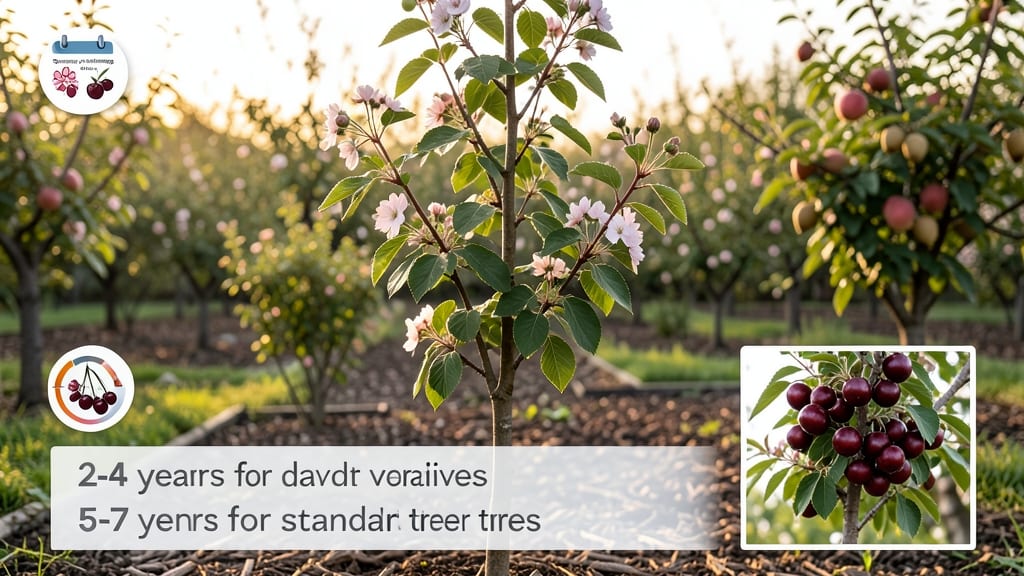
How long before cherry trees bear fruit depends on the variety, but most produce their first harvest between 3 to 7 years after planting. Dwarf varieties can fruit as early as 2 years, while standard trees may take up to a decade to mature.
Cherry trees need patience because their fruiting timeline varies widely based on genetics and care. 🌱 Sweet cherries like 'Stella' often fruit faster than tart varieties such as 'Montmorency', while grafted trees on dwarfing rootstock (like Gisela) reach maturity 2-3 years sooner than standard trees.
The key factors are proper winter chilling hours—most cherries need 500-1,000 hours below 45°F—and well-draining soil with a 6.0-6.5 pH. I've seen growers rush fruiting by over-fertilizing with nitrogen, which actually delays fruit production while encouraging leafy growth instead.
For example, a dwarf Bing cherry on Mahaleb rootstock might bear fruit in 3-4 years, while a standard Black Tartarian could take 8-10 years. The difference comes down to rootstock compatibility with your climate and the tree's natural growth rate.
Pruning in late winter (after dormancy) helps redirect energy toward fruit production rather than excessive branching.
💡 In This Article
- Cherry Tree Fruit Timeline by Variety and Rootstock
- Optimizing Conditions to Speed Up Cherry Tree Fruit Production
Cherry tree fruit timeline by variety and rootstock
Cherry trees follow a biological maturation process where fruit production depends on two critical factors: their genetic variety and the rootstock they're grafted onto.
Sweet cherries like 'Stella' typically fruit within 3-5 years when planted on Gisela rootstock, while tart varieties such as 'Montmorency' may take 4-6 years on the same rootstock.
The rootstock acts like a growth regulator—Gisela, for instance, accelerates maturity by up to 50% compared to traditional Mahaleb rootstock, which can delay fruiting by 2-3 years.
Dwarf varieties are the fastest fruiters, with some like 'Lapins' producing cherries in as little as 2 years under ideal conditions. This is because their compact growth habit prioritizes reproductive energy over vertical expansion.
Standard trees, however, require 7-10 years to reach full fruiting capacity, as their larger size demands more resources for structural development before flowering. The Black Tartarian, a popular tart cherry, often falls into this slower category, needing 8-10 years unless pruned aggressively to redirect energy.
What most gardeners overlook is how climate interacts with these timelines. Trees in colder regions (like the Pacific Northwest) may fruit 1-2 years earlier than those in warmer zones because they experience sufficient winter chilling hours (500-1,000 hours below 45°F).
Without enough chilling, buds remain dormant, and flowering—and thus fruiting—gets delayed indefinitely. I've seen Bing cherries in California's Central Valley take 5-6 years to fruit because they lack natural chilling, whereas identical trees in Michigan produce fruit in 4 years.
Rootstock compatibility with soil type also plays a hidden role. Mahaleb rootstock, for example, thrives in well-draining, slightly acidic soils (pH 6.0-6.5) and can stunt growth if planted in heavy clay, pushing back fruiting by 1-2 years.
Meanwhile, Gisela rootstock tolerates wider pH ranges but requires consistent moisture—drought stress during flowering can reduce fruit set by up to 40% in the first fruiting season. This is why nurseries often pair varieties with rootstocks suited to specific growing zones.
Here's a quick comparison of common varieties and their typical fruiting windows:
- Fastest fruiters (2-4 years): Dwarf 'Stella' (sweet), 'Lapins' (tart), 'Montmorency' on Gisela rootstock
- Moderate (4-6 years): 'Bing' (sweet), 'Blackheart' (tart), 'Rainier' on Mahaleb
- Slowest (7-10+ years): Standard 'Black Tartarian', 'Royal Ann', 'Stella' on Mahaleb
The takeaway? If you're impatient for cherries, choose a dwarf variety on Gisela rootstock and plant it in a climate that matches its chilling requirements. The right combination can cut your wait time nearly in half. 🌿