
Planting
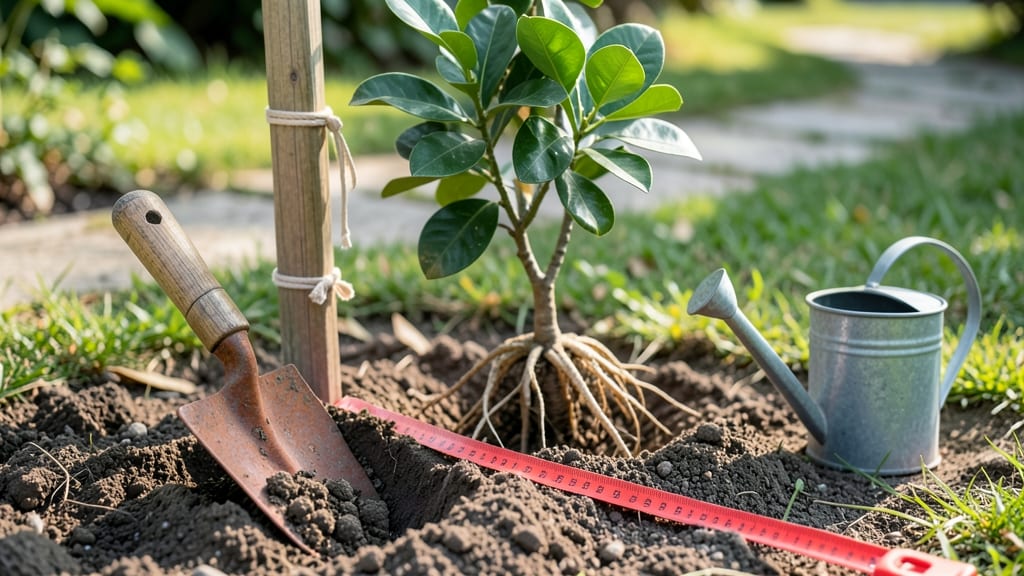
Optimal fruit tree planting depth by root type and species
Getting the planting depth right for your fruit tree is like setting the foundation for a house—do it wrong, and everything else suffers. The root flare, where the roots meet the trunk, must sit 2-3 inches above soil level.
This exposure prevents girdling (where roots strangle the trunk) and suffocation from buried soil. Different species have unique needs, so let’s dive into the science behind proper depth for apple trees, citrus, peaches, and more.
Most gardeners bury the root flare too deep, thinking it’ll provide stability. But suffocated roots can’t absorb water or nutrients, leading to stunted growth or even death. The key is balancing soil contact with root flare visibility.
For bare-root trees, the flare is obvious, but container-grown trees often have hidden flares—we’ll show you how to find them. Let’s start with the species-specific guidelines you need to know before digging.
For bare-root trees, the root flare is usually visible as a swollen area where roots meet the trunk. If you’re unsure, gently peel away the top layer of soil—you’ll see the flare’s natural angle. Container-grown trees are trickier; the flare might be buried under the root ball.
In this case, remove the tree from its pot and loosen the roots to expose the flare before planting. This step is critical for citrus trees and avocados, which have shallow root systems.
Digging the hole too deep or too shallow throws off the tree’s balance. A hole should be 2-3 times wider than the root ball but only as deep as needed to accommodate the roots without burying the flare.
For example, a peach tree with a 12-inch root ball needs a hole about 18-24 inches deep. Fill the bottom with native soil (no amendments)—this mimics natural conditions and prevents root burn. Layer the remaining soil gently around the roots, tamping lightly to remove air pockets.
One common mistake is using amended soil (like compost or fertilizer) in the backfill. While it might seem helpful, it can create a nutrient-rich barrier that discourages roots from spreading outward. Instead, use the soil you dug from the hole.
If your native soil is poor, improve it outside the planting hole in a surrounding 12-inch-wide ring. This encourages roots to grow into the enriched zone naturally.
After planting, create a slight mound of soil around the base to help water drain away from the trunk. This prevents root rot, especially in citrus trees or peaches, which are sensitive to soggy conditions.
Mulch the area with 2-3 inches of organic mulch, keeping it 6 inches away from the trunk to avoid moisture buildup. This mulch layer also regulates soil temperature and retains moisture, reducing the need for frequent watering.
If you’re planting in cl
Step-by-step guide to planting fruit trees at the right depth
Getting the planting depth right for your fruit tree is the difference between a thriving orchard and a struggling sapling. Most gardeners bury the root flare—the swollen area where roots meet the trunk—too deep, which suffocates the tree.
The key is exposing this flare just above soil level while creating a soil gradient that encourages roots to spread outward, not upward.
Before you dig, measure your tree’s root flare. For bare-root trees, this is the widest part of the roots. For container-grown trees, gently remove excess soil to locate it.
The goal is to plant with the flare 2-3 inches above soil level. This might seem counterintuitive, but it prevents girdling (a deadly root constriction) and promotes faster establishment.
Position the tree in the hole so the root flare sits 2-3 inches above soil level. For grafted trees, align the graft union (the bump near the base) with your target height—this ensures the scion (top part) grows vigorously.
Gently spread the roots downward along the sloped hole to encourage outward growth, not circling.
Backfill the hole in thirds, tamping down each layer lightly with your hands or a board to eliminate air pockets. Use only native soil—no amendments like compost or peat moss in the planting hole.
This prevents root burn and allows roots to acclimate naturally. Water thoroughly after each layer to settle the soil.
Finish by creating a watering basin around the base, mounding soil slightly to direct water toward the roots. Mulch with 2-3 inches of organic mulch (like wood chips) but keep it 6 inches away from the trunk to prevent rot.
This setup mimics natural conditions, reducing stress and encouraging deep root growth.
After planting, water deeply every 5-7 days for the first month to encourage roots to explore the soil. Avoid overwatering—soggy soil can suffocate roots just as much as dry soil.
With the right depth and care, your fruit tree will establish strong roots and reward you with decades of abundant harvests. 🌳🍎🌱