
Container Gardens
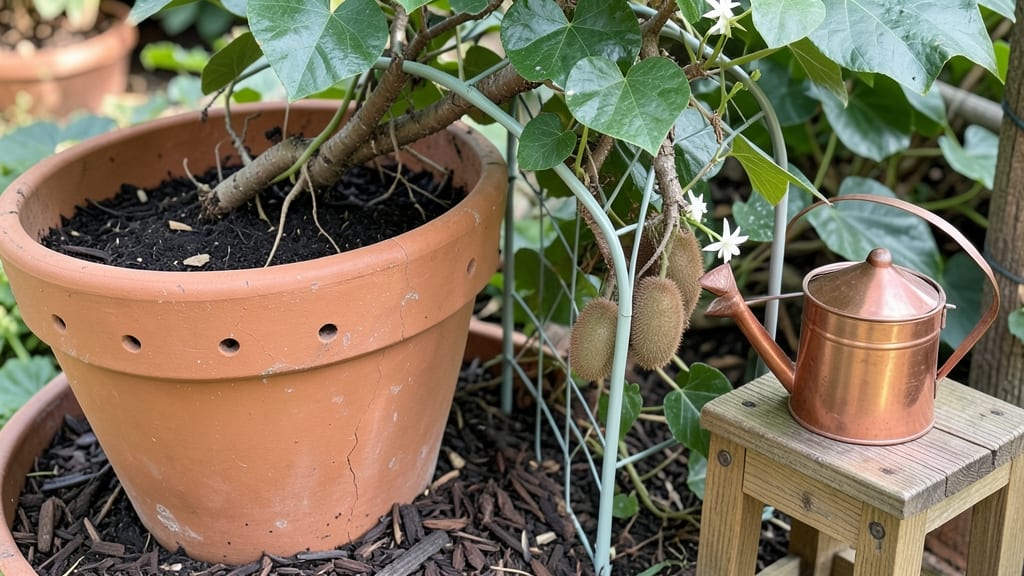
Growing kiwi fruit in pots turns your balcony into a tropical harvest zone. 🌿 I've grown these vines for years, and the sweet, fuzzy fruits taste like nothing store-bought can match—even in a 5-gallon container.
The secret isn't fancy equipment: just the right pot size (at least 10 gallons for mature vines), well-draining soil, and a sunny spot. Most people assume kiwis need acres, but dwarf varieties like Actinidia arguta thrive in containers with proper care.
By summer, you'll see fragrant white flowers that lead to tiny, flavorful kiwis ready to pick in fall. The vines grow fast, so pruning keeps them manageable and boosts fruit production. Works for patios, decks, or even large windowsills with enough light.
Here's how to get started without the backyard space!"
📚 In This Guide
- What you need
- Instructions
- Tips and common mistakes
- Wrapping up and next steps
What you need
- ● Container: A large (at least 15–20 gallons) fabric grow bag or plastic pot with drainage holes. For two vines (male + female), opt for a 25+ gallon container or multiple large pots.
- ● Potting Mix: A well-draining, nutrient-rich blend (e.g., 60% premium potting soil + 30% perlite + 10% compost). Avoid garden soil—it compacts and suffocates roots!
- ● Kiwi Vines: 1 female vine (e.g., 'Hayward' or 'Saicha')
- ● 1 male vine (e.g., 'Tomuri' or 'Matua') for pollination
- ● Support System: A trellis, stakes, or strong wire cage (at least 6–8 feet tall) to train vines vertically.
- ● Fertilizer: Balanced 10-10-10 fertilizer (for early growth)
- ● High-potassium 5-10-10 or 0-0-52 (for fruiting)
- ○ Organic options: Fish emulsion or worm castings (optional but great for soil health!)
- ● Mulch: Straw or shredded bark (2–3 inches) to retain moisture and regulate soil temp.
- ● Pruning Tools: Sharp bypass pruners (for clean cuts)
- ● Disinfectant (e.g., rubbing alcohol) to sterilize tools between cuts.
- ● Drip Irrigation Kit or self-watering pot (kiwis love consistent moisture!).
- ● pH Test Kit (ideal range: 5.5–6.5; amend with lime or sulfur if needed).
- ● Mycorrhizal Fungi (boosts root health—mix into soil at planting!).
- ● Frost Cloth (for winter protection in colder climates).
- ● Handheld Sprayer (for misting leaves in dry conditions).
Step-by-step instructions for growing kiwi fruit in pots
Here’s how to grow sweet, compact kiwi vines in containers—no yard needed!
🪴 Step 1: Choose the Right Containers and Soil
Kiwi vines need large, sturdy pots at least 15-20 gallons each to support their vigorous growth. I use fabric grow bags because they prevent root circling and allow excess water to evaporate. Make sure each pot has multiple drainage holes—kiwi roots rot quickly in soggy soil.
Fill the bottom third of the pot with garden soil mixed with compost for drainage. Then add a high-quality potting mix (never garden soil alone—it compacts too much). Moisten the mix until it’s damp but not dripping. Kiwi vines thrive in slightly acidic soil (pH 5.5-6.5), so test your mix if possible.
🌱 Step 2: Plant Kiwi Cuttings or Bare-Root Plants
Kiwi vines grow from hardwood cuttings (taken in late winter) or bare-root plants (available from nurseries in early spring). If using cuttings, dip the base in rooting hormone before planting to encourage faster root growth. Plant each vine 1-2 inches deeper than it was in its original container—this stabilizes the plant and encourages root development.
Space 4 vines per pot (since kiwi plants are dioecious, you’ll need at least one male and one female for fruit). Water deeply right after planting to settle the soil around the roots. Avoid overwatering now—kiwi roots need time to establish before they can handle excess moisture.
☀️ Step 3: Provide Support and Optimal Light
Kiwi vines are fast-growing climbers and need strong trellising right away. Install a 5-6 foot tall trellis or sturdy wire frame in each pot before the vines start growing. Train the main stems along the trellis as they grow—this prevents tangled, weak growth.
Place your pots in a sunny spot with at least 6-8 hours of direct sunlight daily. Kiwi vines need full sun to produce fruit, but in hot climates, afternoon shade helps prevent leaf scorch. You’ll know your vines are happy when they grow new leaves every 2-3 weeks and develop thick, woody stems by summer.
💧 Step 4: Water and Fertilize for Strong Growth
Water deeply 2-3 times per week in warm weather, keeping the soil evenly moist but not soggy. Check moisture by sticking your finger 2 inches into the soil—if it feels dry, it’s time to water. Kiwi vines hate drought stress, but they also can’t tolerate waterlogged roots, so adjust based on your climate.
Feed your vines every 4-6 weeks with a balanced, water-soluble fertilizer (10-10-10 or 20-20-20). In early spring, switch to a high-nitrogen fertilizer to encourage leafy growth. Once flowers appear, reduce nitrogen and increase phosphorus to support fruit development. Stop fertilizing in late summer to let the vines harden off for winter.
✂️ Step 5: Prune and Winterize for Next Year’s Harvest
Prune in late winter or early spring before new growth starts. Remove dead, weak, or crossing branches to improve airflow and sunlight penetration. Cut back overly long vines to 3-4 feet to encourage bushier growth. Kiwi vines produce fruit on new wood, so pruning now sets up a better harvest next season.
If you live in a cold climate, move pots to a protected spot (like a garage or shed) before temperatures drop below 20°F. Wrap the pots in burlap or frost cloth to shield them from freezing winds. In warmer zones, mulch the soil surface with straw or leaves to insulate roots. With proper care, your potted kiwi vines will reward you with sweet, aromatic fruit in 2-3 years!
Tips & tricks for growing kiwi fruit in pots
Here's what nobody tells you about growing kiwi vines in containers—these tricks make all the difference for compact, productive plants.
Container Size Matters: The 15-20 gallon minimum isn't just a suggestion—kiwi roots spread aggressively. I've seen vines choke in smaller pots by summer. If you're using multiple pots, space them at least 3 feet apart to prevent root competition. For extra insurance, add a 2-inch layer of gravel at the bottom of each pot before soil to improve drainage and prevent root rot.
Soil Science for Happy Vines: That slightly acidic pH (5.5-6.5) is non-negotiable for kiwi plants. If your soil tests higher, mix in 1 cup of peat moss per 5 gallons of soil to lower the pH naturally. I also recommend adding a handful of worm castings to the planting mix—they boost microbial activity that helps roots absorb nutrients more efficiently.
Trellis Training Secret: Don't wait until the vines are climbing to install your trellis! Set up that 5-6 foot frame right after planting. The key is to train the main stems along the trellis using soft plant ties. Gently weave the vines through the trellis structure rather than tying them directly—this creates natural air circulation and prevents disease. I start training when vines reach about 12 inches tall.
Watering Wisdom: The 2-3 times per week guideline works for most climates, but kiwi vines in pots dry out faster than in-ground plants. In summer heat, I water mine every other day in the morning, giving each pot about 1 gallon of water. The finger test is crucial—if the soil feels dry just 1 inch down, it's time to water. Overwatering is just as deadly as underwatering for these tropical plants.
Pro Tips for Growing Kiwi Fruit In Pots
- Here's what nobody tells you about growing kiwi vines in containers—these tricks make all the difference for compact, productive plants.
- Container Size Matters: The 15-20 gallon minimum isn't just a suggestion—kiwi roots spread aggressively.
- Soil Science for Happy Vines: That slightly acidic pH (5.5-6.5) is non-negotiable for kiwi plants.
Frequently asked questions
Got questions about growing kiwi fruit in pots? You’re not alone! Here are some of the most common concerns—and their answers—to help you get started with confidence.
Can kiwi vines really thrive in pots long-term?
Yes! With the right care, kiwi vines can live decades in containers. Choose a large, sturdy pot (at least 15–20 gallons) with good drainage, and feed your vine regularly with balanced fertilizer. Prune annually to manage size, and watch it flourish—some container-grown kiwis even produce fruit!
How long does it take for a kiwi plant in a pot to bear fruit?
Patience is key! Most kiwi vines take 3–5 years to bear fruit in pots, depending on the variety and growing conditions. Female and male vines must be planted together for pollination. Dwarf or compact varieties (like ‘Issai’ or ‘Matua’) may fruit faster—sometimes in just 2–3 years.
What’s the best temperature range for potted kiwi plants?
Kiwi vines love warmth but need protection from extreme heat or cold. Ideal temperatures are 60–85°F (15–29°C). In winter, move pots to a sheltered spot or indoors if temperatures drop below 20°F (-7°C). Avoid frost, which can damage leaves and buds.
Are there any low-maintenance kiwi varieties for beginners?
Try these beginner-friendly options:
- ‘Issai’ kiwi: Self-pollinating, compact, and produces small, sweet fruit—perfect for pots!
- ‘Matua’ kiwi: Dwarf variety with larger fruit, great for small spaces.
- ‘Saichū’ kiwi: Cold-hardy and productive, even in containers.
What should I do if my potted kiwi leaves turn yellow or wilt?
Yellowing leaves often signal overwatering or nutrient deficiency. Let the soil dry slightly between waterings, and fertilize monthly during growing season. Wilting could mean underwatering or root bound—check the pot size and roots. Pests like spider mites or aphids may also be the culprit; treat with neem oil if needed.
Wrapping up and next steps
Growing kiwi fruit in pots is a rewarding way to enjoy fresh, homegrown fruit—even in small spaces! With the right variety, container, and care, you’ll soon be savoring sweet, tangy kiwis straight from your balcony or patio. 🌱✨
Ready to take the next step? Start by selecting your hardy kiwi variety (like ‘Issai’ or ‘Ananasnaya’), then gather your supplies and get planting. Before you know it, you’ll be harvesting your own delicious kiwis—no yard required!
Happy growing, and here’s to your future bountiful harvest! 🍈🌟