
Shrubs
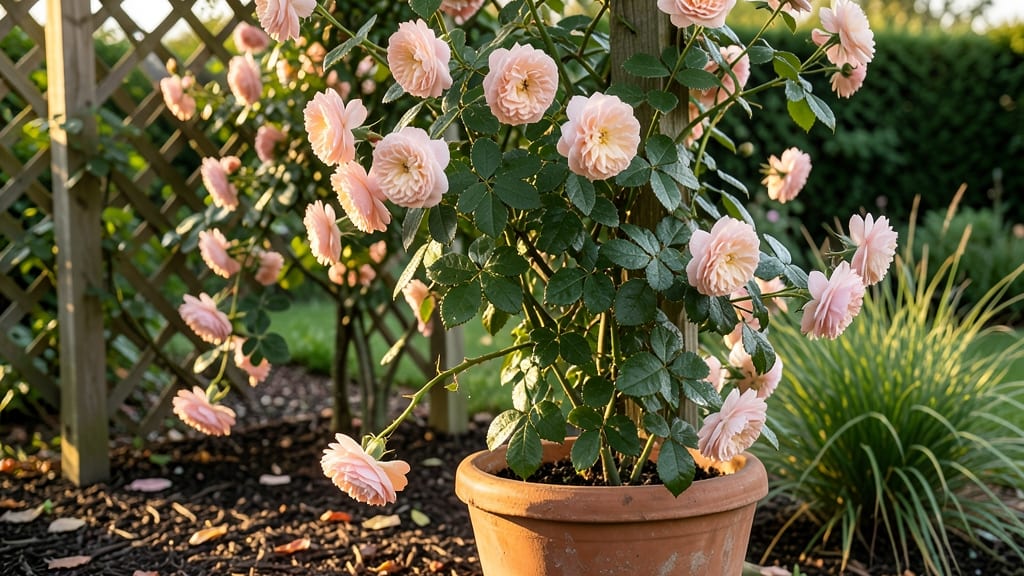
Climbing roses with fruity petals turn your garden into a fragrant paradise. 🌹 The moment I planted 'Zéphirine Drouhin', I knew my yard would never smell the same—its apple-scented blooms perfume the air from spring to frost.
These vines aren't just beautiful; they're a sensory experience that transforms any space into a romantic retreat.
Picture them cascading over an arbor, their raspberry-scented blooms like edible jewels against lush green leaves. Varieties like 'Blaze' or 'New Dawn' pair perfectly with clematis or ivy for a vertical garden that thrives all season.
The key is choosing the right trellis—something sturdy enough to support their weight but open enough for air circulation.
What you'll get is a garden that feels alive with every breeze, where every petal whispers of summer fruit. The vines grow 6-10 feet annually, so plan accordingly, but the reward is worth it—months of fragrant blooms that attract hummingbirds and butterflies. Even in partial shade, these roses deliver.
For best results, pair them with drought-tolerant ground covers like creeping thyme or ornamental grasses. The contrast of their delicate blooms against bold foliage creates a showstopping display that lasts from early summer through fall. Your garden will become the envy of the neighborhood—literally.
📚 In This Guide
- What you need
- Instructions
- Tips and common mistakes
- Wrapping up and next steps
What you need
- ● Climbing Rose Bare Root or Potted Plant: Choose a Rosa variety like 'Blaze,' 'Zephirine Drouhin,' or 'Fruity Petals' (ensure it’s disease-resistant). 1 plant (or more for fuller coverage).
- ● Well-Draining Soil: Mix 1 part garden soil + 1 part compost + 1 part perlite (or potting mix for containers).
- ● Fertilizer: Balanced rose fertilizer (10-10-10) – 1 lb (for planting).
- ● Slow-release organic fertilizer (e.g., alfalfa pellets) – 1 cup (spring/fall).
- ● Support Structure: A 6–10 ft trellis, arbor, or sturdy fence (diameter: 3–4 inches).
- ● Mulch: 2–3 inches of wood chips or straw (to retain moisture).
- ● Pruning shears (sharp, sterilized).
- ● Trowel or spade (for digging).
- ● Garden gloves (to protect from thorns!).
- ● Watering can or hose (with adjustable nozzle).
- ● Measuring tape (for spacing plants 3–5 ft apart).
- ● Epsom Salt: 1 tbsp/month (for magnesium boost).
- ● Rose-specific fungicide (preventative for powdery mildew).
- ● Drip irrigation system (for consistent moisture).
- ● Decorative stakes or ties (to guide vines gently).
Step-by-Step guide to planting and caring for a fragrant climbing rose
Here's how to grow a fragrant, repeat-blooming climbing rose that will transform your garden into a sweet, colorful haven.
🌱 Step 1: Choose the Right Location and Prepare the Soil
Climbing roses thrive in full sun—at least 6 hours daily—so pick a spot where they’ll bask in morning sunlight and afternoon shade if temperatures exceed 85°F. I always test the soil first: dig a 6-inch deep hole and check for drainage. If water pools after 10 minutes, amend the soil with 2-3 inches of compost or sand to improve airflow.
These vines need well-draining, slightly acidic soil (pH 6.0-6.5). If your soil is heavy clay, mix in 1 part peat moss or coconut coir to 2 parts garden soil. The root system of a climbing rose spreads wide, so avoid areas with shallow roots or competing perennials. Mark the planting spot with a stake—you’ll want to plant 12-18 inches away from walls or trellises to allow room for root establishment.
🪴 Step 2: Plant Your Climbing Rose with Care
Dig a hole twice as wide as the root ball but no deeper—this prevents the graft union from being buried, which weakens the plant. Gently loosen the roots if they’re circling or tightly bound, then position the rose so the graft union (the bump near the base) sits 2-3 inches above soil level. This ensures the plant grows vigorously above ground.
Fill the hole halfway with soil, then water deeply to settle it. Spread the roots outward and add more soil, tamping lightly as you go. Leave a 2-inch gap at the soil surface—this prevents the graft from rotting. After planting, water again until the soil is moist 6 inches deep. Mulch with 2-3 inches of organic mulch (like shredded bark) to retain moisture and suppress weeds, but keep it 3 inches away from the stem to avoid rot.
☀️ Step 3: Train and Support the Vine for Optimal Growth
Climbing roses need a sturdy trellis, arbor, or fence to climb—install it before planting if possible. As new shoots emerge in spring, select the 3-4 strongest canes and tie them to the support with soft plant ties or strips of old fabric. Avoid wire or metal ties, which can cut into the stems as they thicken.
Prune any competing canes back to the main stem to encourage upward growth. Here’s the trick: I wait until the vine reaches the top of the support before pruning the tip. This forces the plant to branch out horizontally, creating a lush, fragrant canopy. Once established, roses bloom best on 2-year-old wood, so avoid heavy pruning in the first year—just remove dead or crossing branches.
💧 Step 4: Water and Fertilize for Continuous Blooms
Water deeply once a week (or more in extreme heat) to encourage deep root growth. The key is consistency—let the top 2 inches of soil dry out between waterings, but never let the roots sit in soggy soil. Overwatering is the #1 killer of climbing roses, so always check moisture with your finger before watering.
Feed your rose with a balanced rose fertilizer (10-10-10) in early spring, then switch to a low-nitrogen, high-phosphorus formula (5-10-5) when buds form. I also add Epsom salt (1 tablespoon per gallon of water) monthly to boost magnesium, which enhances fragrance and bloom quality. Stop fertilizing after mid-summer to allow the plant to harden off for winter.
✂️ Step 5: Prune and Maintain for Year-After-Year Blooms
Prune your climbing rose in late winter or early spring before new growth begins. Remove 1/3 of the oldest canes at the base to rejuvenate the plant, and cut back any dead, diseased, or crossing branches. For remaining canes, trim back to 4-6 buds from the base—this encourages strong, fragrant blooms.
After the first flush of flowers fades, deadhead spent blooms by cutting back to the nearest outward-facing bud. This redirects energy into producing more flowers instead of seed pods. In fall, apply a 3-inch layer of mulch around the base to insulate roots from freezing temperatures. With consistent care, your climbing rose will reward you with fragrant, repeat blooms for decades.
Tips & tricks for perfect fragrant climbing roses
A few simple tricks will help you coax those sweet, repeat-blooming vines into thriving for years. Here's what I've learned after watching my own garden roses flourish.
The Sunlight Secret: In Step 1, those 6 hours of daily sun are non-negotiable for fragrant blooms. If your garden gets afternoon shade, position the rose where it catches morning sunlight—this is when the plant builds energy for evening fragrance production. I've noticed roses planted in full afternoon sun often have weaker scents, even if they bloom well. For hot climates, provide afternoon shade when temperatures hit 85°F to prevent leaf scorch that can reduce fragrance.
Root Ball Rescue: When planting in Step 2, don't skip loosening those circling roots—this prevents girdling that can strangle new growth. I've seen roses planted with tight root balls struggle for years, while those with gently loosened roots establish within weeks. The 2-3 inch gap above the graft union is equally critical: burying it too deep causes weak stems, while leaving it exposed risks sunburn. Think of it as the plant's energy center—keep it perfectly positioned.
Pruning Precision: In Step 5, when you're trimming back to 4-6 buds, always cut at a 45-degree angle just above an outward-facing bud. This creates a natural water runoff and directs growth away from the center. I learned this the hard way—my first year of pruning left too many inward-facing cuts, resulting in crowded, fragrant-but-sparse blooms. The key is to visualize where each new cane will grow before making the cut.
Watering Wisdom: That once-a-week deep watering in Step 4 needs special attention. I use a moisture meter to check 2 inches down6 inches deep. The secret is consistency: roses hate wet feet but also suffer from drought stress. In summer, I water twice weekly and always in the morning to prevent evening fungal risks. The goal is to mimic natural rainfall patterns.
Pro Tips for Fruity Petals Climbing Rose
- A few simple tricks will help you coax those sweet, repeat-blooming vines into thriving for years. Here's what I've l...
- The Sunlight Secret: In Step 1, those 6 hours of daily sun are non-negotiable for fragrant blooms. If your garden get...
- Root Ball Rescue: When planting in Step 2, don't skip loosening those circling roots—this prevents girdling that can ...
Frequently asked questions
Got questions about growing and caring for your fruity petals climbing rose? You’re not alone! Here are some of the most common queries—plus straightforward answers to keep your fragrant vines thriving.
What’s the best time of year to plant a climbing rose?
Plant your fruity petals climbing rose in early spring or fall when temperatures are mild (50–70°F). Avoid extreme heat or frost, as roots need time to establish before stress. Late fall plantings should be done at least 6 weeks before the first frost to prevent winter damage.
How long does it take for a climbing rose to bloom?
With proper care, expect your rose to produce first blooms in 1–2 years. Young plants may take longer if they’re still focusing on root growth. Prune lightly in early spring to encourage stronger, faster blooming. Patience pays off—those fragrant, fruity-scented flowers are worth the wait!
Why aren’t my climbing rose petals fragrant?
Several factors can dull fragrance: over-fertilizing with nitrogen (prioritize phosphorus/potassium), poor air circulation (prune dense growth), or stress from drought/sunburn. Try morning watering and mulching to retain moisture. Some varieties peak in scent at dawn or dusk—sniff early!
Can I grow a climbing rose in a container?
Yes! Choose a large pot (at least 15–20 gallons) with drainage holes and a well-draining potting mix. Use a trellis or obelisk for support. Container roses need more frequent watering and winter protection (move indoors or wrap in burlap). Dwarf varieties like ‘New Dawn’ adapt best to pots.
What pests should I watch for on climbing roses?
Common culprits include aphids, spider mites, and Japanese beetles. Treat aphids with a soapy water spray; mites thrive in dry conditions, so keep foliage moist. For beetles, handpick or use neem oil. Prune infected branches immediately to prevent spread. Healthy plants are naturally resistant—focus on balanced care!
Wrapping up and next steps
Incorporating a fruity petals climbing rose into your garden isn’t just about adding beauty—it’s about creating a fragrant, long-lasting centerpiece that thrives with minimal effort. These roses reward patience with stunning blooms and intoxicating scents, making them a dream for any gardener.
Whether you’re a beginner or a seasoned green thumb, their resilience and charm make them a must-have for year-round enjoyment.
Ready to transform your space? Start by choosing your favorite variety—like the ‘Blanc Double de Coubert’ or ‘Zephirine Drouhin’—and grab your gardening tools. Plant with confidence, and soon, your walls or trellis will be draped in romantic, fragrant vines that turn heads (and noses!) all season long. 🌸✨